
Multinational Forces Conduct Maritime Security Training in Senegal as Part of Exercise Obangame Express 2026
Naval forces from a broad coalition of 32 nations recently concluded intensive Visit, Board, Search, and Seizure (VBSS) training in Senegal. The drills formed a key component of Exercise Obangame Express 2026, a comprehensive multinational maritime security exercise coordinated by U.S. Africa Command (AFRICOM) and executed by U.S. Sixth Fleet. The exercise aims to enhance regional maritime safety and security in the Gulf of Guinea and across West Africa.
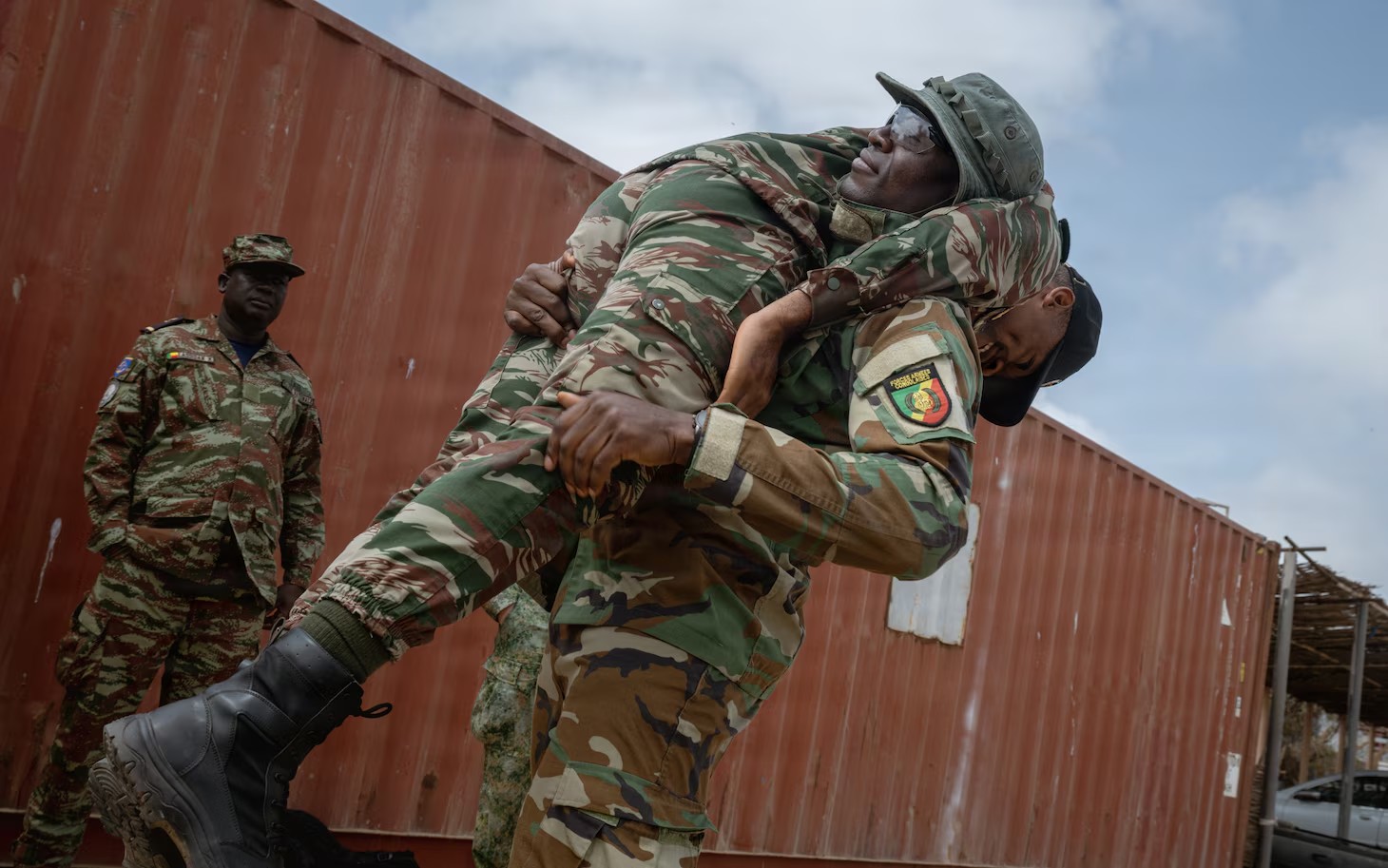
The specialized VBSS training, hosted at Senegal Navy Bel Air Base in Dakar, was expertly led by Senegal’s elite Special Forces Marine unit. It brought together boarding teams from numerous African countries, including 11 nations bordering the strategically vital Gulf of Guinea. The training followed a structured “crawl, walk, run” methodology, designed to progressively build complex skills. Participants began with foundational classroom instruction, advancing through practical demonstrations, before culminating in full-mission boardings on simulated suspect vessels at sea. These realistic scenarios incorporated role players to replicate real-world challenges faced during maritime interdictions.
Throughout the training, teams honed a range of critical skills essential for effective maritime law enforcement. This included mastering tactical ship entries, ensuring the safety of boarding teams and vessel crews, meticulous evidence handling procedures crucial for successful legal prosecution, thorough search protocols to uncover illicit cargo or personnel, and specialized techniques for fisheries inspection. The latter is particularly important given the prevalence of illegal, unreported, and unregulated (IUU) fishing in the region.
Obangame Express is now in its 15th year, underscoring a sustained commitment to regional maritime security. It stands as one of three major regional maritime exercises conducted by U.S. Sixth Fleet in Africa, alongside Cutlass Express and Phoenix Express. These exercises are integral to supporting broader international frameworks for maritime governance, specifically the Yaounde Code of Conduct and the Africa Partnership Station program. The Yaounde Code, established in 2013, provides a framework for signatory states to counter illicit maritime activity in the Gulf of Guinea, fostering cooperation and information sharing. The Africa Partnership Station program focuses on improving maritime domain awareness, information sharing, and interoperability among African partners.
In preparation for the exercise, significant infrastructure improvements were undertaken at the Senegal Navy Bel Air Base. U.S. Navy Seabees from Naval Mobile Construction Battalion 1 completed construction of a dedicated VBSS shoot house, designed for close-quarters battle and boarding team tactics training, and upgraded a small arms range. These enhancements provide Senegal with improved, long-term capabilities for advanced training, benefiting not only its own forces but also future regional exercises.
Rear Admiral Kelly Ward, commander of U.S. Sixth Fleet’s Task Force 66, emphasized the profound economic implications underpinning the exercise’s objectives. “More than half of African regional economies rely on safe and lawful use of the maritime environment. Obangame Express provides a venue for nations to work together and train in areas such as VBSS to ensure maritime security in the Gulf of Guinea,” he stated. His comments highlight the direct link between maritime security and the economic stability and prosperity of nations throughout the region.
The Gulf of Guinea itself represents a critical maritime chokepoint for African commerce. Analysis by the Centre for Strategic and International Studies (CSIS) indicates that the region, home to nearly 20 commercial seaports, handles approximately 25 percent of all African maritime traffic. This makes it a vital conduit for international trade, including oil and gas exports, and a crucial artery for goods reaching landlocked African nations. The economic stakes are further compounded by a range of persistent threats. Illegal, unreported, and unregulated (IUU) fishing, for example, is a severe economic and environmental issue, with some estimates suggesting it accounts for as much as 65 percent of the legally reported catch. Beyond IUU fishing, the region is also challenged by piracy, armed robbery at sea, illicit trafficking of drugs, weapons, and humans, and crude oil theft (bunkering), all of which destabilize economies and threaten human lives.
The diverse roster of participating nations underscored the broad international commitment to Gulf of Guinea security. African nations included Angola, Benin, Cameroon, Congo (Republic of), Cote d’Ivoire, Ghana, Liberia, Nigeria, Sao Tome and Principe, Sierra Leone, Togo, Cabo Verde, the Democratic Republic of Congo, Gabon, Guinea Bissau, Equatorial Guinea, Senegal, Gambia, Guinea, Mauritania, Morocco, and Tunisia. International partners included Belgium, Denmark, France, Italy, Portugal, Spain, the Netherlands, Brazil, and the United States. This wide participation reflects a shared understanding that maritime security is a collective responsibility transcending national borders.
Why This Matters
Exercise Obangame Express 2026 holds significant importance for several reasons, impacting regional stability, economic development, and international cooperation. Firstly, it directly addresses the pervasive maritime insecurity in the Gulf of Guinea. This region is not merely a transit point but a vital economic zone for over half of African economies. Threats like piracy, armed robbery, illicit trafficking, and particularly illegal, unreported, and unregulated (IUU) fishing severely undermine economic growth, food security, and the livelihoods of coastal communities. IUU fishing alone depletes fish stocks, degrades marine ecosystems, and robs nations of crucial revenue and protein sources, exacerbating poverty and instability.
Secondly, the exercise is a cornerstone of capacity building and interoperability among participating nations. By providing advanced training in critical skills like Visit, Board, Search, and Seizure (VBSS), it equips national navies and coast guards with the tools and expertise necessary to detect, deter, and interdict illicit activities. The multinational nature of the drills fosters common operational procedures, enhances communication, and builds trust among diverse forces. This improved interoperability is crucial for effective joint responses to maritime threats, which often transcend national boundaries and require coordinated action. The investment in infrastructure, such as the VBSS shoot house in Senegal, further ensures that these enhanced capabilities are sustainable and can be continuously developed long after the exercise concludes.
Thirdly, Obangame Express reinforces the principle of international cooperation in global maritime governance. The broad participation from African nations, alongside European partners, Brazil, and the United States, demonstrates a shared commitment to upholding international law and ensuring the safety of global sea lanes. The support from U.S. Africa Command and U.S. Sixth Fleet, aligned with initiatives like the Yaounde Code of Conduct, underscores a collaborative approach where external partners support African-led solutions to regional challenges. This collective effort is vital for combating transnational maritime crime, which often has links to broader criminal networks affecting global security.
Ultimately, safeguarding the Gulf of Guinea’s maritime environment is not just about security; it is fundamentally about promoting sustainable development, economic prosperity, and regional stability. By strengthening maritime law enforcement capabilities and fostering cooperation, exercises like Obangame Express contribute directly to creating a safer, more secure environment for legitimate trade, resource management, and the overall well-being of the millions who depend on the region’s seas.