
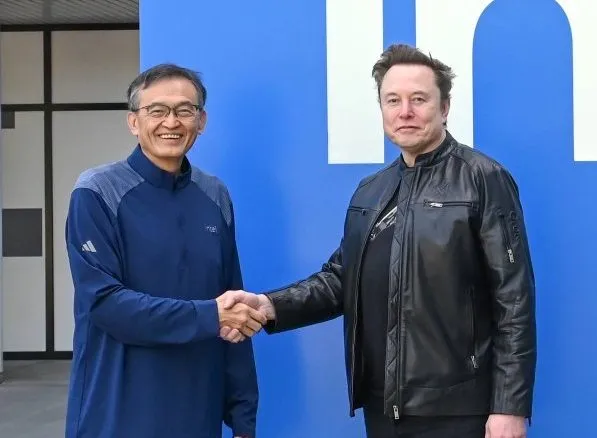
Bloomberg has a deep dive this week into how Intel CEO Lip-Bu Tan is trying to rescue one of Silicon Valley’s most storied, and stumbling, chipmakers. It’s worth a read, but it actually undersells the most jaw-dropping part of the story: Intel’s stock has risen a stunning 490% over the past year, a bet by Wall Street that may be running well ahead of the company’s actual turnaround.
Tan, who took over in March of last year, has spent much of his first year schmoozing rather than restructuring — locking in a sweetheart deal with the U.S. government (now Intel’s third-largest shareholder), cozying up to Elon Musk on a factory partnership, and reportedly landing preliminary manufacturing agreements with both Apple and Tesla.
The fundamentals are still messy. Intel’s chip yields lag well behind industry leader TSMC, and employees tell Bloomberg that Tan has been light on specifics internally, with some teams adjusting missed deadlines rather than recovering from them.
But investors are betting big on the bigger picture. Whether the execution follows is the multibillion-dollar question.
{content}
Key Takeaways:
- Market Euphoria vs. Reality:Intel’s stock has surged an astounding 490% in the past year, a Wall Street bet seemingly detached from the company’s deeply challenged operational fundamentals.
- CEO Tan’s “Schmooze-First” Strategy:Lip-Bu Tan’s leadership has prioritized high-profile external alliances—including significant government backing and partnerships with tech giants like Tesla and potentially Apple—over immediate internal restructuring and process improvement.
- The Execution Chasm:Despite ambitious external maneuvers, Intel continues to grapple with lagging chip yields compared to rivals like TSMC and internal reports of organizational ambiguity, posing a critical question mark over the promised turnaround.
Intel’s High-Wire Act: Wall Street’s Reckless Bet on a Reborn Giant
In the cutthroat world of semiconductor manufacturing, Intel Corporation has long been a titan, a foundational pillar of Silicon Valley’s innovation. Yet, for years, the chipmaker has stumbled, losing its technological edge to nimbler competitors and battling a narrative of decline. Now, under the leadership of CEO Lip-Bu Tan, a new, almost dizzying, chapter is unfolding. Bloomberg’s recent deep dive paints a compelling picture of Tan’s efforts, but it barely scratches the surface of the most astonishing development: Intel’s stock has skyrocketed an eye-watering 490% over the past twelve months. This meteoric rise isn’t just an optimistic outlook; it’s a speculative gamble by Wall Street, a fervent belief in a turnaround that, by many accounts, is still very much in its nascent, and precarious, stages.
The disconnect between market enthusiasm and operational reality couldn’t be starker. While investors are pouring billions into Intel, betting on a future where the company reclaims its crown, the intricate, laborious process of actual technical recovery and organizational overhaul remains a monumental challenge. The core question isn’t whether Intel *can* turn around, but whether the market’s current valuation has wildly outpaced any tangible progress on the ground.
The Architect of Ambition: Lip-Bu Tan’s Strategic Networking
Lip-Bu Tan, who assumed the CEO mantle in March of last year, has demonstrably eschewed the traditional “slash and burn” restructuring playbook. Instead, his tenure has been characterized by an almost relentless focus on strategic alliances and high-level politicking. Rather than immediately diving into the nitty-gritty of process nodes and fabrication plant efficiencies, Tan has spent much of his initial year as a master networker, cultivating relationships that bring significant capital and high-profile endorsements to Intel’s struggling coffers.
The most significant outcome of this “schmooze-first” approach is undoubtedly the sweetheart deal struck with the U.S. government. In a move reflecting growing national security concerns and a push for domestic semiconductor manufacturing, the government has emerged as Intel’s third-largest shareholder. This isn’t just about capital injection; it’s a powerful endorsement, a de-risking factor that lends an aura of stability and national importance to Intel’s future. It signals that Intel’s success is now intertwined with U.S. strategic interests, potentially opening doors to further subsidies, R&D grants, and guaranteed contracts.
Beyond Washington, Tan has courted other titans of industry. His reported cozying up to Elon Musk for a factory partnership, alongside preliminary manufacturing agreements with Apple and Tesla, are massive symbolic wins. While the details of these deals remain opaque—and “preliminary” often implies a long road to actual execution—they represent a potential validation of Intel’s long-term foundry ambitions. Securing even a fraction of Apple’s or Tesla’s chip business, currently dominated by rivals, would be a game-changer, signaling a significant vote of confidence in Intel’s future manufacturing capabilities.
The Foundry Floor: Grappling with Fundamentals
Despite the boardroom victories and government backing, the stark reality on Intel’s foundry floors remains a sobering counterpoint to the market’s exuberance. The fundamental issue of chip yields and process technology continues to plague the company. Intel’s ability to produce functional chips at scale, particularly on its advanced nodes, still lags significantly behind industry leader TSMC. This isn’t a minor detail; it impacts everything from power efficiency and transistor density to manufacturing costs and, ultimately, market competitiveness. Intel has made strides in renaming its process nodes to appear more competitive (e.g., “Intel 7” for what was once a 10nm process), but true technological parity with TSMC’s bleeding-edge N3 or upcoming N2 remains a distant, costly goal.
Internally, the picture painted by employees to Bloomberg is one of an organization struggling for clear direction. Tan’s focus on external strategy has reportedly left some teams feeling “light on specifics.” This translates into a culture where, rather than aggressively recovering from missed deadlines, teams are often “adjusting” them. Such internal ambiguity and a lack of granular accountability can cripple execution, delaying critical product roadmaps and making it harder to close the technological gap. The capital expenditure required to build and equip state-of-the-art fabs is immense, but without precise, well-executed plans, even endless billions can be squandered.
Catching up to TSMC and Samsung Foundry requires not just financial investment, but also a cultural shift, an unrelenting focus on engineering excellence, and a rapid iteration cycle. The current reports suggest that while the big picture is being painted with broad, optimistic strokes, the fine details of execution are still fuzzy.
Wall Street’s Verdict: A Bet on the Bigger Picture
So, why the stratospheric 490% stock surge? Wall Street’s current infatuation with Intel is a complex brew of factors. The substantial government backing significantly de-risks Intel’s capital-intensive foundry plans, making it a more attractive, stable investment. The prospect of future contracts with high-profile clients like Apple and Tesla, even if preliminary, paints a vivid picture of potential future revenue streams and validates Intel’s return to foundry services. Moreover, the broader market enthusiasm for semiconductors, fueled by the insatiable demand for AI chips and geopolitical tensions emphasizing supply chain resilience, provides a fertile ground for speculative growth.
Investors are effectively buying into a narrative, a vision of what Intel *could* be, rather than what it definitively is today. This is a bet on Tan’s strategic prowess to attract partners and capital, on the eventual, if not immediate, success of its R&D, and on the geopolitical imperative to have a strong domestic chip manufacturer. It’s a growth story built on future promises, where the market is willing to overlook current profitability challenges and execution hurdles in anticipation of a massive rebound.
However, this kind of speculative growth carries inherent risks. If the preliminary agreements don’t materialize into substantial, long-term contracts, or if Intel continues to struggle with its process technology, the current valuation could prove to be fragile. The market’s patience, while extended now, is rarely infinite.
The Path Ahead: A High-Stakes Wager
Intel finds itself at a pivotal juncture. Lip-Bu Tan has successfully orchestrated a remarkable shift in market sentiment and secured critical external partnerships and government support. He has crafted a compelling “bigger picture” narrative that has captivated Wall Street. Yet, the chasm between this grand vision and the ground-level execution remains wide. The multibillion-dollar question isn’t just a rhetorical one; it’s the existential challenge facing Intel: can the company translate its newfound market confidence and strategic alliances into tangible technological advancements and reliable manufacturing output?
The stakes are immense, not just for Intel and its shareholders, but for the entire tech industry and for national efforts to secure a robust domestic semiconductor supply chain. The coming quarters will be crucial in determining whether Intel can bridge this gap and prove that Wall Street’s audacious bet was a stroke of genius, or merely a fleeting moment of euphoria.
Bottom Line:
Intel’s dramatic stock surge signals a powerful market belief in CEO Lip-Bu Tan’s vision and strategic alliances, particularly with the U.S. government and potential major clients. However, this optimism currently outpaces the company’s persistent internal struggles with chip yields and execution. The future of Intel hinges on its ability to translate this external goodwill and investment into tangible technological recovery, proving that Wall Street’s high-stakes gamble is rooted in eventual reality, not just ambitious promises.
Source:{feed_title}