
Key Takeaways
- Digital Mountains of Malware:While vx-underground hosts a significant 30 terabytes of malware source code (a 2.5-foot stack of hard drives), VirusTotal dwarfs this with an astonishing 31 petabytes of samples (equating to a stack of hard drives nearly as tall as the Burj Khalifa).
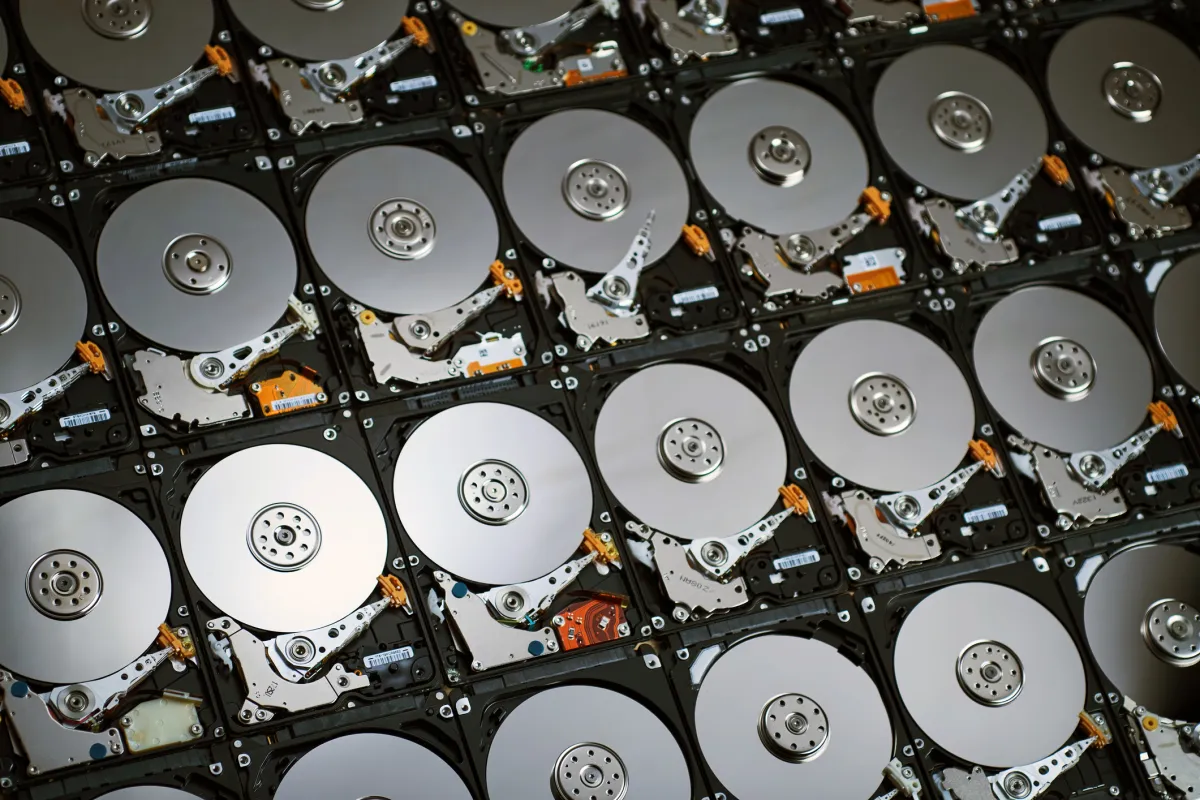
- Visualizing the Immeasurable:To grasp the sheer scale of these critical cybersecurity datasets, we translated abstract digital volumes into tangible physical stacks of 1TB hard drives, offering a relatable, albeit simplified, comparison against iconic landmarks.
- Beyond the Stacks:These colossal data repositories are indispensable for cybersecurity. They fuel the development of advanced threat detection models, train AI, and provide crucial intelligence for understanding the evolving landscape of cyberattacks.
In the ever-escalating digital arms race, the sheer volume of cyber threats can feel abstract, an invisible torrent of malicious code swirling through networks. But what if we could bring that scale into the physical world? What if we could actually *see* the mountains of malware that cybersecurity researchers and services contend with daily?
A recent revelation sparked this very question, contrasting two giants in the cybersecurity data space: vx-underground and VirusTotal. The former, a renowned malware research group boasting what it claims is the largest collection of malware source code, recently posted on X (formerly Twitter) that its archive spans approximately 30 terabytes.
This impressive figure, however, was quickly put into an even more mind-boggling perspective by Bernardo Quintero, founder of VirusTotal. Quintero replied, stating that his service, which scans files for malware using a multitude of antivirus engines, has accumulated an astounding 31petabytesof user-contributed malware samples to date. To truly appreciate this leap, remember that one petabyte is roughly 1,000 times larger than a terabyte. We’re talking orders of magnitude.
The Data Giants: vx-underground and VirusTotal
For context, both vx-underground and VirusTotal play crucial, albeit different, roles in the cybersecurity ecosystem. vx-underground serves as a vital repository for researchers, providing access to historical and contemporary malware source code, enabling deep dives into attack methodologies and evolutionary trends. VirusTotal, on the other hand, acts as a community-driven early warning system, aggregating threat intelligence from millions of daily submissions and offering a multi-faceted view of potential threats.
These repositories, whether housing raw code or executable samples, are goldmines for threat intelligence firms, AI researchers, and cybersecurity companies. They are the training grounds for the next generation of detection models and the historical records that help us predict future attacks. Yet, grasping “30 terabytes” or “31 petabytes” in a meaningful way remains challenging for the human mind.
Visualizing the Digital Deluge: Our Back-of-a-Napkin Approach
The sheer enormity of these datasets prompted a query within our newsroom: What would these colossal data banks *actually* look like if stacked as hard drives? How would they compare to something as familiar as the Eiffel Tower, or even the world’s tallest buildings?
We initially posed this question to an AI chatbot, hoping for a quick, insightful visualization. The results, frankly, were incredibly inaccurate – a stark reminder that while AI is powerful, it still struggles with certain types of creative, comparative reasoning without precise contextual grounding.
So, we reverted to a more traditional, “back-of-a-napkin” method, employing some rough but illuminating arithmetic. Given that both vx-underground and VirusTotal cited “about” these figures, our approximations are perfectly suited for this exercise in visualization.
Our Methodology and Assumptions:
To create a consistent visual, we based our calculations on standard 3.5-inch internal hard drives with a 1 terabyte (TB) capacity. These drives are largely standardized in their physical dimensions, typically measuring 1 inch (approximately 2.54 cm) in height. This consistent height is key for our stacking analogy.
We also made the simplifying assumption that each hard drive provides *exactly* 1 terabyte of usable storage. In reality, due to formatting and overhead, the actual usable capacity is usually slightly less than the advertised amount. However, for the purpose of a grand, illustrative comparison, this assumption introduces negligible error and significantly simplifies the math.
The Stacks Revealed: From Desktops to Skylines
Using an online conversion tool and our chosen hard drive specifications, the results are quite striking:
vx-underground’s 30 Terabytes:
- This volume of malware source code would fill 30 individual 1TB hard drives.
- Stacked one on top of the other, these drives would reach a height of 30 inches, or approximately 2.5 feet.
For a tangible comparison, this reporter stands at 6 feet tall. So, vx-underground’s data stack would barely reach my waist. While substantial for an individual archive, it’s a manageable pile.
VirusTotal’s 31 Petabytes:
- Converting 31 petabytes to terabytes gives us 31,744 terabytes (since 1 petabyte=1024 terabytes).
- This means VirusTotal’s samples would require 31,744 individual 1TB hard drives.
- Stacked vertically, these drives would achieve an astonishing height of 31,744 inches, which translates to about 2,645 feet.
Now, for the architectural comparisons that truly put this into perspective:
- The world’s tallest building, the Burj Khalifa in Dubai, stands at 2,722 feet. VirusTotal’s data stack would be just shy of its immense height, a mere 77 feet shorter.
- The iconic Eiffel Tower in Paris measures 1,083 feet tall. By this measure, VirusTotal’s data repository is equivalent to stacking about two-and-a-half Eiffel Towers on top of each other.
Why These Digital Mountains Matter
Beyond the fascinating physical analogies, the true significance of these massive malware datasets cannot be overstated. They are the bedrock of modern cybersecurity defense. This seemingly endless accumulation of malicious code and samples fuels critical advancements:
- AI and Machine Learning Training:These datasets are essential for training sophisticated AI and machine learning models that can identify new and evolving threats, detect subtle behavioral anomalies, and predict attack vectors long before human analysts could. The more diverse and comprehensive the data, the smarter and more effective these defensive systems become.
- Threat Intelligence and Research:Researchers mine these archives to understand malware families, their origins, propagation methods, and evolutionary paths. This intelligence informs defensive strategies, patching priorities, and proactive security measures for organizations worldwide.
- Zero-Day Vulnerability Discovery:By studying samples, security experts can sometimes uncover previously unknown vulnerabilities (zero-days) that attackers are exploiting, allowing for the development of patches and countermeasures.
- Forensic Analysis:In the aftermath of a breach, having access to vast repositories of malware helps forensic investigators quickly identify the specific strains used in an attack, understand their capabilities, and guide recovery efforts.
The continuous growth of these data stacks underscores the relentless pace of cybercrime. Every new piece of malware, every variant, adds to the collective knowledge that security professionals use to build stronger digital fortresses. It’s a testament to the scale of the challenge and the monumental effort required to stay one step ahead of adversaries.
Bottom Line
From a desk-high stack of source code to a towering monument of samples that rivals the world’s tallest skyscrapers, the physical visualization of malware data reveals a staggering reality: the fight against cyber threats is a battle against an ever-growing, astronomically large, and profoundly complex digital adversary, necessitating continuous innovation in data analysis and artificial intelligence to protect our interconnected world.
When you purchase through links in our articles, we may earn a small commission. This doesn’t affect our editorial independence.
{content}
Source:{feed_title}