
Key Takeaways:
- Evolved Funding, Enduring Ethos:Despite raising its largest funds ever—a $750M core fund and a $1.25B growth fund—Benchmark remains committed to its foundational principle of deeply focused, early-stage partnerships, viewing the larger capital as an “inflation” adjustment and a necessary expansion to capture previously missed opportunities.
- The Power of the Small Partnership:Benchmark’s unique five-partner structure fosters a culture of high-fidelity interaction, mutual admiration, and collective learning, enabling agile decision-making and a deep, unified commitment to founders over hierarchical processes or rigid agendas.
- Intentional Concentration & Trust:The firm embraces a highly concentrated portfolio strategy, particularly for its new growth fund, and operates without formal deal-veto rules. This unconventional approach is underpinned by a profound trust among partners and a shared philosophy of selecting founders who genuinely align with their collaborative, long-term vision.
Benchmark’s Paradox: Scaling Up While Staying Small
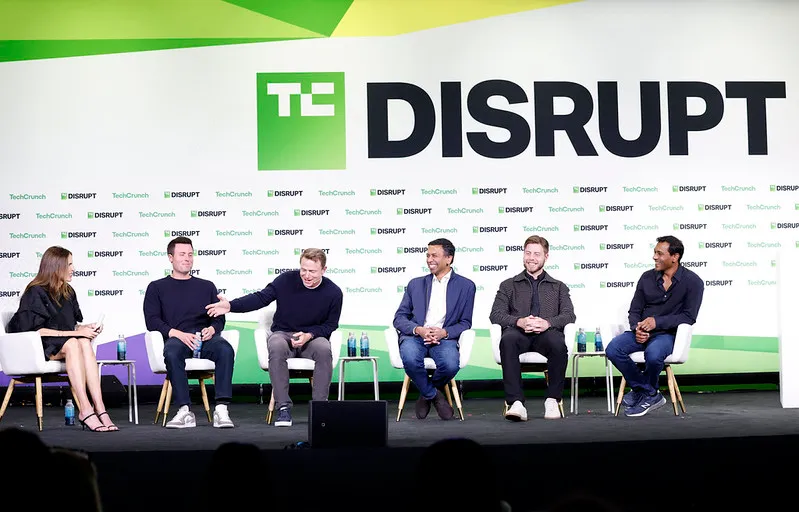
In an industry often characterized by rapid expansion and shifting allegiances, Benchmark, the venerable Silicon Valley venture firm, presents a compelling paradox. Its recent announcement of $2 billion across two new funds—a $750 million core fund and a $1.25 billion growth fund—marks a significant departure from its historical practice of smaller, more concentrated vehicles. Yet, as its five general partners gathered at TechCrunch Disrupt, they painted a vivid picture of a firm resolutely committed to its foundational principles: a close-knit team, a deliberate pace, and an unwavering focus on deep founder partnerships. While the capital commitments have evolved, Benchmark insists its soul remains unchanged, proving that in a world speeding up, sometimes the slowest path forward is the most strategic.
The players may sometimes change, as evidenced by the shift in partners over three years. The capital has certainly changed, with this summer marking only the second time in Benchmark’s 31-year history that it has veered from raising a far smaller vehicle. But at TechCrunch Disrupt, the five current partners convincingly portrayed a close-knit team that’s not about to put the pedal to the metal, even as many of their rivals do exactly that. The world may be drowning in information and economic indicators may point to trouble, but Benchmark appears unfazed, seeing much of the warning signs as products of X-fueled hysteria. They’re investing at the pace they always have: just two or three new bets per year per partner, and their Monday partner meetings still have no agenda. It’s a vision of venture capital that defies conventional wisdom, and here’s how they articulate it.
Adapting to Inflation, Guarding the Craft
For decades, Benchmark has been synonymous with early-stage, hands-on investing. The firm’s decision to raise significantly larger funds—the $750 million core fund and the new $1.25 billion growth fund—might seem at odds with this identity. Peter Fenton, a long-standing partner, clarified this evolution: “The craft that hasn’t changed is the core fund: working closely with founders at the beginning. It’s usually a 10-to-15-year commitment, [working] shoulder to shoulder, and that doesn’t scale.” He explained that the increase in the core fund size was largely an adjustment for “inflation,” correcting a “tactical error” of holding the fund at $500 million for two decades. It’s about maintaining purchasing power in an inflated economy, not a fundamental shift in their core early-stage strategy.
The introduction of the growth fund, however, represents a more significant expansion of Benchmark’s mandate. Fenton candidly admitted that not having a growth-stage vehicle was “a fork in our eye,” causing the firm to miss out on “a number of opportunities that came to Benchmark [that] would have returned somewhere between 10 and 1,000x.” This fund allows Benchmark to support its most successful portfolio companies through later stages, deepening its long-term impact without compromising its early-stage focus. Despite the larger sum, the growth fund will still embody Benchmark’s philosophy of concentration, with Fenton estimating only four to eight investments, aiming for “the agony and ecstasy of a concentrated portfolio.” This deliberate approach underscores their belief that returns come from conviction and deep engagement, not from a high volume of deals.
The Unbreakable Bond of a Small Partnership
At the heart of Benchmark’s enduring identity is its famously small, egalitarian partnership. Ev Randall, who brings experience from firms like Founders Fund and Kleiner Perkins, underscored this unique culture. “Every firm is ultimately a collection of the people within the firm and how they work together,” Randall noted, contrasting Benchmark’s intimate setup with the “very hierarchical, with a 50- or 60-person investment team” models prevalent elsewhere. For Randall, small partnerships offer “a higher level of throughput and fidelity in your conversations, where you don’t feel like you’re making decisions through some Byzantine corporate structure.” He emphasized the importance of finding “your people”—individuals you not only like but also admire and learn from. This rare blend, he explained, was immediately apparent at Benchmark.
This sentiment was echoed by Jack Altman, who joined Benchmark earlier this year after successfully running his own firm and hosting a popular podcast. Altman articulated his decision by highlighting Benchmark’s deep commitment to founders: “So much in this industry gets tied up in money and status, and what I felt from the Benchmark team then, and ten times more as I’ve gotten to know them so well, is it’s a group that really cares about founders and helping companies.” He values the collective intelligence and support of a team that is “so smart and focused and driven to learn it with and from,” emphasizing that there’s “no better place to learn.” For Altman, the allure wasn’t just about capital or status, but about joining a collective dedicated to genuine impact and continuous learning.
No Agenda, No Kibosh: Trust as the Operating System
Perhaps the most iconic manifestation of Benchmark’s unconventional approach is its Monday partner meeting—famously held with “no agenda.” While Jack Altman jokingly admitted to trying to introduce one, Eric Vishria elucidated the philosophy behind this seemingly unstructured gathering: “It’s an ongoing conversation. In a time of rapid change, you’re trying to figure out what’s becoming possible that wasn’t possible six months ago, and who’s bending light.” This organic dialogue allows the partners to share insights from their board meetings, discuss emerging companies, and collaboratively stretch their thinking, even inviting outside experts for dinner to gain fresh perspectives. This constant, fluid exchange is their alternative to rigid systematization, only possible because of the small, trusting group.
Chethan Puttagunta further clarified that the lack of a rigid agenda creates “space to be reactive,” enabling the five partners to collectively assist founders with urgent needs, whether it’s landing an executive or navigating a strategic partnership. This deep-seated trust and fluid collaboration extend even to deal-making. When asked if one partner could “put the kibosh on a deal,” the partners offered a collective shrug and laughter. “Nobody knows. We don’t have rules around it,” Puttagunta stated, with Altman adding, “Because the firm is structured around a low volume of deals, you don’t actually want to have all of this rigor. The lack of structure is a huge asset.” Fenton added a crucial nuance, explaining that if an entrepreneur is polarizing to even one partner, they’re likely not a good fit for Benchmark’s collaborative, long-term partnership model. It’s not about being “cocksure” or a “Shark Tank” dynamic; it’s about genuine alignment and mutual respect from the outset.
A Steady Hand in a Speeding World
In an era where many venture firms are accelerating their investment pace to keep up with faster-growing companies and increasingly competitive markets, Benchmark maintains its measured stride. The partners seem unfazed by economic warning signs, viewing much of the “hysteria” as X-fueled noise. Their commitment to making just “two or three new bets per year per partner” reflects a conviction that quality, depth, and focused partnership yield superior long-term results over volume and velocity. This deliberate approach allows them to truly be “shoulder to shoulder” with founders, a commitment that simply “doesn’t scale” in the traditional sense, but scales profoundly in terms of impact and trust. As companies grow faster than ever, the firm’s partners implicitly suggest that missing out on some opportunities is a worthwhile trade-off for the clarity and concentration that define their brand.
Bottom Line
Benchmark’s journey through evolving markets demonstrates a rare blend of adaptability and steadfastness. By strategically adjusting its fund sizes to meet modern economic realities and capture new growth opportunities, the firm has embraced necessary change without compromising its core identity. Its strength lies in its small, deeply connected partnership—a model that prioritizes trust, mutual respect, and an unwavering commitment to founders over hierarchical structures or rapid-fire deal-making. In a venture landscape often chasing the next big trend, Benchmark continues to prove that focused intensity, collaborative intelligence, and a genuine, long-term partnership ethos remain its most potent competitive advantages.
Inside Benchmark: Navigating AI, IPOs, and the Shifting VC Landscape
At the forefront of venture capital, Benchmark stands as a titan, known for its lean structure, founder-first ethos, and a track record of identifying groundbreaking companies. In a candid discussion, partners Eric Vishria, Chethan Puttagunta, Jack Altman, Peter Fenton, and Sarah Tavel Randall peeled back the curtain on their investment philosophies, the volatile world of AI, and the enduring pull of Silicon Valley.
Their insights offer a compelling snapshot of a venture firm grappling with unprecedented technological shifts, market dynamics, and the constant imperative to back the next generation of innovators.
- The Evolving VC-Founder Pact:Rapid technological evolution, particularly in AI, is leading to increasing overlap and potential conflicts between portfolio companies, challenging traditional exclusivity commitments while emphasizing mutual respect.
- Embracing the Unorthodox:Benchmark thrives on “heretical” bets, often investing in polarizing ideas and founders who defy consensus, acknowledging that such unconventional approaches are where true startup opportunities lie.
- San Francisco’s Unwavering Gravity:Despite distributed work trends, San Francisco remains the unparalleled epicenter for AI talent, capital, and customer acquisition, creating an “iron sharpens iron” ecosystem essential for high-ambition founders.
The Evolving VC-Founder Dynamic
A Foundational Philosophy: Amplifying Strengths
Benchmark’s approach to venture capital is deeply rooted in a commitment to founders. “Part of the reality of venture capital in our business is that we are not going to be part of every successful company, and that’s okay,” reflectsEric Vishria. “There are companies that we identify, we find that the entrepreneur has some great strength, and we want to amplify that strength. And it’s our job to find a way to work with that person. It kind of doesn’t matter how much capital they want to raise, or what structure, or where they are. You just have to work through all that stuff.” This philosophy underscores a flexible, founder-centric model that prioritizes the individual’s vision and potential over rigid investment criteria.
The Challenge of Competing Bets in the AI Era
A burgeoning concern among founders is the practice of VCs backing competing companies. This trend has gained traction as rapid technological evolution blurs industry lines, particularly in the fast-paced AI sector.Vishriaaddressed this head-on: “One of the things we have an ethos around is, we are making a commitment to an entrepreneur, and through that commitment, we’re saying we’re going to work with you in this thing, and whatever that thing is, and we are working closely enough where it matters, and it should matter to them, and as it matters to us.”
However, the reality of swift market changes inevitably leads to conflicts. “The harsh reality of this world is every company is evolving very quickly, and so you do have companies that will naturally evolve from one thing to another, or pivot or change, and you are going to get conflicts. That’s just the reality of the of the kind of current dynamic,”Vishriaconceded. While maintaining confidentiality and avoiding direct, “insane” conflicts (like recent high-profile cases), the commitment to exclusivity in a specific area remains paramount, even as the landscape shifts.
Chethan Puttaguntaattributes this escalating trend to the ambition driving the current AI boom. “And I think people are ultra ambitious in this AI era. As the cost of coding new products effectively goes to zero, founders see a surface area and they want to attack the surface area, and so I think it’s probably going to happen more, where you start to run into each other,” he noted. Despite this, he believes “there’s a way to be there’s a way to maintain that relationship and be respectful.”
The Art of the Investment: From First Bets to Heretical Plays
Conquering the First Deal: Jack Altman’s Experience
Joining a firm with Benchmark’s pedigree comes with an inherent pressure, particularly for a new partner making their first investments.Jack Altmanshared his experience: “I have, a few, and some are recent, so not all are disclosed. My background was software, but since joining, I’ve done chips, robotics and infra.” He described a unique “non-onboarding” process, where partners encouraged him to trust his instincts. “Either Chethan or Eric told me early on, ‘Hey, you’re going to feel tight on your first one. Don’t. You’re going to make many investments while you’re here. This whole game includes crazy power laws. The odds of it being your first are low.’” Altman emphasized the collaborative nature of the firm: “It really is a group dynamic on a lot of these. The investments I’ve made, I don’t think we would have won them if I didn’t have my partners. I don’t know that I would have been able to know how to get to a yes without them.”
Embracing the Unorthodox: The Cerebras Case Study
Benchmark’s investment in Cerebras, an AI chip company, was a significant departure from their typical software-focused portfolio, representing their first hardware bet in a decade.Eric Vishriarecounted the initial skepticism: “We invested in the spring of 2016, in the first round. We hadn’t made a hardware investment in 10 years. The founders seemed good, they had a very simple thesis, and I didn’t understand most of the rest.” He revealed a pivotal moment before the partnership pitch: “On the Sunday night before they came back to pitch the partnership, Peter told me it went against everything he’d learned in venture. Then, after the Monday pitch, he had flipped.” This turnaround highlighted the firm’s capacity for collective instinct and conviction. “That began a journey of lots of ups and downs and many potential deaths of the company along the way, and it’s far from over. The romanticism of falling in love with a founder and an idea is why we do this.”
Peter Fentonelaborated on the essence of such investments: “Andrew and his co-founders are heretics. What they were saying was unorthodox, and you see it today, with people dumping on the stock because it’s polarizing. That’s exactly where we have to be as investors. If it’s consensus, why is there a startup?” This philosophy encapsulates Benchmark’s willingness to lean into contrarian views and support founders whose visions challenge established norms.
Public Markets, IPOs, and AI’s Volatile Reality
Navigating Post-IPO Swings: A “Stomach of Titanium”
The journey from private funding to public trading is often fraught with volatility, as exemplified by Cerebras’s post-IPO performance. After pricing at $185, jumping to $350, and returning near its initial price, the ride has been anything but smooth.Eric Vishriaoffered a pragmatic perspective: “About six weeks before the IPO, I showed the company stock chart after stock chart: CoreWeave, Datadog, DoorDash, Amazon. Peak to trough, it’s insane how many of them move 500% in a year, up and down. So who knows? You control what you can control, and you update the public markets every 12 weeks. Being a public company takes a stomach of titanium, and the employees have to understand that.” This highlights the brutal reality of public market sentiment and the need for internal resilience.
IPO Mechanics: Direct Listings vs. Capital Needs
The discussion inevitably turned to the merits of different IPO processes. Bill Gurley, a former Benchmark partner, has long championed direct listings as a way to avoid the fees and “pop” that benefit bankers and their clients over the company.Eric Vishria, having experienced a direct listing, acknowledged its potential: “I think maybe of this group, I’m the only one who’s worked on a direct listing. It can for sure make sense.” However, he noted a critical distinction for the current AI boom: “I think the reality is for this crop of AI companies, it’s going to be unlikely because they need capital, and they need a lot of capital. At the end of the day, IPOs raise money. Cerebras raised $6 billion. That matters, so I think it’s probably unlikely for this crop just because most of them need capital.” This suggests that for capital-intensive AI ventures, traditional IPOs remain the preferred route for fundraising.
The AI Ecosystem: Hype, Health, and San Francisco’s Enduring Pull
Debunking Doomsayers: The True Health of AI
Amidst concerns about a potential correction, rising borrowing costs, and even the first reported AI bankruptcy (Character AI),Sarah Tavel Randallprovided a nuanced counter-narrative. “Macro is always a fool’s errand to predict with precision. What has changed most since I started investing is the information environment,” she observed. She clarified the context around Character AI, noting it was an acqui-hired “corpse” that had already been sold for billions, rather than a true indicator of an AI “chill effect.”
Randall pointed to the underlying strength of the AI market, particularly the demand for compute. “If you look at the market today and you see where CoreWeave and Nebius and all these things are trading, those numbers are are due to the ARR figures of two private companies that will probably be public in the next 12 months… There’s so much capex and there’s so much investment that runs through the estimated and projected health of OpenAI and Anthropic.” She emphasized: “Our companies see so much demand that they can’t get enough compute to serve customers who are willing to pay them at good gross margins. There’s nothing inherently unhealthy about the AI ecosystem. What’s unhealthy is the volatility from data points that are often untrue or exaggerated for clicks.” Randall believes that public listings for OpenAI and Anthropic would “be healthy, so the market stops swinging 5% to 10% every time an anonymous account updates an estimate.”
San Francisco’s Irresistible Gravity
The resurgence of AI has firmly re-established San Francisco as the global epicenter for tech innovation. The question of whether founders *must* be in San Francisco now elicited a strong consensus.Jack Altmanacknowledged, “I don’t know that you have to be here as a founder, but I think it is right now by far the easiest place to get talent, capital, and customers. Probably everyone [on the team] works with companies that are not in San Francisco, but we’re also here in San Francisco every day, so I wouldn’t say you have to, but I’d say: strong bias for our particular setup.”
Peter Fentonunderscored the historical data: “Historically, 90%-plus percent of the capital returns have come from companies founded here. There are beautiful stories outside that dense probability distribution — Shopify is a great example, Ramp — but the ecosystem effect that occurs when you have a successful company and that leads to a background of great executives [and] ambitious people, the bar of success gets raised. I don’t think it has systemically happened anywhere quite like here.”
Sarah Tavel Randallpainted an even more vivid picture of the magnetic pull: “I’m trying to think of a non-SF based company that I’ve met with in the last 18 months that wasn’t actively saying that they were spending time in San Francisco. They’ve either opening an office in San Francisco, they’re spending half of their time in San Francisco, or they’re planning to move out to San Francisco. Iron sharpens iron. If you want to be around peers who are going to make you the best version of yourself, and it’s hard to think of a city that does that better than San Francisco in the current era that we’re in now with AI here.”
Bottom Line
Benchmark’s partners offer a masterclass in navigating the complexities of modern venture capital. Their unwavering commitment to founders, willingness to embrace “heretical” ideas, and a pragmatic understanding of both public market volatility and the underlying health of the AI ecosystem define their strategy. While the tech landscape continues its rapid evolution, their insights confirm that core principles—backing exceptional talent, fostering innovation, and recognizing the critical mass of an unparalleled ecosystem like San Francisco—remain the bedrock of enduring success in venture capital.
When you purchase through links in our articles, we may earn a small commission. This doesn’t affect our editorial independence.