
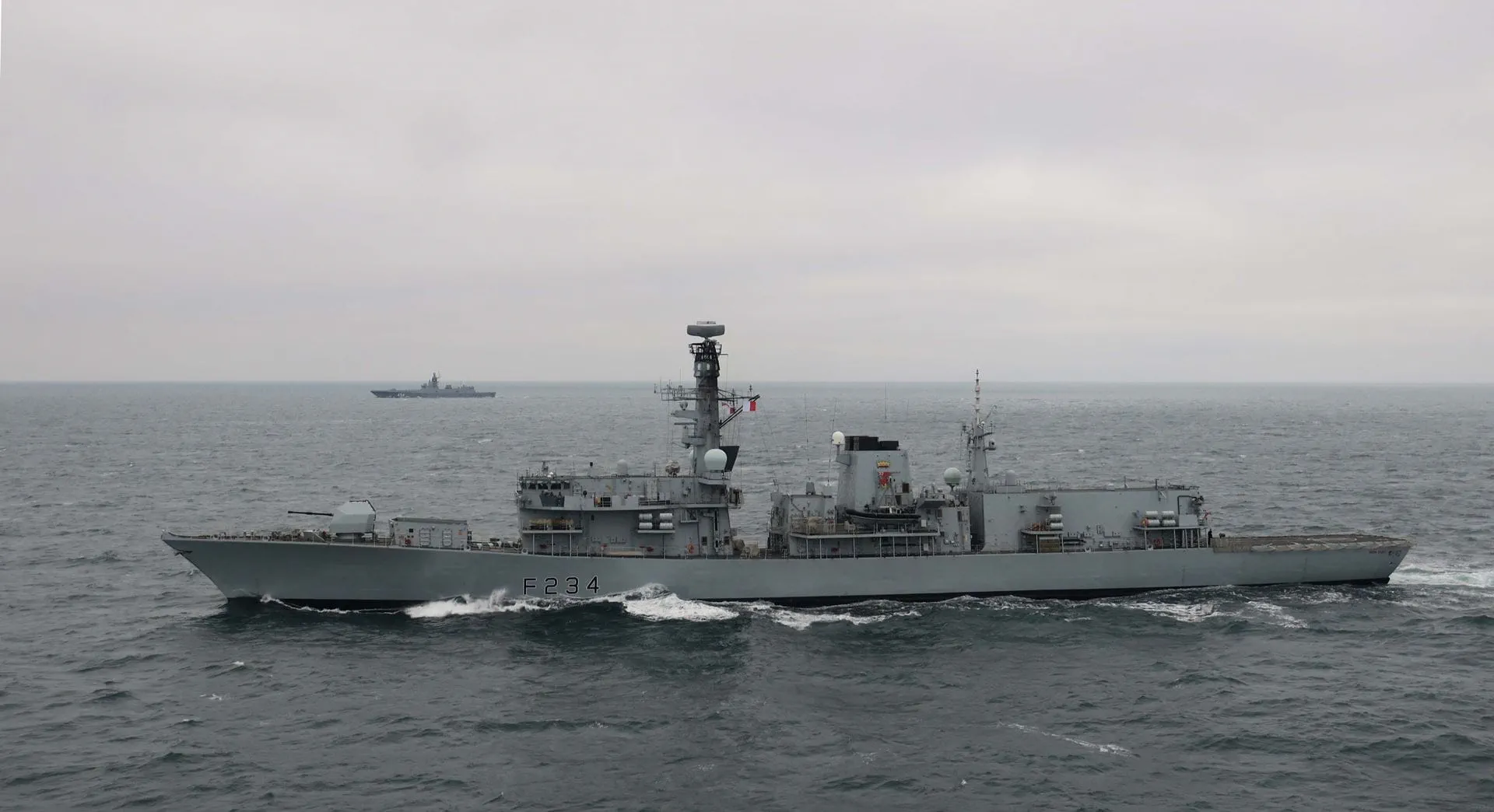
UK Defence Spending Under Scrutiny Over Millions Invested in Decommissioned Warships
LONDON –The United Kingdom’s Ministry of Defence (MoD) is facing parliamentary scrutiny over significant public expenditures on naval vessels that were subsequently taken out of service, with one major upgrade cancelled mid-programme. Written evidence submitted to the Defence Committee reveals that over £100 million was spent on extending the life of HMS Iron Duke, a Type 23 frigate, only for the vessel to be withdrawn from service shortly after. An additional £4.7 million was allocated to a planned sonar upgrade for the same ship, a project later abandoned.
These disclosures came in response to follow-up questions from the Defence Committee’s High North inquiry. The committee, tasked with examining the UK’s defence interests and capabilities in the Arctic region, had pressed defence ministers during oral evidence on July 15. Members sought precise details on the deep maintenance costs for HMS Iron Duke and HMS Richmond, another Type 23 frigate, and clarity on why it was ultimately deemed not cost-effective to keep either ship in active service.
HMS Iron Duke: £102.9 Million Investment Followed by Early Withdrawal
The life extension programme for HMS Iron Duke, a general-purpose frigate designed for anti-submarine and anti-surface warfare, incurred costs of £102.9 million. This extensive maintenance period spanned 208 weeks, running from May 2019 to May 2023. During this time, the vessel underwent significant upgrades, including the installation of new diesel generators and enhancements to its Sea Ceptor missile system and Artisan radar, aiming to extend its operational lifespan and improve its capabilities.
However, despite this considerable investment and upgrade work, the MoD confirmed that HMS Iron Duke was taken out of service in 2025. This means the vessel provided approximately two years of operational service post-refit, a period significantly shorter than the four years it spent in maintenance. This timeline directly addressed a concern raised by the Defence Committee, which had questioned whether “the refit took longer than the payback of service.”
When asked for the “precise reason that HMS Iron Duke was taken out of service,” the Ministry of Defence stated, “HMS Iron Duke was taken out of service because the ship required significant additional structural repairs and investment which could not be justified given its remaining service life and the availability of other frigates to meet operational requirements.” This indicates a complex assessment of the vessel’s structural integrity and the financial viability of further repairs against its projected operational lifespan and the broader context of the Royal Navy’s fleet composition.
Cancelled Sonar Upgrade: £4.7 Million Spent on Abandoned Plan
Further scrutiny was directed at a cancelled project to equip HMS Iron Duke with a towed sonar array. This highly specialized sonar system, known as Sonar 2087, is critical for deep anti-submarine warfare (ASW) operations. Such capabilities are particularly vital in challenging maritime environments like the Greenland-Iceland-United Kingdom (GIUK) gap – a strategically important choke point for naval movements. Converting HMS Iron Duke would have transformed it from a general-purpose frigate into a dedicated ASW platform, addressing a long-standing shortage of such specialist hulls within the Royal Navy.
Approximately £4.7 million was spent on this conversion programme before its cancellation. The MoD justified the decision by stating, “The Ministry of Defence keeps all capability programmes under regular review to ensure they remain affordable, deliver value for money, and align with operational priorities.” It added that the cancellation was based on “a comprehensive assessment,” which considered the platform’s remaining service life, the extensive time required to complete the conversion, and “competing operational priorities.” Consequently, resources were “re-prioritised to deliver greater operational effect elsewhere.”
HMS Richmond: £72 Million Refit Precedes Decommissioning
Similar questions were raised regarding HMS Richmond, another Type 23 frigate, which also underwent a significant life extension programme costing £72.0 million. This refit lasted 126 weeks, from October 2017 to June 2020. Despite this investment, HMS Richmond was also slated for withdrawal from service alongside HMS Iron Duke in 2025.
The Ministry of Defence explained its decision regarding HMS Richmond: “HMS Richmond was found to require a major refit to address structural defects. This would have produced limited availability before her planned out of service date.” The department concluded that “focusing investment and resources on sustaining the remaining Type 23 frigates and supporting the entry to service of the Type 26 and Type 31 frigates was deemed better value for money.” This strategic rationale highlights the Royal Navy’s ongoing efforts to manage its existing fleet while transitioning to a new generation of warships.
Broader Context: A Fleet in Transition
The Type 23 frigates, also known as the Duke-class, have served as the backbone of the Royal Navy’s surface fleet for decades. These versatile vessels have provided crucial capabilities across various mission sets, from anti-submarine warfare to counter-piracy operations and escort duties. However, like all naval assets, they have finite operational lives and are now reaching the end of their service careers.
The decommissioning of vessels such as HMS Iron Duke and HMS Richmond is part of a broader fleet modernization strategy. The Royal Navy is in the process of transitioning to its successor classes: the advanced Type 26 Global Combat Ships and the more general-purpose Type 31 frigates. Both programmes are currently underway. The first of class for each, HMS Glasgow (Type 26) being built on the Clyde and HMS Venturer (Type 31) at Rosyth, are still in various stages of construction and fitting out, working towards their operational readiness.
This period of transition inevitably creates a temporary reduction in the overall number of frigates available to the fleet. This factor likely influenced the MoD’s decisions regarding the cost-effectiveness of further extensive investment in the older Type 23s, weighing continued maintenance against the readiness of future capabilities. The persistent shortage of specialist anti-submarine warfare hulls, particularly those equipped with the crucial Sonar 2087 towed array, has been a known challenge for the Royal Navy. The initial plan to convert HMS Iron Duke was an attempt to mitigate this specific capability gap, underscoring the strategic importance placed on maintaining robust ASW capabilities in a complex global security environment. The cancellation of this conversion, despite the initial investment, illustrates the difficult choices defence planners face in balancing immediate operational needs with long-term fleet modernization objectives.
Why This Matters
The decisions surrounding the maintenance, upgrades, and subsequent decommissioning of HMS Iron Duke and HMS Richmond raise significant questions concerning financial stewardship, long-term defence planning, and the Royal Navy’s operational capabilities. Firstly, the expenditure of over £100 million on a vessel that provided only two years of operational service post-refit, coupled with the £4.7 million spent on a cancelled upgrade, highlights potential inefficiencies in defence procurement and maintenance cycles. Such substantial costs borne by taxpayers necessitate rigorous accountability and transparency in how defence funds are allocated and managed.
Secondly, these events underscore the inherent challenges of modernizing a naval fleet while maintaining current operational commitments. While the transition to the advanced Type 26 and Type 31 frigates is vital for future capabilities and technological superiority, the interim period exposes potential gaps in the Royal Navy’s immediate operational strength, particularly in critical areas like anti-submarine warfare. The decision to decommission vessels after significant investment, rather than fully extending their service life, reflects a strategic choice to consolidate resources on new builds, but it inevitably carries implications for immediate naval presence and capability projection.
Finally, the scrutiny from the Defence Committee reflects Parliament’s essential role in overseeing defence spending and strategy. The questions raised by the High North inquiry specifically point to broader concerns about the UK’s ability to project power and protect its interests in strategically important regions, such as the Arctic, and to meet its NATO commitments. Ensuring that defence investments deliver optimal value for money and genuinely enhance national security remains a paramount concern for both policymakers and the public, shaping confidence in the nation’s defence capabilities and its international standing.