
Key Takeaways:
- Accelerated Defence Sector Investment:Nato Secretary-General Mark Rutte’s urgent call for European arms manufacturers to boost investment and production signals an unprecedented acceleration in defence spending, directly impacting companies like Rheinmetall, Safran, Airbus, Saab, MBDA, and Leonardo.
- Geopolitical Catalysts Drive Demand:Geopolitical tensions, including the US withdrawal of troops from Germany, reports of critical munitions depletion, and US demands for increased allied contributions, are creating powerful, albeit volatile, demand signals for the European defence industrial base.
- Strategic Autonomy and Supply Chain Focus:The push for rapid capacity expansion extends beyond production to encompass securing raw materials, strengthening supply chains, and reducing dependence on critical components from China and Taiwan, highlighting a broader strategic imperative for European industrial self-reliance.
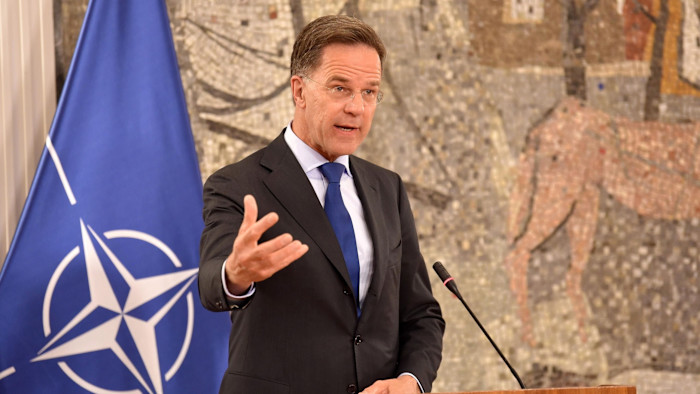
Brussels, Belgium —The corridors of European defence are humming with a renewed sense of urgency, signaling a potential boom for the continent’s arms industry. Nato Secretary-General Mark Rutte is poised to convene a pivotal meeting next week, pressing Europe’s leading defence contractors to significantly ramp up investment and production. This aggressive push is not merely a strategic imperative for strengthening Europe’s military capabilities; it carries profound implications for market valuations, investment flows, and the long-term outlook of the defence sector.
Rutte’s upcoming Brussels meeting with top European defence groups is designed to accelerate industrial expansion ahead of Nato’s annual summit in Ankara this July. Industry insiders familiar with the matter told the Financial Times that companies have been specifically asked to detail major investments and their capacity to boost output, with a particular focus on critical areas such as air defence systems and long-range missiles. While Rutte routinely engages with defence executives, the scale and focus of this gathering — bringing together a large number of industry leaders — underscore the alliance’s acute need to demonstrate tangible progress on industrial readiness.
Among the anticipated attendees are representatives from Europe’s defence heavyweights, including Rheinmetall, Safran, Airbus, Saab, MBDA, and Leonardo. The silence from most of these firms, with Airbus stating it does not comment on “private, informal meetings” and others declining comment or not responding, speaks to the high stakes and sensitive nature of these discussions.
The impetus for this industrial mobilization is multifaceted, rooted deeply in evolving geopolitical dynamics and the perceived need to recalibrate transatlantic security arrangements. Sources indicate that a key driver is the desire to address US President Donald Trump’s long-standing demands for greater defence spending from European allies and his reported anger over what is perceived as the alliance’s failure to adequately support his “war against Iran.” Beyond appeasing Washington, the investments are critically aimed at fostering greater European strategic autonomy, reducing the continent’s reliance on the US amidst growing concerns about Washington’s commitment to the region. This shift towards self-sufficiency is a powerful, long-term market signal for European defence firms.
At last year’s Nato summit in The Hague, members agreed to an ambitious push towards increasing defence spending. While the established Nato target is 2 per cent of GDP, Trump’s call has consistently urged members to not only meet but exceed this threshold. Focusing the Ankara meeting on concrete arms deals and production targets would allow Nato to demonstrate the tangible impact of these spending commitments, offering a visible return on investment for member states and a potential political win for the US president. As one official briefed on the preparations put it, “It’s about making the defence spending increase look more real.”
Crucially, Rutte is pressing European defence companies to invest rapidly, without necessarily waiting for the certainty of significant new government procurement contracts. This represents a challenge to the traditional procurement model and a significant ask from a capital markets perspective, where long-term visibility on orders often drives investment decisions. European arms companies and defence ministries have historically clashed over the root causes of the continent’s production shortfalls. Firms often argue that governments fail to sign enough long-term contracts to justify massive capital expenditures, while states counter that the sector has not scaled up production capacity quickly enough in response to emerging threats. Resolving this tension will be critical for unlocking private sector capital.
Despite these historical frictions, Rutte is also seeking direct input from companies regarding the specific barriers to increasing production. While addressing ammunition shortages has been a priority, access to long-range missiles now stands as a primary concern for European capitals. Germany, for instance, is actively attempting to procure American Tomahawk cruise missiles to bolster its defences, a move made more urgent following reports of the Pentagon scrapping plans to deploy its own equipment and burning through “years” of critical munitions in recent conflicts. Simultaneously, Europe is intensifying pressure on domestic companies to accelerate the development of indigenous alternatives, signaling robust R&D funding and production opportunities.
Recent events have served as potent “wake-up calls” for European leaders and investors alike regarding the urgent need to bolster industrial capacity. The Pentagon’s early May announcement of plans to withdraw 5,000 troops from Germany, reportedly amid a spat between Trump and Chancellor Friedrich Merz over the Iran conflict, further underscored the imperative for Europe to enhance its self-reliance. This reduction in US presence directly translates into increased demand for European-sourced capabilities to fill potential security gaps.
The financial implications are staggering. If European Nato allies were to significantly increase their spending towards and potentially beyond the 2 per cent GDP target, it could translate into a combined increase in annual defence expenditure reaching hundreds of billions of dollars over the next decade. Nato officials are targeting headline agreements in areas where European armies are most reliant on the US: air defence, long-range precision-strike missiles, and advanced intelligence and surveillance capabilities, including space satellites. These are clear growth segments for investors to watch.
Next week’s meeting will see companies present their plans for new factories, additional personnel, strategies for securing crucial raw materials, and initiatives to strengthen their complex supply chains. A critical component of these discussions will also involve strategies to reduce dependence on Chinese and Taiwanese components, a de-risking effort that will impact global supply chains and potentially foster new European capabilities in critical component manufacturing. A Nato official affirmed, “The secretary-general regularly meets with industry and financial institutions from across the alliance to encourage increased production, innovation and investment to meet our capability needs.”
Additional reporting by Sarah White in Paris
Market Impact:
The urgent push from Nato, spearheaded by Secretary-General Rutte, signals a sustained period of growth and capital expenditure for Europe’s defence sector. Investors are likely to view this as a strong buy signal for key players like Rheinmetall, Saab, and Leonardo, which are directly positioned to benefit from increased orders for ammunition, air defence, and long-range missiles. The emphasis on pre-contractual investment, while challenging traditional procurement models, indicates a fundamental shift in demand dynamics, potentially rewarding companies willing to front-load capacity expansion. This drive for strategic autonomy will also spur innovation and M&A within the European defence technology landscape. Furthermore, the focus on supply chain resilience and reducing dependence on Asian components will create opportunities for European suppliers in materials, advanced manufacturing, and dual-use technologies, while potentially raising input costs for those unable to localize. Overall, the defence sector is poised for significant re-rating, driven by geopolitical imperatives turning into tangible revenue and earnings growth, though execution risk and the long-term commitment of government funding remain key variables for investors to monitor.