
Stay informed with free updates
Simply sign up to the War in Ukraine myFT Digest — delivered directly to your inbox.
### Key Takeaways
1. **Energy Market Volatility:** Escalating drone strikes, particularly on critical infrastructure like the Moscow Oil Refinery, directly threaten global energy supply chains and refining capacity, likely fueling upward pressure on crude oil and refined product prices, and exacerbating existing inflationary concerns.
2. **Heightened Geopolitical Risk Premium:** The intensified tit-for-tat attacks signify a significant escalation in the conflict, driving up the geopolitical risk premium for investors in Eastern Europe and broader emerging markets, impacting sovereign bond yields, currency stability, and foreign direct investment appetite.
3. **Economic Warfare & Sanctions Efficacy:** Ukraine’s strategic targeting of Russia’s energy sector underscores an ongoing economic warfare strategy aimed at depleting Moscow’s war chest, while Russia’s sustained attacks on Ukrainian infrastructure highlight the enduring economic costs of the conflict and the ongoing debate over the effectiveness of international sanctions.
President Volodymyr Zelenskyy has declared Ukraine’s latest long-range drone strikes, which tragically killed three individuals in the Moscow region, as “entirely justified” — a direct and defiant response to Russia’s unprecedented aerial assault on Kyiv earlier this week. This escalating exchange of attacks carries significant implications for global markets, particularly in the energy sector, and casts a lengthening shadow of uncertainty over geopolitical stability.
Russian authorities on Sunday confirmed the fatalities, with three in the Moscow region and a fourth in the Belgorod region bordering Ukraine, following a massive, overnight drone attack. Russia’s defence ministry reported an extraordinary 556 drones downed across the country, marking one of the largest Ukrainian barrages since the onset of Russia’s full-scale invasion in 2022. The sheer scale of this attack underscores a critical shift in the conflict’s dynamics, introducing a new layer of risk for infrastructure and civilian populations far from the front lines.
“Our responses to Russia’s prolongation of the war and its attacks on our cities and communities are entirely justified,” Zelenskyy stated on X, articulating Ukraine’s strategic intent. “This time, Ukrainian long-range sanctions reached the Moscow region, and we are clearly telling the Russians: their state must end its war.” His post notably included video footage purporting to show Ukrainian drones impacting the Moscow Oil Refinery, the capital region’s largest such facility. This targeting of vital energy infrastructure is not merely a military tactic; it is a calculated move in an economic war, designed to disrupt Russia’s primary revenue stream and its capacity to sustain military operations.
Moscow Mayor Sergey Sobyanin corroborated damage to structures within the refinery grounds, owned by Gazprom Neft, reporting the involvement of approximately 120 drones over a 24-hour period and 12 injuries. Attacks on energy infrastructure of this magnitude instantly trigger market jitters. The Moscow Oil Refinery is a key producer of gasoline and diesel for the region, and any significant disruption to its operations can lead to immediate spikes in refined product prices, influencing global benchmarks like Brent crude and WTI, and further stoking inflationary pressures worldwide. Insurers are likely to reassess premiums for critical infrastructure in conflict-adjacent territories, adding to operational costs.
Zelenskyy’s vow of retribution followed Wednesday’s devastating Russian bombardment of Ukrainian cities. Russia unleashed dozens of missiles and over 1,400 drones in a relentless 24-hour assault that claimed 24 lives in Kyiv, marking the largest combined air attack of the war. Reports that the cruise missile striking an apartment building in the Ukrainian capital was produced with western components this year raise concerns about the efficacy of existing sanctions regimes and the persistent leakage of dual-use technologies, prompting renewed scrutiny from international bodies and potentially leading to tighter export controls. This has direct implications for global supply chains and the compliance burden on businesses operating internationally.
After convening with Ukrainian military and intelligence chiefs on Friday, Zelenskyy explicitly stated Kyiv was “defining targets for our next long-range sanctions against Russia.” He elaborated, “Ukraine will not allow any of the aggressor’s strikes that take the lives of our people to go unpunished,” adding that Kyiv had grounds to retaliate “against Russia’s oil industry, military production and those directly responsible for committing war crimes against Ukraine and Ukrainians.” This clear articulation of targeting strategy against Russia’s economic backbone signals a prolonged period of energy market instability, as both sides leverage economic pressure points. Traders and analysts will closely monitor any further hits to Russian crude processing capacity, which could tighten global supplies and drive up the cost of petroleum products.
On Sunday, the Ukrainian leader tragically reported 52 deaths and 346 injuries, including 22 children, from the week’s attacks. He detailed Russia’s staggering deployment of over 3,170 attack drones, more than 1,300 guided aerial bombs, and 74 missiles of various types against Ukraine throughout the week. Ukraine’s Air Forces reported managing to shoot down or divert 279 of 287 Russian drones, including jet-powered versions, underscoring the relentless nature of the aerial conflict and the immense financial cost of air defense for Ukraine, largely supported by international aid.

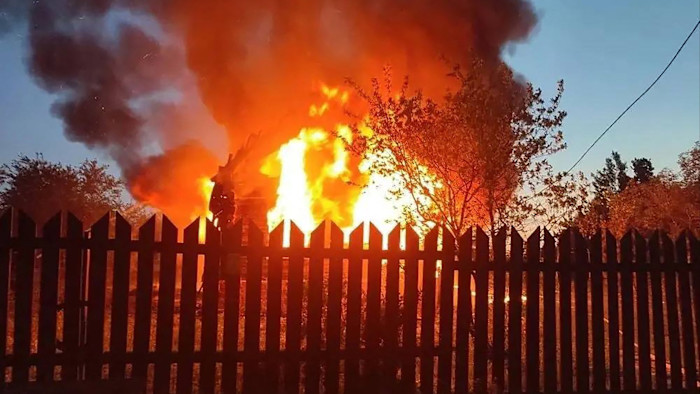
Moscow area residents, via Telegram, reported multiple explosions around the Russian capital, accompanied by the sounds of air defenses intercepting Ukrainian drones. Videos showed drones descending on the Moscow region and thick black smoke rising from the oil refinery. Zelenskyy’s assertion, “The concentration of Russian air defence in the Moscow region is the highest. But we are overcoming it,” highlights the ongoing technological arms race and the growing vulnerability of even heavily defended areas, which impacts investor confidence in national security and stability.
Residential buildings sustained damage, according to Russian authorities, and all four airports in the Russian capital reported disruptions. Drone debris reportedly fell on the grounds of Sheremetyevo, Russia’s largest airport, though without causing significant damage. Such disruptions, even minor, incur economic costs from flight delays, logistical bottlenecks, and the perception of insecurity, deterring business travel and foreign investment into Russia.
The attacks come as peace talks remain stalled, primarily due to President Putin’s unwavering determination to annex the Donbas region—a concession President Zelenskyy has resolutely refused. This impasse underscores the protracted nature of the conflict, ensuring continued geopolitical uncertainty and a lack of a clear off-ramp for de-escalation, which fundamentally weighs on long-term investment horizons for the region and contributes to global risk aversion.
Russia and Ukraine have significantly escalated air strikes against each other this spring. Kyiv’s deliberate focus on Russia’s oil and gas sector is a concerted effort to cripple Moscow’s energy revenues, paralyze its military logistics, and undermine the economic engine powering its war effort. This strategy, if successful, could have profound impacts on global energy markets, potentially leading to a re-evaluation of Russia’s role as a reliable energy supplier and prompting shifts in global energy trade routes and partnerships.
Conversely, Russia’s brutal winter campaign against Ukrainian energy infrastructure pushed Kyiv and much of the country to the brink of catastrophe. Moscow has subsequently scaled up these attacks with massive combined missile and drone strikes, reportedly in preparation for a summer ground offensive. This ongoing destruction of Ukrainian infrastructure not only exacts a devastating humanitarian toll but also incurs immense future reconstruction costs, estimated in the hundreds of billions of dollars, for which international financing will be crucial. These costs will likely require significant international aid and long-term financial commitments, placing additional burdens on global economies and development budgets.
### Market Impact
The latest escalation of drone strikes, particularly on vital energy infrastructure such as the Moscow Oil Refinery, immediately elevates the geopolitical risk premium across financial markets. Investors can anticipate increased volatility in crude oil and refined product futures, with potential upward price movements if supply disruptions are sustained. This also impacts the global inflation outlook, complicating monetary policy decisions for central banks. Beyond energy, the prolonged and intensified conflict will likely depress investor sentiment towards emerging markets, particularly those with strong ties to the region, leading to capital outflows and currency depreciation in some instances. Defense sector stocks, conversely, may see a boost due to increased demand for military hardware and technologies. Furthermore, the damage to civil infrastructure and disruptions to air travel in Russia underscore broader economic costs, impacting logistical chains and business operations, while Ukraine’s ongoing economic resilience remains heavily dependent on sustained international financial and military support, influencing sovereign debt markets and aid commitments. The absence of a clear path to peace ensures continued market uncertainty and sustained risk aversion.