
**Long Island Rail Road Strike Ends as Deal Reached Between Transit Authority and Unions**
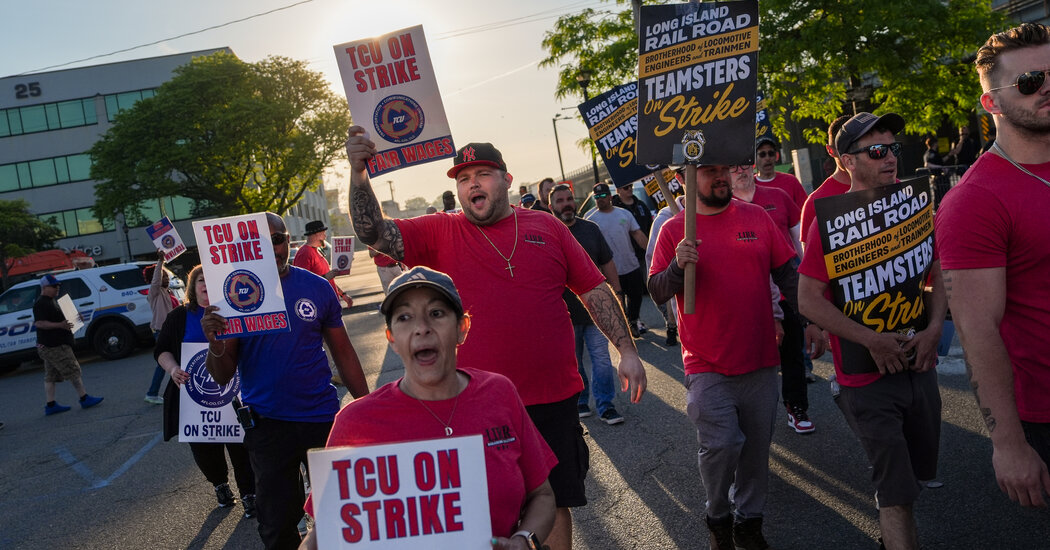
New York – Transit authorities and workers’ unions announced on Monday, May 20, that they have reached a tentative agreement, effectively ending a three-day strike that had paralyzed the Long Island Rail Road (LIRR), America’s busiest commuter rail service. The strike, which began early Saturday morning, had severely disrupted the daily routines of approximately a quarter-million weekday riders, generating widespread commuter frustration and significant economic strain across the region.
Officials confirmed that LIRR service, which typically transports about 270,000 individuals daily between New York City and its eastern suburbs on Long Island, would commence a gradual resumption on Tuesday, May 21. Full service restoration is anticipated in time for the crucial evening rush hour, alleviating concerns for hundreds of thousands ahead of major events and the upcoming Memorial Day holiday weekend.
Governor Kathy Hochul, speaking at a news conference late Monday alongside officials from the Metropolitan Transportation Authority (MTA), expressed triumph regarding the resolution. She underscored that the newly brokered deal would prevent the necessity of raising taxes or increasing transit fares, a key objective for her administration. While specific details of the labor agreement were not immediately disclosed, officials noted that the contract must still undergo a ratification process by union members before becoming final.
“I always believed we could reach a good, fair compromise that achieved two principles,” Governor Hochul stated. “Protecting affordability for Long Islanders and commuters, while giving fair wages to employees.” Her remarks highlighted the delicate balance struck between fiscal responsibility and equitable compensation for the transit workforce.
The resolution brought an end to what many commuters described as a “nightmare” scenario. Throughout the three-day shutdown, thousands of individuals who depend on the LIRR for their daily commutes experienced a stark glimpse into the potential chaos of a protracted labor dispute. Commuters resorted to a complex and often unreliable patchwork of alternative transportation methods, including crowded buses, improvised carpools, and extended subway journeys, all in an effort to arrive at their workplaces on time. Some companies took extraordinary measures, such as renting hotel rooms for employees, while others encouraged or mandated remote work to mitigate the impact.
The personal toll of the strike was evident in numerous commuter anecdotes. Vanessa Zhang, 38, interviewed Monday morning at the Hicksville station on Long Island, vividly described her ordeal. “Three hours going to work is just not worth it — my job doesn’t pay that much,” she remarked, having narrowly missed the last shuttle bus provided by transit officials to Queens. Her remaining options were an unfamiliar and complex network of local buses or an expensive ride-sharing service. Faced with these prospects, Ms. Zhang ultimately decided to take a sick day, a choice many likely mirrored across the affected region.
The strike involved members of five unions, representing approximately half of the LIRR’s workforce—more than 3,500 employees. This vital group includes engineers, signal workers, and other personnel crucial to the safe and efficient operation of the rail system. Their walkout on Saturday followed three years of unsuccessful negotiations aimed at securing higher wages. Union representatives highlighted that their members had not received a pay raise since 2022, a point of significant contention in an area with a high cost of living. Kevin Sexton, national vice president of the Brotherhood of Locomotive Engineers and Trainmen, indicated that the unions would first discuss the specifics of the deal with their members, expressing confidence that the agreement would be ratified.
While official details were scant, sources familiar with the negotiations indicated that the agreement includes a wage increase effectively amounting to 4.5 percent in 2026, spread over a period slightly longer than a year. This figure represents a compromise, as the unions had initially sought a 5 percent increase, while the MTA’s previous offer stood closer to 3 percent. The concession from both sides reflects the intense pressure to resolve the dispute.
The cessation of service was rapidly escalating into a painful ordeal not only for individual riders but also for the broader regional economy. The state comptroller’s office had estimated that the strike could cost the region an alarming $61 million per day in lost economic activity, impacting businesses, tourism, and overall productivity. Furthermore, the ongoing dispute was becoming a growing political liability for Governor Hochul, who faces a re-election campaign this year. The pressure to secure a resolution intensified throughout Monday. Earlier in the day, Gary Dellaverson, a former MTA executive and seasoned labor negotiator who had advised the authority in the talks, had expressed “no confidence” that a deal was imminent, underscoring the eleventh-hour nature of the agreement.
The urgency was further amplified by several significant upcoming events. The New York Knicks were scheduled to play the Cleveland Cavaliers in the first game of the Eastern Conference finals at Madison Square Garden on Tuesday night, with thousands of fans typically relying on the LIRR for transportation. Moreover, Memorial Day, a major holiday when countless New York City residents flock to Long Island for leisure and family gatherings, was less than a week away, threatening widespread travel chaos had the strike continued.
During earlier stages of negotiations, the unions had expressed a willingness to accept a retroactive 9.5 percent wage increase covering the previous three years, a deal structure consistent with what the MTA had recently offered to several other transit and civil service unions. However, their subsequent demand for an additional raise of up to 5 percent for the current year distinguished them, exceeding the agency’s offers to other union groups. This higher demand became a major sticking point.
The MTA consistently argued that acceding to the unions’ higher wage demands could have severe repercussions, potentially leading to increased fares for passengers or significant reductions in service across its network. The authority emphasized that it negotiates with over 80 different unions, and granting substantially higher wage increases to one group could set an expensive precedent, compelling it to meet similar demands when other contracts came up for renewal. Conversely, the unions pointed to the recommendations of two independent federal review panels, which had supported a higher wage increase than the MTA’s initial offers. They also asserted their unwillingness to concede other parts of their existing contract, such as modifications to longstanding work rules, which they argued could effectively reduce their overall income or benefits.
On Monday, before the breakthrough, the two sides remained approximately one percentage point apart on the proposed wage increases for 2026. Another significant point of contention was an MTA proposal that would have required new employees to shoulder a greater share of health care costs under a different model than that used by current employees. This proposal was rejected by the unions, underscoring their commitment to maintaining existing benefits.
According to MTA figures, the average cash compensation for members of the five holdout unions stood at over $136,000 in 2025, positioning them among the highest-paid rail workers in the nation. Despite these figures, leaders of the negotiating unions maintained that their workers’ earnings were insufficient to keep pace with the exceptionally high cost of living in the New York metropolitan area, arguing for adjustments that reflected the economic realities faced by their members.
In response to the strike, which effectively shut down 126 rail stations across the region, the MTA implemented a free shuttle bus service. This limited service operated between a select number of Long Island stations and two key subway stops in Queens, attempting to provide a crucial, albeit insufficient, lifeline for stranded commuters. The authority had warned that these buses could accommodate only about 13,000 riders during the peak morning and evening rush hours. By Monday afternoon, however, fewer than 2,200 riders had utilized the service, indicating that many found alternative means or simply opted not to travel. Reserving these emergency buses came at a considerable cost to the agency, estimated at about $550,000 per day.
Interviews with stranded riders revealed a complex mix of public sentiment. Many expressed sympathy for the unions’ demands for fair wages, acknowledging the challenges of living in the region. However, this sympathy often came with limits, particularly as the personal and economic disruptions mounted. Mandy Ramzan, 50, a resident of Long Island City in Queens, was observed in a lengthy queue of rerouted commuters at a bus stop on Roosevelt Avenue in Flushing. Her journey involved transferring from the No. 7 subway train in an attempt to reach her job as the director of an assisted living center in Great Neck, Nassau County. This significant detour was adding an extra hour to her already lengthy morning commute, a common grievance among those affected.
**Why This Matters**
The resolution of the Long Island Rail Road strike carries significant implications beyond the immediate resumption of train service. Firstly, it underscores the critical economic fragility tied to public transportation infrastructure in major metropolitan areas. The estimated $61 million daily economic loss during the strike highlights how deeply the regional economy, from local businesses to major financial institutions, relies on the uninterrupted flow of commuters. Prolonged disruptions can erode business confidence, reduce consumer spending, and impact the overall productivity of a region.
Secondly, this agreement sets an important precedent for future labor relations within the Metropolitan Transportation Authority and potentially across other transit agencies in the United States. The MTA negotiates with over 80 unions, and the terms of this deal, particularly regarding wage increases and health care contributions for new employees, will be closely watched. It demonstrates the power of collective bargaining and the leverage workers can exert when providing essential services, even against a backdrop of public inconvenience and economic pressure. It also reveals the delicate balance public entities must strike between employee compensation, fiscal solvency, and passenger affordability.
Thirdly, the strike brought into sharp focus the sheer dependency of a vast population on reliable public transit. The “nightmare” experienced by a quarter-million daily riders illustrates the vulnerability of urban and suburban populations when essential services falter. This event reinforces the need for robust contingency planning, ongoing investment in infrastructure, and stable labor relations to ensure the resilience of public transportation systems, which are the lifeblood of major cities like New York. The low utilization of MTA’s emergency buses, despite high costs, also points to the difficulty of scaling effective alternatives for such a massive commuter base.
Finally, the political dimension of the strike, particularly its timing during Governor Hochul’s re-election year, emphasizes how intimately linked public service reliability is to political leadership. The pressure to resolve the dispute quickly was immense, reflecting public expectations for effective governance and the potential electoral consequences of widespread public discontent. The emphasis on “protecting affordability for Long Islanders and commuters” while ensuring “fair wages for employees” will undoubtedly be a key talking point for the administration as it navigates future challenges and seeks to maintain public trust.
Long Island Rail Road Strike Halts Service Amid Intensifying Political Dispute
NEW YORK –Commuter services on the Long Island Rail Road (LIRR), one of the busiest commuter rail systems in North America, have been suspended indefinitely following a breakdown in labor negotiations between the railroad’s unions and management. The strike has left hundreds of thousands of daily commuters seeking alternative transportation, sparking immediate economic disruption and intensifying a political blame game between state and federal officials.
The dispute centers on ongoing demands from LIRR workers for improved wages and benefits, which union leaders argue are essential to fairly compensate their members for their critical role in maintaining vital transportation infrastructure. Management, representing the Metropolitan Transportation Authority (MTA) and the State of New York, has maintained that their current offers are financially sustainable within the state’s budget constraints.
The suspension of LIRR service, which typically carries over 200,000 passengers on an average weekday, has created a ripple effect across the New York metropolitan area. Commuters from Long Island, stretching from Manhattan to the eastern tip of Suffolk County, are facing significantly longer travel times, increased traffic congestion on roadways, and strain on alternative public transit options such as buses and subway lines.
Among those navigating the disruption was Ms. Ramzan, who expressed mixed feelings while waiting in line with an iced coffee. “Listen, people deserve to be paid. I get it,” she stated, acknowledging the workers’ position. However, she also highlighted the immediate impact: “But there are also a lot of commuters who are really feeling it this morning.” This sentiment captures the difficult balance between supporting labor rights and experiencing the direct consequences of a service shutdown.
The strike’s timing is particularly unwelcome for Governor Kathy Hochul, a Democrat, who is facing a challenging re-election bid in November. Her opponent, Bruce Blakeman, a Republican and the Nassau County executive, has strong ties to Long Island, a region Ms. Hochul lost in the 2022 election. Mr. Blakeman swiftly capitalized on the situation, issuing a statement asserting, “This strike never should have happened.” He further criticized the governor, adding, “Union leaders do not trust Kathy Hochul when she says she doesn’t have the money for their workers,” framing the dispute as a failure of trust in her administration.
Governor Hochul, in turn, has directed some of her frustration toward former President Donald Trump. She has publicly blamed him for increasing the odds of a strike by pointing to decisions made by the National Mediation Board (NMB). The NMB, a federal agency responsible for mediating labor disputes in the railway and airline industries, last year released the LIRR unions from mediation, a decision that effectively cleared the path for a potential walkout by removing a key procedural barrier. President Trump, however, quickly rebutted her claims on Saturday, stating that the governor “knows, full well, that I have NOTHING TO DO WITH IT,” while simultaneously expressing his support for Mr. Blakeman in the gubernatorial race, further intertwining the labor dispute with high-stakes political maneuvering.
The suspension of LIRR service is anticipated to have a disproportionate effect on middle-class workers, particularly those who do not have the flexibility to work remotely. This segment of the workforce, often reliant on public transportation for their daily commute to jobs in New York City or other parts of Long Island, faces immediate financial and logistical challenges. The impact is not confined to Long Island alone; a growing number of Queens residents also depend on the LIRR for their commutes. The influx of passengers from the suburbs attempting to connect to the subway system in Queens is expected to place additional strain on that borough’s already busy transit infrastructure.
Queens is home to several critical LIRR stations, including the major hub at Jamaica, where multiple train lines converge. This station serves as a vital connection point, allowing riders to transfer to various subway lines and the AirTrain to John F. Kennedy International Airport. The disruption at such a crucial nexus creates widespread travel headaches beyond just the immediate LIRR service area.
Historically, LIRR strikes have varied in duration and impact. The last time Long Island Rail Road workers walked out, in 1994, the dispute was resolved relatively quickly within two days, minimizing prolonged disruption. However, a more significant precedent occurred in the summer of 1960, when LIRR service was suspended for a substantial 26 days. That lengthy strike, driven by workers pushing for better wages and improved working conditions, ultimately led to a landmark agreement instituting a five-day workweek for rail workers, underscoring the potential for long-term changes that can arise from such labor actions. The current strike’s duration and ultimate resolution remain uncertain, but its immediate effects are already profoundly felt.
Why This Matters
The ongoing Long Island Rail Road strike carries significant implications that extend far beyond the immediate inconvenience for commuters:
- Economic Disruption:The LIRR is a crucial economic artery connecting Long Island’s workforce to New York City. A prolonged strike could lead to substantial economic losses from reduced productivity, lost wages for affected workers, decreased consumer spending, and potential negative impacts on businesses reliant on a stable workforce and consumer flow. The economic health of an entire region is tied to the reliability of its transit infrastructure.
- Political Ramifications:This labor dispute has quickly become a flashpoint in the upcoming gubernatorial election. Governor Hochul’s handling of the strike, and the perception of her administration’s ability to resolve it, could significantly influence voter sentiment, particularly in the swing region of Long Island. The involvement of former President Trump further elevates the political stakes, highlighting the interplay between local labor disputes and national political figures.
- Labor Relations and Worker Rights:The strike underscores the ongoing tension between essential service providers and their employees’ demands for fair compensation and working conditions. The outcome of this dispute could set a precedent for future labor negotiations not only within the MTA but also across other critical infrastructure sectors, influencing the balance of power between unions and management.
- Social Equity and Access:The suspension disproportionately affects middle-class and working-class individuals who often lack the flexibility to work remotely or afford alternative, more expensive transportation options. It highlights disparities in access and the essential role public transit plays in enabling economic participation for all segments of society, not just those with the means to adapt easily.
- Infrastructure Resilience:This event serves as a stark reminder of the vulnerability of major metropolitan areas to disruptions in their vital transportation networks. It prompts questions about contingency planning, the robustness of alternative transit options, and the broader need for investment in resilient infrastructure to withstand such challenges, whether from labor disputes or other unforeseen events.
- Precedent for Future Disputes:The resolution of this strike, its duration, and the terms agreed upon will be closely watched. It could influence future collective bargaining agreements not just for LIRR workers but for other public sector unions and transit agencies, shaping the landscape of labor relations for years to come.