
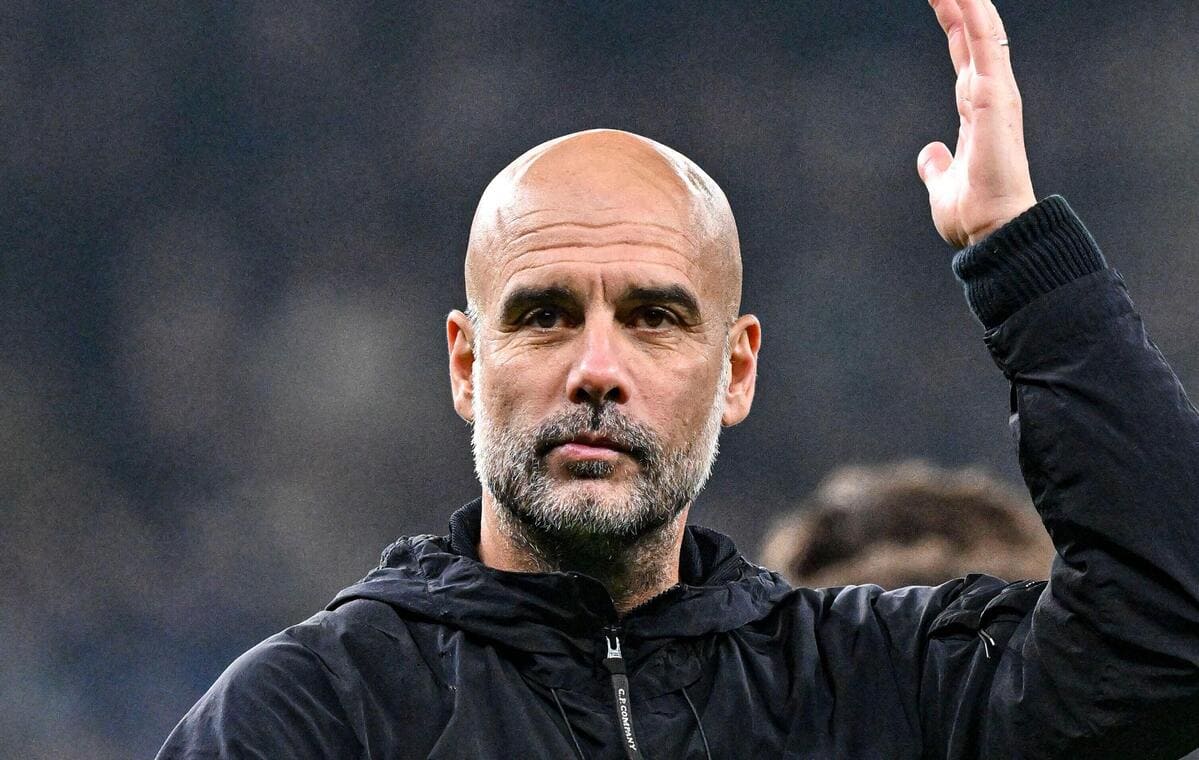
The titan departs. The architect steps away. In a seismic shift that reverberates through the very foundations of English football, Pep Guardiola has officially confirmed his departure from Manchester City, drawing an emphatic close to an era of unprecedented dominance and breathtaking football. The news, though anticipated by some, still hits with the force of a thunderclap, leaving an immediate void at the heart of the Premier League’s most formidable modern dynasty.
Guardiola, ever the pragmatist, has already turned his gaze to the future – not his own, but that of the club he so meticulously sculpted. “When the club tell me who it is, of course I will call him,” Guardiola declared, a testament to his class and unwavering loyalty to the Sky Blue project. He promised the incoming manager, widely expected to be former assistant Enzo Maresca, currently navigating his own complex path at Chelsea, a level of backing rarely seen in the cut-throat world of elite football. “I will tell him, ‘Be yourself and the club will support you unconditionally’,” he affirmed, highlighting the unique, protective environment City fosters. “That is the biggest compliment, or the biggest luck that all the managers who have been here have had. You will be protected in the bad moments more than any other club. Be yourself, be free, go with your ideas. Work a lot and everything will be fine.” This isn’t just a passing comment; it’s a profound insight into the stability and long-term vision that has enabled City’s sustained success, a blueprint Guardiola himself benefited from and now entrusts to his successor.
Guardiola Already Processed Departure: The Weight of an Empire
While the football world grappled with the news, Guardiola himself revealed a man who had already come to terms with the impending transition. Reports earlier in the week merely confirmed a truth he had internally processed. “Yesterday I was at home and I didn’t have any furniture. It was basically completely empty. I just had a bed to sleep on,” Guardiola reflected, painting a stark, almost monastic image of his state of mind. “I’ve processed it already. After a few weeks, already it is done.” This wasn’t merely a manager leaving a job; it was an artist stepping away from his masterpiece, a visionary detaching from the daily intensity that defined his every waking moment for eight years. The ’empty house’ metaphor speaks volumes – a mind cleared, ready for the much-needed, lengthy break from management he intends to take, to recharge the batteries drained by the relentless pursuit of perfection.
Villa Spoils Farewell at Etihad: A Bitter-Sweet Curtain Call
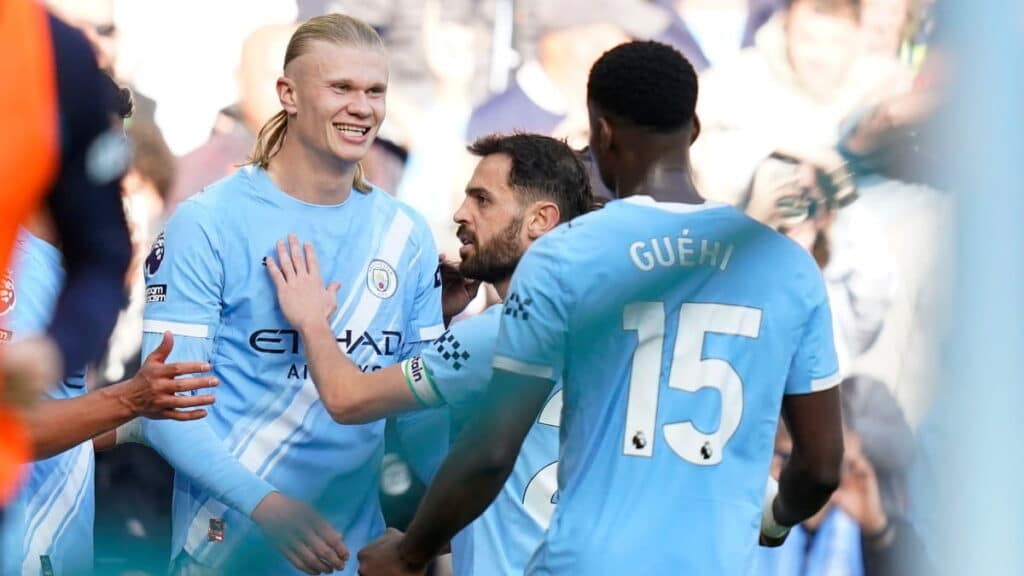
The final Premier League fixture under Guardiola’s charge at the Etihad, against Aston Villa, was intended as a celebratory coronation. Instead, it delivered a surprisingly poignant, if slightly jarring, conclusion. Manchester City, perhaps distracted by the emotional weight of the occasion and the impending farewells, suffered a 2-1 defeat at the hands of a determined Aston Villa side. The result, while inconsequential in the grand scheme of City’s trophy-laden season, served as a humble, almost human, reminder that even the most dominant forces are not invincible. The focus, however, transcended the scoreline, centering on the emotional goodbyes to not just Pep, but also two long-serving stalwarts who have been instrumental to the club’s success: Bernardo Silva and John Stones.
Game Highlights: Man City vs. Aston Villa
- 23rd Minute: City Breaks the Deadlock.The Etihad Stadium erupted as Antoine Semenyo, capitalising on a moment of fluid City attacking play, found the back of the net. A beautifully weighted pass dissected the Villa defence, allowing Semenyo to finish with characteristic precision, placing City firmly in the lead and momentarily setting the stage for a perfect send-off. The intricate build-up showcased the very essence of Guardiola’s philosophy.
- Second Half Surge for Villa.Aston Villa, however, refused to play the role of mere spectators in City’s farewell party. Galvanised after the break, they demonstrated resilience and tactical acumen. Ollie Watkins, always a threat with his intelligent movement and predatory instinct, spearheaded their comeback.
- 55th Minute: Watkins Equalises.A swift counter-attack caught City’s defence slightly out of position. A pin-point cross from the flank found Watkins unmarked, and he powered a header past the City goalkeeper, silencing the home crowd and levelling the score.
- 72nd Minute: Watkins Seals the Victory.Building on their momentum, Villa pressed for a winner. Another incisive move, culminating in a through ball that split the City centre-backs, allowed Watkins to latch onto it. He calmly rounded the keeper and slotted the ball into an empty net, completing his brace and securing an impressive 2-1 victory for Aston Villa, a performance that highlighted their own ambitions and disrupted City’s planned narrative.
Stones and Silva Pay Tribute to Guardiola: A Shared Legacy
The guards of honour for Bernardo Silva and John Stones, as they were substituted in the second half, were moments drenched in emotion. Both players received heartfelt ovations from both sets of fans, a testament to their immense contributions. It was a poignant symbol of the collective ending of an era, not just for the manager, but for key figures he brought to prominence.
John Stones, a cornerstone of Guardiola’s defence since joining in the same summer of 2016, reflected on their shared journey: “Looking back at myself as a young boy playing on the streets, to say that I’d win this amount of trophies, I never would have believed it,” Stones admitted, the awe still palpable in his voice. “It’s something incredible and we kind of set a standard for this club. I hope going forward when I come back and watch from the stands that they can recreate some incredible moments.” His words underscore the profound transformation he underwent under Pep’s tutelage, evolving into one of the world’s most intelligent ball-playing defenders.
Bernardo Silva, who arrived from Monaco in 2017 and quickly became a creative lynchpin, didn’t hold back in his praise. “Pep’s the reason we won so much. He was at the wheel, making the decisions and creating this monster of a team and, on a personal level, he’s my father in football,” Silva declared. “I do believe he’s the greatest manager ever.” This deep personal connection, echoed by so many players who have thrived under Guardiola, illustrates not just his tactical genius but his unparalleled ability to inspire and elevate individuals, forging them into a collective force that dominated the English game and conquered Europe.
The departure of Guardiola, coupled with the farewells of Silva and Stones, marks a genuine inflection point for Manchester City. Guardiola’s legacy extends beyond the trophies; he instilled a philosophy, a winning mentality, and a style of play that redefined expectations. He turned City into a global footballing superpower, setting new benchmarks for consistency and tactical innovation. The task ahead for his successor, whether Maresca or another, is monumental. They will inherit an incredibly strong squad and an elite infrastructure, but also the daunting shadow of the man who built it all. The pressure to maintain such stratospheric standards, particularly without the guiding hand of a managerial titan and the creative brilliance of Silva, will test the very fabric of the club’s resolve.
Prediction: Navigating the Aftermath of Greatness
The immediate future for Manchester City promises a fascinating blend of continuity and evolution. While the foundational strength – the robust squad depth, the elite infrastructure, and the winning culture – remains firmly in place, the absence of Pep Guardiola’s unique tactical genius and motivational force will undoubtedly be felt. The departure of Bernardo Silva, a maestro in midfield, further compounds the challenge. Therefore, while City will remain a formidable force, contending for top honours, a slight transitional period seems almost inevitable. The new manager will need time to imprint their own vision, even if it’s an evolution of Pep’s. They will still finish in the top two of the Premier League, but the effortless dominance of recent years might waver slightly. Expect a spirited challenge, but perhaps a year where the Champions League proves a step too far, as the team adjusts to life post-Pep. The machine will keep running, but perhaps with a slight, almost imperceptible, hitch in its previously flawless rhythm.