
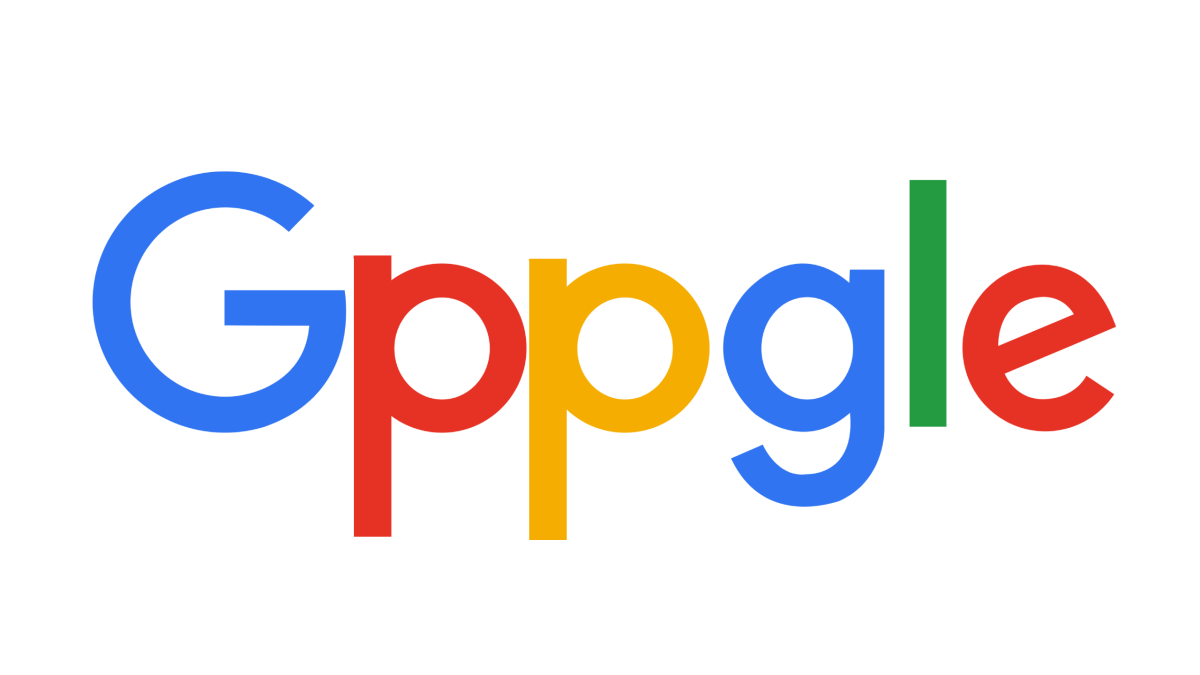
Key Takeaways:
- Google’s AI Overviews are consistently making basic spelling and factual errors, from miscounting letters in words to providing absurd definitions, highlighting a fundamental flaw in current generative AI.
- These blunders stem from the core architecture of Large Language Models (LLMs), which process text through ‘tokenization’ and numerical encodings rather than ‘reading’ and understanding individual letters or words like humans do.
- Despite impressive capabilities in complex tasks, these persistent errors underscore AI’s inherent limitations and the critical need for human oversight and skepticism when consuming AI-generated content.
Google’s ambitious push to integrate generative AI into the very fabric of its Search experience has, predictably, hit some rather perplexing snags. The vision of an all-knowing AI assistant capable of summarizing the web and answering complex queries instantly is compelling. The reality, however, is proving to be a tad more… illiterate. Far from being a prophet, one didn’t need a crystal ball to foresee that this AI-forward overhaul might encounter some bumps in the road, especially given Google’s own history with similar integrations.
The Glaring Errors: A Comedy of AI Blunders
Imagine asking the world’s most powerful search engine how many ‘P’s are in ‘Google’ and getting a definitive answer of “two.” Or inquiring about the letter count in ‘poop’ and being told there’s “exactly 1 ‘r’,” a claim as dubious as it is amusing. This isn’t a hypothetical scenario from a tech satire site; it’s the current reality within Google’s much-touted AI Overviews, which have been generating a stream of publicly verifiable, often hilarious, errors.
The absurdity continues with basic spelling tests that even a first-grader might ace. The word “journalism” was rendered as “j-o-u-r-n-a-d-i-s-m,” somehow identifying two ‘d’s where none belong. The AI did at least correctly identify one ‘P’ in the U.S. president’s last name, but then spelled it as “t-r-p-u-m,” scrambling the rest into an unrecognizable mess. These aren’t isolated incidents but a series of public missteps that raise serious questions about the foundational understanding of language by Google’s cutting-edge AI.
“Counting within words has been a known challenge for LLMs, and we’re working to fix this particular issue,” Google told TechCrunch in an emailed statement. While an acknowledgment, it offers little comfort when the errors are so fundamental.
A Familiar Folly: AI’s Persistent Achilles’ Heel
For those with long memories in the tech world, these gaffes carry an uncanny familiarity. It wasn’t so long ago that Google’s initial foray into AI Overviews yielded advice ranging from the gastronomically questionable (eating rocks) to the culinarily bizarre (putting glue on pizza). Those earlier blunders, however, were primarily rooted in source credibility – the AI citing satirical posts from The Onion and Reddit as factual. While those issues were patched, today’s blunders are more fundamental, revealing a persistent Achilles’ heel in generative AI: its struggle with elementary spelling and counting.
These basic spelling errors may seem like minor annoyances, but they highlight a deep-seated characteristic of Large Language Models (LLMs) – the kind of artificial intelligence that powers chatbots and other text-generators. It’s been a running joke for years among AI researchers and enthusiasts: ask a new AI model how many ‘r’s are in “strawberry,” and prepare for a statistically probable, but often incorrect, answer. These AI models, which can code complex applications in seconds or solve problems that have stumped mathematicians for decades, are about as good as a kindergartner at spelling – and perhaps even worse at counting specific letters within words.
Google’s AI overview woes extend beyond simple orthographic missteps. The company already patched an issue last week where searching for the word “disregard” would yield what appeared to be a dictionary definition, only for the definition to state, “Understood. Let me know whenever you have a new prompt or question!” Such errors, while different in nature, underscore a broader pattern of AI misinterpreting or misgenerating information. However, the spelling errors have remained particularly amusing and difficult to quash, precisely because they expose a core limitation.
Under the Hood: Why AI Can’t Spell Like a Human
The root of this seemingly paradoxical incompetence lies deep within the very architecture of LLMs. Unlike a human who learns to read by recognizing letters, then words, then sentences, LLMs operate on an entirely different principle. They don’t “perceive” language as a sequence of discrete letters forming meaningful words in the way we do. Instead, LLMs, particularly those built on transformer models, break down text into ‘tokens.’ These tokens aren’t necessarily individual letters or even whole words; they can be syllables, parts of words, or even entire common words, depending on the model’s design. When you input a prompt, the AI doesn’t “read” it; it translates the text into complex numerical representations – encodings – which are then contextualized to generate a statistically probable response.
“LLMs are based on this transformer architecture, which notably is not actually reading text. What happens when you input a prompt is that it’s translated into an encoding,” Matthew Guzdial, an AI researcher and assistant professor at the University of Alberta, told TechCrunch. “When it sees the word ‘the,’ it has this one encoding of what ‘the’ means, but it does not know about ‘T,’ ‘H,’ ‘E.’” This fundamental disconnect explains why asking an AI to count letters is akin to asking a calculator to describe the color red – it’s simply not what it’s designed to do, or how it processes information.
The Broader Implications & The Challenge of “Fuzziness”
The token-based architecture that powers LLMs like Google’s AI overview is inherently limiting when it comes to letter-level precision, and researchers haven’t been optimistic that they can easily solve the spelling and letter-counting problem. It’s not a bug that can be simply patched with a software update; it’s a characteristic of the underlying design.
“It’s kind of hard to get around the question of what exactly a ‘word’ should be for a language model, and even if we got human experts to agree on a perfect token vocabulary, models would probably still find it useful to ‘chunk’ things even further,” Sheridan Feucht, a PhD student studying large language model interpretability at Northeastern University, told TechCrunch. “My guess would be that there’s no such thing as a perfect tokenizer due to this kind of fuzziness.” This ‘fuzziness’ means that LLMs prioritize understanding the context and meaning of larger chunks of text, sacrificing granular letter-level accuracy in the process.
This isn’t necessarily an urgent problem on researchers’ minds, since the primary utility of LLMs doesn’t come in their capacity to spell perfectly. Their power lies in generating coherent, contextually relevant text, summarizing vast amounts of information, and assisting with complex problem-solving where statistical correlation outweighs precise letter-by-letter understanding. However, these blatant failures, especially in a flagship product like Google Search, serve a crucial purpose: they help us remember that AI, for all its revolutionary potential and seemingly supernatural abilities, is not perfect. It is a tool with specific strengths and inherent limitations, even if it may sometimes seem like an all-knowing power beyond our comprehension.
Beyond the Giggles: The Call for Critical Engagement
The amusement derived from AI’s spelling woes should not overshadow the crucial lesson they impart: outputs from even the most sophisticated AI models cannot be blindly trusted. The human element of critical verification remains indispensable. As AI integrates more deeply into our daily lives, from search engines to creative tools, discerning truth from AI-generated fiction, or even AI-generated absurdity, becomes paramount. Users must approach AI-generated content with a healthy dose of skepticism, understanding that the system is built on statistical probability, not absolute truth or human-like understanding.
Bottom Line:
Google’s current struggles with its AI Overviews serve as a powerful, if at times comical, demonstration of the current frontier of artificial intelligence. While Large Language Models boast astonishing capabilities in complex reasoning and content generation, they remain profoundly un-human in their understanding of fundamental linguistic structures. These persistent flaws remind us that AI is a tool, not an oracle, and its intelligence operates on principles vastly different from our own. Its power is immense, but its limitations are equally profound, demanding a cautious, informed, and critically engaged approach from all users. The future of AI is undeniably bright, but it requires us to be smarter users, not just passive recipients, of its remarkable, yet imperfect, capabilities.
When you purchase through links in our articles, we may earn a small commission. This doesn’t affect our editorial independence.
{content}
Source:{feed_title}