
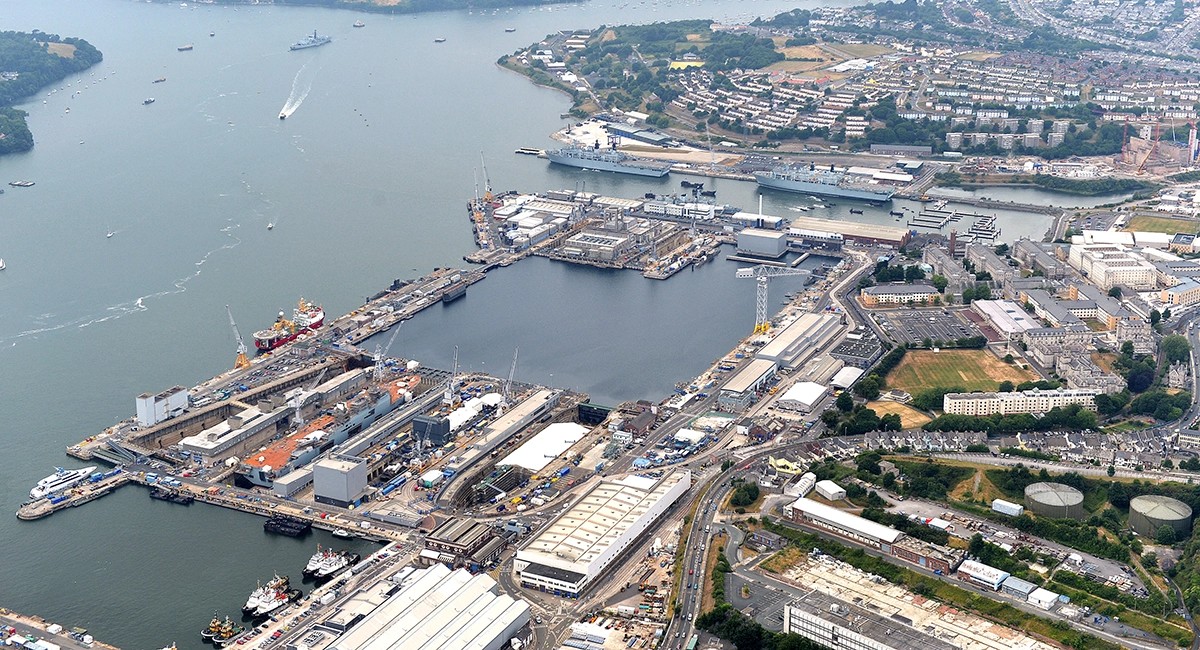
Plymouth, UK –Significant challenges persist in the delivery of the Submarine Waterfront Infrastructure Future (SWIF) programme at His Majesty’s Naval Base Devonport, a critical undertaking aimed at modernising the facilities essential for maintaining the Royal Navy’s nuclear submarine fleet. This assessment comes from a recent parliamentary exchange, highlighting ongoing government efforts to recover the programme from its current difficulties.
The update was provided by Luke Pollard, the Minister of State for Defence, in response to a query from James MacCleary, the Liberal Democrat Member of Parliament for Lewes. Mr. MacCleary had sought information regarding the progress of the SWIF programme, specifically within the context of the delivery confidence assessments applied to defence projects listed in the Government Major Project Portfolio (GMPP).
Minister Pollard affirmed that the delivery confidence assessment for the SWIF programme, like all such evaluations, reflects the likelihood of successful completion at a specific point in time. He underscored the integral role of the National Infrastructure and Service Transformation Authority (NISTA) Gate Review process as a core component of the Ministry of Defence’s (MoD) comprehensive Assurance Framework designed to support robust project delivery. Despite acknowledging “positive progress,” the Minister conceded that “there are still challenges to the delivery of the SWIF programme.” He further stated that the dedicated delivery team is actively engaged with both NISTA and the principal contractor to implement recovery measures. The immediate focus, he explained, is on accelerating the completion of critical design work, a phase where the pace of design decisions has been increased and approval processes streamlined. In a move to further expedite progress, principles derived from the recent Nuclear Regulatory Review are being applied to identify new opportunities for acceleration.
Devonport Naval Base holds unparalleled strategic importance for the United Kingdom’s defence capabilities. It remains the sole dockyard in Britain equipped with the necessary licences and infrastructure to undertake the complex refitting of nuclear submarines. The waterfront infrastructure at Devonport is indispensable for supporting the Royal Navy’s advanced Astute-class attack submarines, managing the ongoing storage and eventual disposal of decommissioned nuclear boats, and facilitating the extensive deep maintenance periods vital for ensuring the operational availability of the attack submarine flotilla.
The operational readiness and availability of this vital flotilla have been subjects of recurrent scrutiny and criticism in recent years. A report published earlier this month by the House of Commons Defence Committee raised significant concerns, stating that the availability levels across the Royal Navy’s destroyers, frigates, and attack submarines cast doubt on Britain’s capacity to meet its defence commitments, particularly within the strategically crucial High North region. A stark illustration of these challenges is the refit of HMS Vanguard, one of the nation’s ballistic missile submarines, which stretched to seven and a half years against an initial plan of just three and a half years. Such delays have direct implications for the continuous at-sea deterrence posture and the overall operational tempo of the Royal Navy.
The aforementioned Nuclear Regulatory Review was specifically commissioned with the objective of reducing the time that regulatory approvals add to major nuclear programmes, without compromising safety standards. The application of its principles to the design decisions for the Devonport waterfront infrastructure signifies a concerted effort to de-bottleneck and accelerate development. Recognising the enduring strategic value of the base, the Ministry of Defence has committed more than £2 billion to infrastructure improvements at Devonport over the coming decade, underscoring the long-term investment in this national asset.
Alongside the critical work at Devonport, the Ministry of Defence is also progressing with the Clyde Infrastructure programme, located at Faslane and Coulport in Scotland, which serves as the home of the UK’s strategic nuclear deterrent. However, ministers declined to provide an updated assessment of the Clyde programme’s delivery confidence, stating that the next set of comprehensive figures would be based on information captured on 31 March 2027. This highlights the long-term, multi-generational nature of these essential defence infrastructure projects and the structured approach to their oversight and reporting.
Why This Matters
The challenges faced by the Submarine Waterfront Infrastructure Future (SWIF) programme at Devonport are of profound national significance, extending far beyond routine project management issues. They directly impact the operational readiness, strategic capabilities, and international standing of the United Kingdom.
National Security and Deterrence:Devonport is not merely a dockyard; it is the cornerstone of the UK’s nuclear submarine enterprise. As the only facility capable of refitting nuclear submarines, its efficient operation is indispensable for maintaining the Royal Navy’s Astute-class attack submarines and supporting the continuous at-sea deterrence provided by the Vanguard-class ballistic missile submarines. Delays in infrastructure modernisation translate directly into potential delays in submarine maintenance and deployment, which could compromise the UK’s ability to protect its interests and uphold its nuclear deterrent.
Operational Readiness of the Royal Navy:The health of Devonport’s infrastructure directly affects the availability of the Royal Navy’s submarine fleet. When maintenance periods are extended due to inadequate or outdated facilities, fewer submarines are available for active service. This impacts the Navy’s capacity to conduct critical missions, such as intelligence gathering, anti-submarine warfare, and protecting vital sea lanes. The Defence Committee’s concerns about the Navy’s ability to meet High North commitments underscore the real-world implications of these infrastructure challenges on global responsibilities.
Economic Investment and Regional Impact:The £2 billion commitment to Devonport infrastructure over the next decade represents a significant public investment. While delays represent a risk to the efficient use of taxpayer money, successful recovery and completion of the programme will sustain and create highly skilled jobs in Plymouth and the wider region, strengthening the UK’s defence industrial base and contributing to economic stability in the South West of England.
Transparency and Accountability:The parliamentary questioning of the SWIF programme demonstrates the vital role of democratic oversight in major government projects. The detailed responses, despite outlining challenges, provide a level of transparency that allows for public scrutiny and ensures accountability for the substantial public funds invested in defence infrastructure. The involvement of bodies like NISTA and the application of assurance frameworks are crucial for ensuring that these complex projects are managed effectively and deliver their intended strategic outcomes.
Future Naval Capabilities:Modernised infrastructure at Devonport is not just about today’s fleet; it is about future-proofing the Royal Navy for decades to come. As new submarine classes and technologies emerge, the ability of Devonport to adapt and support these advancements will be paramount. Overcoming current challenges is essential to ensuring the UK remains a leading naval power capable of addressing evolving global threats and maintaining its strategic autonomy.