
Key Takeaways
- Mega-Valuation, AI-Driven Future:Cognition’s $1 billion raise at a $26 billion valuation underscores a fervent investor belief in AI coding agents like Devin, propelling the vision of “self-driving software development.”
- Augmentation Over Replacement:Despite the industry’s layoff trends, CEO Scott Wu, a former child programming prodigy, emphatically positions Devin as a “buddy” that augments human engineers, handling “toil” to free up creative potential.
- The Evolving Human Role:While Cognition itself relies heavily on Devin for code commits, the company emphasizes that AI agents are an evolutionary layer of abstraction, intended to elevate human programmers to higher-order problem-solving, with human oversight remaining paramount across all professions.
In a year marked by relentless tech layoffs often justified by the march of artificial intelligence, Cognition CEO Scott Wu has once again captured the industry’s attention, not just with his company’s latest colossal funding round, but with a nuanced vision for how AI will reshape software development. His two-year-old startup, creator of the AI coding agent Devin, just secured a staggering $1 billion at an eye-watering $26 billion valuation. This massive investment signals a profound belief in Cognition’s audacious goal: to usher in a world of “self-driving software development” where AI agents “naturally own tasks end to end.”
The Prodigy Behind the Vision: Crafting a “Buddy,” Not a Replacement
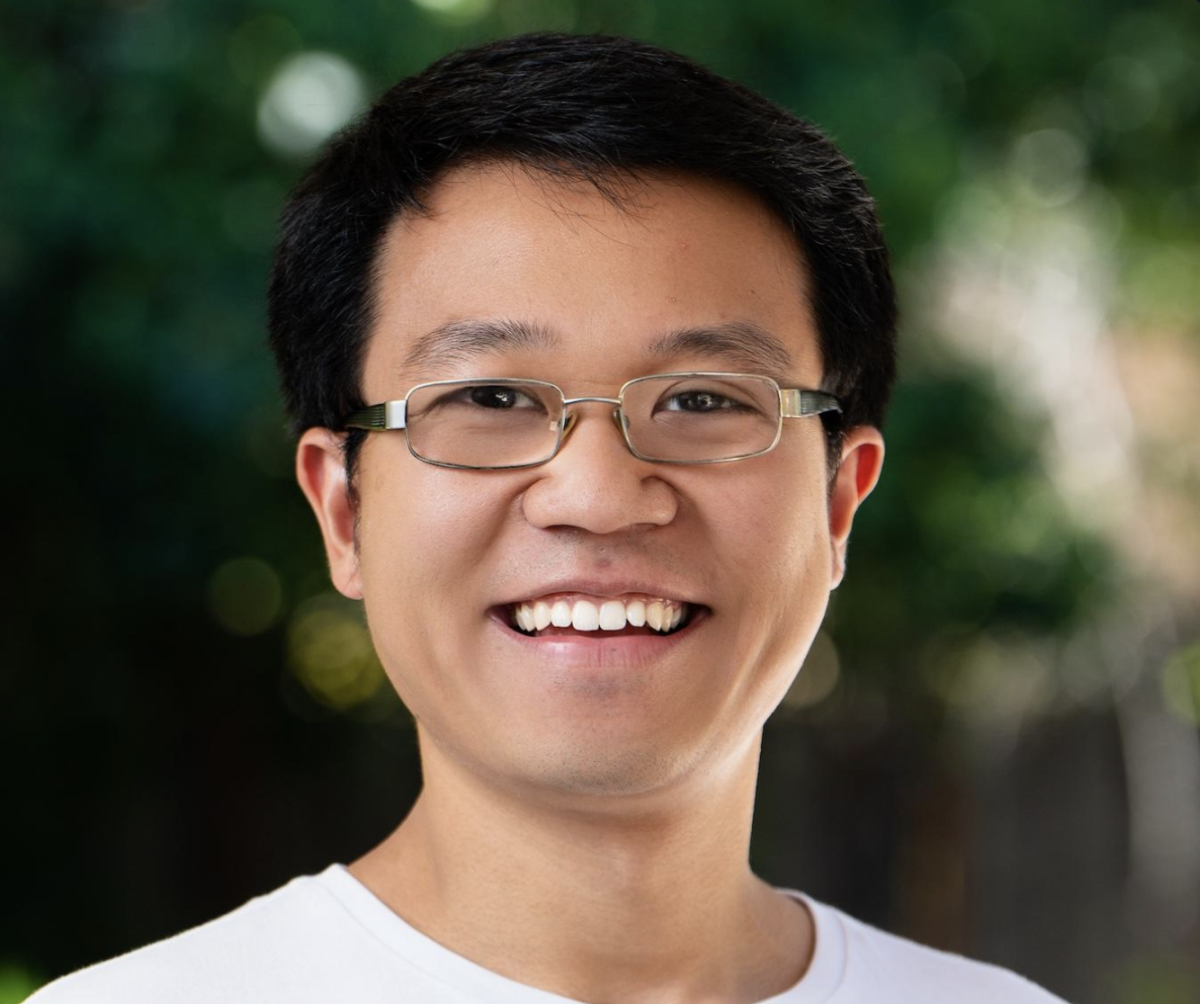
At the heart of Cognition’s ambition is its CEO, Scott Wu, a figure whose personal journey deeply informs his company’s philosophy. Wu is not merely another tech executive; he’s been celebrated as one of the most accomplished child competitive programmers of all time. Starting his coding journey at the tender age of nine and winning a nationwide math competition for seventh graders in second grade, Wu’s formative years were steeped in the world of programming tournaments alongside other future tech luminaries like Scale AI founder Alexandr Wang.
This background gives Wu a unique perspective, one that he insists is far removed from the narrative of AI replacing human jobs. “We’ve never thought about it as replacing humans,” Wu told TechCrunch, acknowledging the widespread fear while firmly distancing Cognition from it. “We are all programmers ourselves. I started coding when I was nine.” For Wu, the creation of Devin was born not out of a desire for automation at all costs, but from an empathetic understanding of the programmer’s craft. He visualizes Devin not as a competitor, but as “your buddy who helps you build more,” a sentiment symbolized by a small, computer-holding stuffed animal on his desk.
Wu is passionate about preserving the inherent joy of programming. “It’s not a secret, most software engineers love building software, right?” he mused. “If you ask them why, what they’ll basically tell you is, ‘Well, it’s like I get to build things from nothing. I can make my whole idea that I have, and turn it into a product. I can turn it into an experience.'” He sees AI agents like Devin as merely the next evolutionary layer of abstraction, akin to how visual development environments abstracted software creation away from tedious machine instructions. This new layer, he believes, will bridge the gap between envisioning a software product and bringing it to fruition, empowering humans rather than supplanting them.
Devin’s Role: Abstraction, Not Abolition, but the Numbers Tell a Story
The practical application of Devin within Cognition offers a fascinating glimpse into this augmented future. The company openly states that Devin is instrumental in shipping nearly all its software. A striking statistic reveals that 89% of code committed by its engineers was, in fact, committed by Devin, with the remainder handled by local agents from Windsurf, an AI coding competitor Cognition acquired last year. This level of internal reliance might, at first glance, appear to contradict Wu’s “buddy” narrative and fuel concerns about AI taking over.
However, Wu clarifies that Devin’s primary function is to tackle the “toil” — the long-tail maintenance tasks that many programmers find less engaging. This includes critical but often tedious work like bringing older software up to date, migrating applications between platforms, or handling repetitive bug fixes. By offloading these tasks, agents are designed to liberate human programmers “from a lot of the toil, and so they can do much more of the creation side,” Wu promises. He rates Devin’s capabilities at “somewhere between a junior and a mid-level engineer” depending on the complexity of the task, reinforcing the idea that it assists rather than dictates.
This framing suggests a shift in the programmer’s role: from hands-on coding of every line to a more strategic, architect-like function, overseeing and guiding AI agents. It raises questions about the future of entry-level positions and how foundational programming skills will be acquired and valued in an increasingly abstracted development environment. The implication is that the definition of a “programmer” is rapidly evolving, moving towards one of a “software orchestrator” or “AI prompt engineer” rather than a traditional coder.
Beyond Code: The “Wild Ride” of Recursive AI and Human Agency
Looking ahead, Wu sees the concept of “self-driving software” as just the beginning of a “wild ride” driven by “recursive” AI—agents that learn and improve themselves autonomously. While code and software have been the initial frontier, Wu predicts this agent-driven paradigm will extend across a multitude of industries. He envisions agents learning and performing tasks in fields as diverse as customer service and medicine, consistently aiming to augment human workers rather than replace them.
“One thing that’s been clear to us since the beginning is, it should always be up to the human what to do,” Wu asserts. This principle of ultimate human oversight and control is critical to Cognition’s vision, serving as a safeguard against a fully autonomous, unchecked AI future. The challenge, then, lies in effectively integrating these powerful agents while ensuring that human creativity, critical thinking, and ethical decision-making remain at the helm. As these tools become more sophisticated, defining the precise boundaries of human authority and AI autonomy will be crucial.
Bottom Line
Cognition’s meteoric rise and Scott Wu’s compelling narrative represent a pivotal moment in the AI revolution. The company’s massive valuation reflects a future where AI agents like Devin will undeniably transform how software is built and, by extension, how many industries operate. While the promise of freeing humans from “toil” to pursue higher creative endeavors is appealing, the industry must proactively address the resulting shifts in job roles and skill requirements. The enduring message from Cognition, however, is one of human empowerment: that the future isn’t about AI replacing us, but about AI acting as an intelligent partner, always under the ultimate direction and ingenuity of the human mind.
When you purchase through links in our articles, we may earn a small commission. This doesn’t affect our editorial independence.
{content}
Source:{feed_title}