
Key Takeaways
- Strategic Brand Transformation & Market Risk:Ferrari’s fully electric “Luce” marks a high-stakes pivot into the EV market, risking alienation of traditionalists for the sake of future relevance and growth. This move is a critical test of whether the iconic brand can successfully adapt to technological disruption while preserving its core identity and premium valuation.
- Leadership Scrutiny & Governance Concerns:Executive Chair John Elkann’s stewardship of Ferrari and the broader Agnelli family holding company, Exor, is under intense scrutiny. The “Luce” controversy amplifies broader market concerns regarding strategic asset reallocation and the perceived detachment of Italian industrial giants from their national roots, potentially impacting investor confidence in Exor’s long-term vision.
- Intensified Luxury EV Competition:The “Luce” launch escalates competition in the nascent ultra-luxury EV segment. Ferrari’s radical design and technological gamble force a re-evaluation of market positioning against rivals like Lamborghini (emphasizing traditional performance heritage) and disruptive pure-play EV manufacturers, making brand perception and customer acquisition crucial for market share.
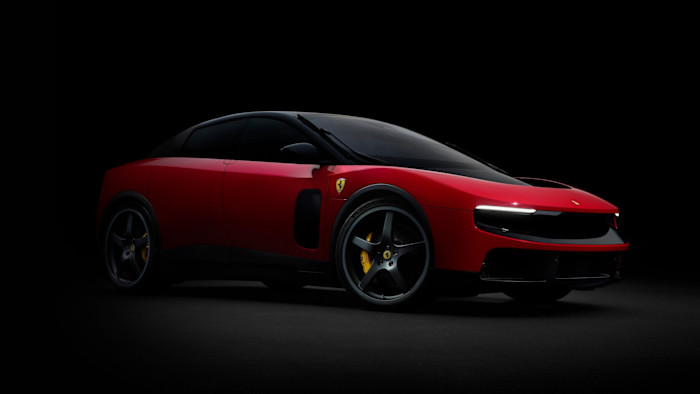
Ferrari’s first fully electric vehicle, the “Luce,” has not merely sparked Italian angst; it has ignited a fierce debate within the global luxury automotive market, placing the iconic brand’s future trajectory and John Elkann’s leadership under unprecedented scrutiny. As scion of the Agnelli family dynasty and executive chair of the carmaker, Elkann’s strategic direction is now a key factor for investors assessing Ferrari’s long-term value in a rapidly electrifying industry.
The Luce’s futuristic design, unusual proportions, and symbolic departure from Ferrari’s cherished combustion-engine heritage have provoked a visceral reaction among enthusiasts, former executives, and politicians across Italy. This outrage transcends mere aesthetic preference; it represents a challenge to Ferrari’s carefully cultivated brand equity, a crucial driver of its extraordinary market premium and exclusivity. The question for investors is whether this perceived betrayal of heritage could lead to brand dilution or a segmentation challenge that impacts future sales and resale values.
Transport minister Matteo Salvini’s claim that Ferrari’s founder Enzo Ferrari would be “turning in his grave” is more than political rhetoric; it taps into a narrative of corporate governance and strategic misalignment. The daily bouts of criticism about the Luce come amid broader questions over Elkann’s stewardship of significant Italian industrial assets, in his roles as boss of the Agnelli family holding company Exor and chair at Ferrari. For market observers, this isn’t just about sentiment; it’s about the perceived efficacy of capital allocation and the strategic vision guiding one of Italy’s most valuable corporate entities.
The €550,000 Luce, priced squarely in the ultra-luxury niche, was designed in collaboration with former Apple design chief Jony Ive and Marc Newson. This high-profile EV project, which began about five years ago, grew out of Elkann’s longstanding personal relationship with Ive and Newson. From a market perspective, this collaboration is a strategic bet on design-led innovation to differentiate Ferrari in an increasingly crowded EV landscape. The rationale is clear: leverage a design duo renowned for creating aspirational, high-tech products to appeal to a new generation of luxury buyers who value cutting-edge aesthetics and digital integration as much as, if not more than, traditional automotive prowess. The high sticker price underscores Ferrari’s intent to maintain its exclusivity and margins even in electrification.
Publicly describing the collaboration as part of a broader effort to rethink how Ferrari approached its first EV, Elkann at the Luce’s launch event said the company “took the deliberate decision to lead what comes next.” This statement signals an aggressive market positioning, aiming not merely to participate but to define the future of the luxury EV segment. For shareholders, this represents a calculated risk: a bold move that could secure long-term market leadership or alienate a significant portion of its existing, highly loyal customer base.
The Agnelli family has long controlled many of Italy’s most important industrial assets through Exor. For decades they occupied a quasi-royal status in Italy where their ownership of Fiat — the country’s largest postwar private-sector employer — placed them at the centre of the country’s economic and public life. This historical context is vital; Ferrari’s brand strength is intrinsically linked to this national pride, an intangible asset that drives consumer loyalty and investment appeal. Any perceived weakening of this bond could impact investor confidence and brand valuation.
But Elkann, the grandson of industrialist Gianni Agnelli, has restructured the group through a series of sales and mergers which critics say have detached the empire from its home country. In an interview on Mediaset, Carlo Calenda, Italy’s former industry minister and a former Ferrari executive, slammed the Luce EV as “an aesthetic and technological insult.” This isn’t just a subjective critique; it directly challenges Ferrari’s reputation for engineering excellence and design integrity, which are fundamental pillars of its market premium. Calenda further accused Elkann of wanting to destroy Ferrari and other companies formerly under the Agnelli umbrella, a serious allegation that, if echoed by a critical mass of investors, could lead to significant shareholder pressure and potential stock volatility.
Exor, on behalf of Elkann, declined to comment on the reaction, maintaining a strategic silence in the face of mounting public and market pressure.
Since Elkann took charge of the Agnelli empire 20 years ago, he has executed a strategic portfolio re-alignment that has seen the disposal of companies once regarded as national symbols. Asset sales have included van maker Iveco, high-tech components maker Magneti Marelli. Fiat was absorbed into Stellantis in a merger with France’s PSA, with Italians concerned about the future of the country’s car plants. This year he sold media group GEDI, publisher of La Repubblica and La Stampa, to a Greek billionaire. From a financial perspective, these moves represent a concentrated effort to streamline Exor’s holdings, focus on core competencies, and redeploy capital. However, the political and cultural fallout from these sales underscores the unique challenge of managing iconic Italian brands, where national identity often trumps pure financial logic.
Calenda added: “I don’t understand why nobody does anything while [he] destroys Stellantis’ Italian factories and sells Comau, Magneti Marelli, Iveco, La Stampa, La Repubblica.” This sentiment reflects a deeper concern about the long-term industrial strategy of Exor and its impact on Italy’s manufacturing base and economic landscape, issues that can influence regulatory environments and public perception for its remaining assets.
However, Ferrari alone accounts for about one-third of Exor’s total assets, underscoring its disproportionate strategic importance within the portfolio. Its performance and brand health are inextricably linked to Exor’s overall valuation. Earlier this year Elkann turned down a €1bn offer from crypto group Tether for football club Juventus, demonstrating a selective approach to asset divestiture. Stellantis, which also owns luxury carmaker Maserati, still employs more than 30,000 people in Italy, highlighting that Exor’s influence in the Italian economy, while diversified, remains substantial.
Online commenters have accused Elkann of having “destroyed everything he has touched” before turning to Ferrari, challenging his market credibility and leadership effectiveness. Some suggested Turin-based Elkann should leave Italy and relocate to the Netherlands, where Exor’s legal headquarters are based, a common corporate maneuver for tax and governance advantages that often fuels nationalistic criticism.
Others called the move “genius.” One Italian brand expert with a large social media following articulated the strategic imperative, stating the Luce could help Ferrari avoid the fate of Nokia, BlackBerry, Kodak or Blockbuster — once dominant brands undone by technological change. This perspective frames the Luce as a necessary, albeit risky, act of disruptive innovation.
“Ferrari has taken a risky bet, but it is looking beyond today’s customers,” the influencer said. “Its future clients are 14 years old now, grew up with Teslas and may not care for a noisy combustion engine.” This highlights a crucial market consideration: the need to anticipate evolving consumer preferences and secure future revenue streams by appealing to younger, tech-savvy demographics who prioritize sustainability and digital integration.
The intensity of the reaction reflects Ferrari’s unique place in Italian culture. The company has long represented a blend of national pride, engineering excellence and sporting mythology. Its prancing horse, orcavallino rampantein Italian, is one of the country’s most recognisable symbols. This profound emotional connection translates into significant brand equity, making any perceived deviation from its core identity a potential threat to its premium pricing power and resale values, key metrics for luxury carmakers.
Rival Lamborghini on Wednesday posted an image of its hybrid V12 Revuelto supercar on social media with the caption: “Proud to keep you dreaming.” Thousands of comments including those praising the company for “staying true to its soul” and that it was “our only hope” appeared below the post. While the company made no direct reference to Ferrari, car enthusiasts—and market analysts—saw the post as Lamborghini’s shrewd way of contrasting Ferrari’s more radical approach to electrification, reinforcing its own brand promise of preserving visceral performance and heritage in the face of industry-wide change. This is a direct competitive play for market positioning within the luxury segment.
Even the decision to present the Luce to both Pope Leo XIV and President Sergio Mattarella seemed to backfire, as photographs of the pontiff and the head of state seated inside the vehicle fuelled further criticism online from detractors who accused Ferrari of seeking official endorsement for a deeply divisive project. This PR strategy, intended to leverage institutional legitimacy for market acceptance, appears to have misjudged public sentiment, further complicating the narrative surrounding the Luce’s launch.
Ferrari executives remain defiant. Speaking at a public event in Modena on Thursday, chief executive Benedetto Vigna said he was confident demand would be strong. “Look at the people writing to us, the people placing orders,” Vigna said. “Some are existing clients and others are new.” This reassurance is critical for investor sentiment, aiming to signal robust market interest and effective segmentation strategies to capture both loyal and new high-net-worth customers.
Piero Ferrari, son of the founder who owns a 10 per cent stake in the eponymous group, also rallied in support, telling detractors to “try it, drive it, and you might change your minds.” His endorsement provides crucial internal cohesion and external validation, aiming to mitigate market skepticism about the Luce’s performance and authenticity.
Market Impact
The launch of the Ferrari Luce represents a critical inflection point for the luxury automotive market and a significant test for Ferrari’s brand resilience and strategic foresight. For investors, the immediate market impact includes potential short-term stock volatility driven by mixed sentiment—between those who see it as a necessary evolution for growth and those who fear brand dilution. The controversy intensifies the competitive landscape within the ultra-luxury EV segment, forcing rivals to hone their own electrification strategies and brand narratives. Long-term, the Luce’s success or failure will dictate Ferrari’s ability to maintain its premium valuation, expand its addressable market, and sustain its technological leadership. Furthermore, Elkann’s handling of this high-profile project, alongside Exor’s broader portfolio management, will continue to shape perceptions of his leadership and the future direction of one of Italy’s most iconic industrial dynasties, with potential ripple effects on shareholder confidence and capital flows into Italian luxury and automotive sectors.