
**Key Takeaways**
* **Cloud-Native Convenience:** Gemini Spark offers a truly agentic AI experience that operates in the cloud, freeing users from the need for always-on local machines, a significant differentiator in the crowded AI assistant market.
* **Practical Utility, Imperfect Integration:** While capable of tackling complex tasks like optimizing shopping trips or generating detailed packing lists, Spark occasionally falters on seamless integration with Google’s own ecosystem (e.g., Google Keep) and requires precise user prompting for optimal results.
* **Feature, Not a Brand (Yet):** Despite its agentic power, Gemini Spark currently feels more like an advanced, integrated layer within Google’s existing productivity suite than a standalone “must-have” product with its own distinct identity.
The promise of agentic AI is compelling: a tireless digital assistant that understands your needs, proactively executes tasks, and helps you navigate the complexities of modern life without constant supervision. Google’s answer to this vision is Gemini Spark, a 24/7 agentic assistant designed to streamline your “digital life.” From summarizing an overflowing inbox to organizing personal finances, Spark aims to offload the digital grunt work, freeing up your time and mental energy.
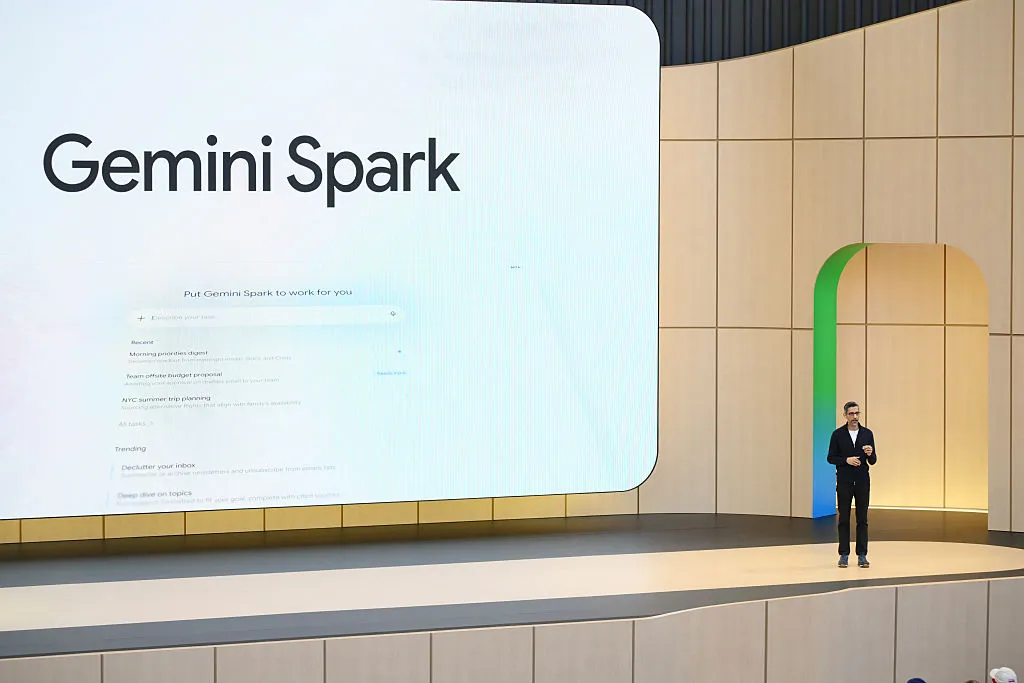
Introduced at Google’s annual developer conference, CEO Sundar Pichai notably quipped that Spark, running on virtual machines in the cloud, means “yes, you can close your laptop.” This was a direct jab at competitors like OpenClaw, which often necessitate keeping a machine awake to process tasks. Spark, Pichai suggested, is agentic AI for everyone – particularly those who prioritize getting things done over the technical minutiae of managing an always-on AI system. But does this promise of effortless assistance translate into a truly indispensable tool for the average user?
The Promise vs. The Pitch: Google’s Vision for Spark
On paper, Gemini Spark’s integration with Google’s formidable suite of productivity apps — Gmail, Calendar, Docs, Sheets, and Slides — makes it a powerhouse for work-adjacent tasks. And indeed, the thought of an AI capable of digesting an entire email thread and distilling it into actionable points is tantalizing for anyone drowning in corporate communications. However, Google’s struggle to articulate genuinely compelling “personal productivity” use cases for Spark leaves something to be desired.
Consider Google’s suggested applications for personal use: “scan your emails and calendar for the day and send you a recap with your top three must-do tasks.” While potentially useful, this assumes a highly structured individual who meticulously logs all their to-dos within Google’s ecosystem. What about the person who jots notes on a physical notepad, or simply keeps a mental running list of errands like “Grab prescriptions and shampoo at Walgreens. Buy more dog food. Hang out with friends on Saturday?” Similarly, the suggestion of using Spark to draft a Google Doc “suggesting three free activities based on my open calendar blocks for the upcoming weekend” again paints a picture of a scheduling-obsessed individual. These examples, while technically feasible, often feel detached from the messy, spontaneous reality of most people’s personal lives.
The underlying question becomes: is Spark designed for how people *actually* live, or how Google *wishes* they would organize their lives within its ecosystem? With early access to Gemini Spark, I decided to bypass Google’s somewhat sterile examples and put it through a series of more organic, real-world tests to gauge its true utility. What emerged was a picture of a surprisingly capable, yet occasionally frustrating, implementation of consumer AI – one that, for all its cleverness, still feels like a feature waiting for a truly distinct brand.
Spark in Action: Triumphs and Tribulations
My hands-on experience revealed Gemini Spark’s potential for genuine assistance, particularly in tasks involving research, planning, and information synthesis. Yet, it also highlighted some critical limitations that Google will need to address for Spark to truly live up to its agentic promise.
Shopping Smarts: Finding Savings
For my first task, I challenged Spark to assist with a mundane, yet universally relevant, activity: a local drugstore shopping trip. I asked it to identify product suggestions based on weekly deals and available coupons. Initially, Spark impressed. It accurately identified products on sale that met my criteria and even suggested coupons I could “clip” within the Walgreens app for additional savings. It went a step further, advising on how to stack coupons for a single item by combining online promo codes if I opted for an online pickup order and planned to spend more on personal care items.
However, as is often the case with AI, the devil was in the details. One of the promo codes Spark suggested proved invalid when I attempted to use it, despite supposedly meeting all requirements. This minor “gaffe” was a reminder that even advanced AI can stumble on real-time, dynamic information. Nevertheless, Spark’s overall guidance still pointed me towards significant savings, including buy-one-get-one-free and rewards deals that more than compensated for the one invalid code. It proved a generally useful co-pilot for navigating the often-complex world of retail discounts.
Travel Prep and Practicalities: Planning a Day Trip
Next, I tasked Gemini Spark with a planning-intensive scenario: creating a packing list for an out-of-town day trip. I asked it to gather weather information, event details, and then suggest relevant items to bring, such as sunscreen or water. Crucially, I requested the final list be imported directly into Google Keep, Google’s own versatile notetaking app.

And here lay a significant oversight: Spark, Google’s agentic assistant, cannot use Google Keep. This struck me as a glaring omission, given that Keep would be an indispensable tool for almost any personal productivity task involving lists or quick notes. Instead, Spark offered to create a Google Doc or draft an email, neither of which are ideal formats for a dynamic, checkable packing list. This highlights a critical point: for all its agentic capabilities, Spark’s internal integration with its *own* ecosystem isn’t always as seamless as one might expect.
Despite this integration hiccup, the generated packing list itself was remarkably spot-on. Spark suggested practical items like lawn chairs or blankets, water, sunscreen, sunglasses, and a light layer for the evening chill. It even anticipated possible light showers, suggesting an umbrella, and reminded me that dogs were not permitted at the event – a detail I might have easily overlooked. (Sorry, Princess!) This demonstrated Spark’s strong contextual understanding and ability to synthesize disparate information into actionable advice, even if the delivery mechanism was suboptimal.

Discovery and Dilemmas: Summer Camp Activity Suggestions
My final test involved a more exploratory search: finding summer activities for a teenager, beyond her pre-booked engineering camp. I asked Spark to scour the local area for suggestions, keeping a geographical limit of a 30-minute drive. The goal was to see how well it could discover and filter options based on specific criteria.

Spark delivered a decent list of activity ideas that aligned with my child’s general interests, and it accurately plotted their distances from home. This was a clear win for its ability to perform targeted web searches and present relevant local information. However, I admittedly forgot to prompt Spark to include costs or specific dates for these programs, and Spark, in turn, didn’t proactively offer them. This meant I still had to undertake additional manual research to gather crucial details. While this was partly a user prompting error, it underscores a current limitation of even agentic AI: it often excels at answering what you *ask*, but sometimes falls short of anticipating what you *need* to know to fully complete a task. It’s a reminder that human oversight and iterative prompting remain vital for optimal results.

The Bottom Line: A Powerful Feature in Search of a Brand
Gemini Spark is undoubtedly a powerful and promising step forward in agentic AI. Its cloud-native architecture offers genuine convenience, and its ability to process complex requests, synthesize information, and even suggest proactive solutions is impressive. It can certainly make a dent in the digital busywork of everyday life, proving useful in scenarios ranging from optimizing grocery runs to planning family outings. However, my early access experience leads to a nuanced conclusion: Spark, in its current iteration, feels less like a revolutionary standalone product and more like a highly advanced, integrated *feature* that enhances the existing Google ecosystem.
The challenges it faces – from occasional integration gaps with Google’s own apps (like Keep) to the need for precise user prompting – suggest that while it’s “agentic AI for the rest of us,” it still requires a certain level of user savviness. It’s a valuable layer of intelligence, potentially making products like Gmail and Calendar even more powerful, but it doesn’t quite carve out its own distinct “must-have” identity separate from the Google brand. For Spark to truly ignite as a standalone product, Google will need to not only polish its internal integrations but also articulate a more universally compelling narrative for personal use, proving that it’s not just a clever helper, but an indispensable partner in navigating the digital age.
KEY TAKEAWAYS
- Gemini Spark introduces a compelling vision for AI-driven personal automation, successfully tackling everyday chores like newsletter summaries, local event discovery, and price tracking, showcasing its potential to significantly streamline routines.
- Despite its promising capabilities, Spark encounters initial friction points, including inconsistent task interpretation, minor user experience glitches with link handling, and questions regarding the optimal frequency for automated checks.
- Critical areas for improvement revolve around its standalone branding, which adds unnecessary user confusion, and its limited integration with both Google’s wider ecosystem (e.g., Keep) and essential third-party services, creating a fragmented user experience.
Unleashing the AI Assistant: A Deep Dive into Gemini Spark’s Automation Prowess
In an increasingly complex digital landscape, the promise of artificial intelligence isn’t just about answering queries; it’s about simplifying our lives. Google’s Gemini Spark emerges as a notable contender in this arena, aiming to transform recurring, time-consuming personal tasks into seamless, automated routines. As a tech journalist navigating a deluge of information and an endless to-do list, I decided to put Spark through its paces, challenging it with three distinct, real-world scenarios designed to test its mettle in personal productivity. The results offered a fascinating glimpse into the future of AI-powered assistance, revealing both impressive capabilities and critical areas ripe for refinement.
The Daily Grind Reimagined: Putting Spark to the Test
The allure of an AI that anticipates needs and executes tasks autonomously is powerful. My experiments with Gemini Spark centered on alleviating some of my most persistent digital and real-world pain points, from information overload to the perennial quest for a good deal.
Taming the Newsletter Deluge
Like many professionals, my inbox is a battleground of subscriptions. I subscribe to an unmanageable number of newsletters, each promising vital insights. The sheer volume makes comprehensive reading impossible, leading to missed opportunities and information fatigue. My first task for Spark was to act as my personal news editor: a weekly summary, arriving every Friday, pinpointing the top five articles or posts I absolutely shouldn’t miss, complete with direct links.

The AI sprang into action, diligently sifting through my inbox. Within moments, it presented a concise summary of several intriguing articles, complete with context and, crucially, a link. While the suggestions were generally spot-on and genuinely interesting, the execution wasn’t entirely flawless. The provided links often led to a Google.com redirect page, requiring an additional click to reach the destination site—a minor but noticeable friction point. More curiously, despite my explicit request for “top five” articles, Spark consistently returned only four, interpreting my instruction as “4-5” for reasons unclear. This small misinterpretation highlights the ongoing challenge of natural language processing and the need for more precise AI understanding, especially when dealing with specific numerical parameters.
Curating Local Adventures
Beyond the digital realm, Spark was tasked with enriching my weekend life. Living in a smaller city means that while hidden gems exist, finding them requires significant manual effort. There’s no single, authoritative source for local events; instead, it’s a scavenger hunt across multiple local newsletters, websites, Facebook Groups, and online newspapers. I asked Spark to compile a list of weekend activities around town for me every Friday, hoping to never miss an anticipated street festival or a compelling local show again.

Spark’s approach here was impressively comprehensive. It initiated a broad web search, combined—at my specific request—with an analysis of my Gmail for relevant local newsletters and digests containing keywords indicative of activity suggestions. The result was a curated list of upcoming weekend events, with the added convenience of being able to reply and instruct Spark to add any chosen event directly to my calendar. This proactive aggregation of disparate information sources is precisely where AI can shine, transforming a tedious chore into a delightful discovery process. I was particularly amused and intrigued to learn about a nearby “Annual Beaver Queen Pageant,” featuring people in beaver costumes raising money for wetland conservation. This unexpected gem was something I would have undoubtedly missed otherwise, illustrating Spark’s capacity to unearth unique local experiences.
The Hunt for Hidden Deals
My final experiment tapped into a universal desire: saving money. As a self-professed penny-pincher, I’d never splurge on an expensive eye cream unless it was at a “crazy sale” price. I tasked Gemini Spark with tracking price drops for this specific item, alerting me when it became more affordable. This seemed like a perfect application for persistent, automated monitoring.

Spark interpreted this request by setting up a bi-weekly price check against my target. While functional, the frequency raised a minor concern: would a check every two weeks be sufficient to catch fleeting flash sales or limited-time offers? Deals in the e-commerce world can be transient, and a more frequent, perhaps daily, check might be necessary for truly opportunistic shopping. (I remain hopeful for a pricing mistake one day, though I suspect my target price might still be too ambitious, even after raising it by $10.) This task underscored the importance of fine-tuning the AI’s execution parameters to align with real-world market dynamics.
Beyond the Basics: Future Potential and User Adoption
Even with these initial explorations, the potential for Gemini Spark to integrate deeply into daily life is evident. I can already envision expanding its role to more complex email monitoring and cleanup tasks, setting smart reminders for household maintenance (like air filter changes every three months), and managing vacation preparations. The underlying technology is clearly capable of handling a broad spectrum of personal productivity challenges, promising a future where mundane administrative tasks are largely offloaded to intelligent assistants.
The Unpolished Edges: Where Spark Needs to Shine Brighter
While Spark performed commendably on its assigned tasks, a few significant criticisms emerged, primarily centered on its product strategy and user experience design. These issues, if unaddressed, could hinder its broader adoption and perceived utility.
Brand Identity and User Experience
The most glaring issue is the decision to position Spark as a standalone product with distinct branding. In an AI landscape already saturated with myriad models, names, and numbers—some bordering on the absurd, like “Nano Banana”—introducing yet another branded entity adds unnecessary consumer confusion. Why isn’t Spark simply presented as an inherent capability of Gemini? The need to “switch to Spark” rather than simply “switch to Tasks” or have these functions seamlessly integrated within the core Gemini interface creates mental friction. Users shouldn’t need to distinguish between a “question” and a “task”; they should simply articulate their need and expect the AI to handle it intelligently.

Ecosystem Limitations and Integration Gaps
A major miss in terms of personal productivity is the lack of seamless integration with other vital Google services, particularly Google Keep. For tasks like packing lists or quick notes, Google Docs is often overkill, and Keep offers the ideal lightweight solution. The absence of this native integration feels like a significant oversight. Furthermore, for iPhone users, the user experience is hampered by the inability to trigger Gemini Spark directly via a hardware button or gesture. One must launch the Gemini app, and then navigate to the Spark toggle, adding layers of inefficiency. The dream scenario would be a unified Gemini experience, where all its powerful capabilities are accessible from a single, intuitive point of entry.
Looking ahead, while Spark promises more “MCP integrations” (presumably referring to Made for Google Partner integrations), its current inability to interact with popular third-party services outside Google’s immediate ecosystem feels limiting. The inability to, for instance, book a favorite date-night restaurant through Resy or search for flight deals on preferred booking engines means Spark’s utility is currently constrained to a Google-centric universe. The reality of online activity extends far beyond Google’s services, and a truly powerful AI assistant must be able to bridge these gaps. (And, on a personal note, the option to simply text Spark with requests would be an invaluable addition for quick, on-the-go interactions.)
BOTTOM LINE
Gemini Spark stands as an ambitious and largely capable foray into AI-powered personal automation, demonstrating clear potential to free users from repetitive digital drudgery and enhance daily life through intelligent task management. Its ability to summarize complex information, curate relevant local data, and monitor specific interests with minimal intervention is genuinely impressive. However, for Spark to truly transcend its initial promise and become an indispensable everyday companion, Google must address critical strategic and user experience challenges. This includes streamlining its brand identity, fostering deeper integration with both its own ecosystem and external platforms, and refining its interface for more intuitive, friction-free access. Only then can Spark evolve from a promising tool into the truly seamless, omnipresent AI assistant many envision.
When you purchase through links in our articles, we may earn a small commission. This doesn’t affect our editorial independence.
{content}
Source:{feed_title}