
Pensacola, Florida-area resident Jacob Rockwell joins ‘The Sunday Briefing’ to discuss his concerns over red-light camera surveillance and raises questions about who is liable for camera tickets after disputing his own out-of-state citation.
**Key Takeaways:**
* **Market Headwinds for Surveillance Tech:** Florida’s directive deals a significant blow to Automated License Plate Reader (ALPR) vendors like Flock Safety, highlighting the increasing regulatory risk for companies reliant on government contracts and data collection.
* **Data Privacy as a Material Risk:** Governor DeSantis’s strong stance underscores how escalating public and governmental concerns over data privacy and potential misuse are translating into direct policy actions, impacting the revenue streams and operational viability of surveillance technology providers.
* **Fragmented Regulatory Landscape:** The Florida ban, following similar actions in Texas and other municipalities, signals a growing trend of state-level pushback, creating a complex and potentially costly patchwork of regulations for technology companies operating across different jurisdictions.
Florida’s expansive roadways, long a frontier for technological innovation and growing infrastructure, are now becoming a battleground for digital privacy, with significant implications for the burgeoning surveillance technology market. State officials have delivered a potent message to private surveillance vendors, ordering local police to dismantle Automated License Plate Readers (ALPRs) from state roads. This decisive action, spearheaded by Gov. Ron DeSantis, represents a direct challenge to the business models of companies like Flock Safety and signals a hardening stance against what he terms an “expanding digital AI surveillance state.”
“If you want to get in your car and you want to go down to Buc-ee’s in St. Augustine, it’s really none of the government’s damn business if you’re doing that, right? What we don’t want in the state of Florida is to have a digital AI surveillance state where everything we’re doing is being tracked at all times,” DeSantis said at a Monday news conference, articulating a sentiment that resonates beyond privacy advocates to impact market dynamics.
The governor’s comments didn’t stop at personal freedom; they delved into the economic underpinnings of the surveillance industry. “There’s obviously times when I think it’s probably been useful, but where is this data going?” he questioned. “They claim that the companies aren’t going to misuse it, but no one’s watching that. And I know you can make some money selling cameras, but you really can make a lot of money if you can sell people’s data.” This statement explicitly links the hardware sales of ALPRs to the more lucrative, and often opaque, business of data monetization – a critical revenue stream for many tech firms operating in the public safety sector.
DeSantis’ comments coincide with a critical directive from the Florida Department of Transportation (FDOT), which announced in a one-page memo Monday the revocation of existing permits for ALPRs within state highway rights-of-way. Law enforcement agencies have been given a tight 30-day window to remove existing devices, an operational mandate that carries direct financial costs for municipalities and abruptly cuts off revenue for vendors. This immediate halt to contracts and the forced removal of infrastructure represent a material financial blow, not only in terms of lost future revenue but also potential decommissioning costs.
FLORIDA CHAMBER CEO: COMPANIES EYE SUNSHINE STATE ‘FROM ALL OVER THE COUNTRY’ AFTER VIRAL MAMDANI BILLBOARD
FDOT justified its action by citing the rapid expansion of automated license plate readers, coupled with alarming reports of misuse, significant data privacy concerns, and alleged surveillance schemes. ALPRs, often small, solar-powered cameras affixed to poles, buildings, or police cars, continuously capture vehicle license plates and locations. This data then feeds into searchable databases which, when agencies opt to share information, can facilitate cross-jurisdictional searches. For leading ALPR vendors like Flock Safety, whose business model relies heavily on subscriptions for data access and hardware sales, this directive directly threatens their market penetration and growth strategy in one of the nation’s largest states.
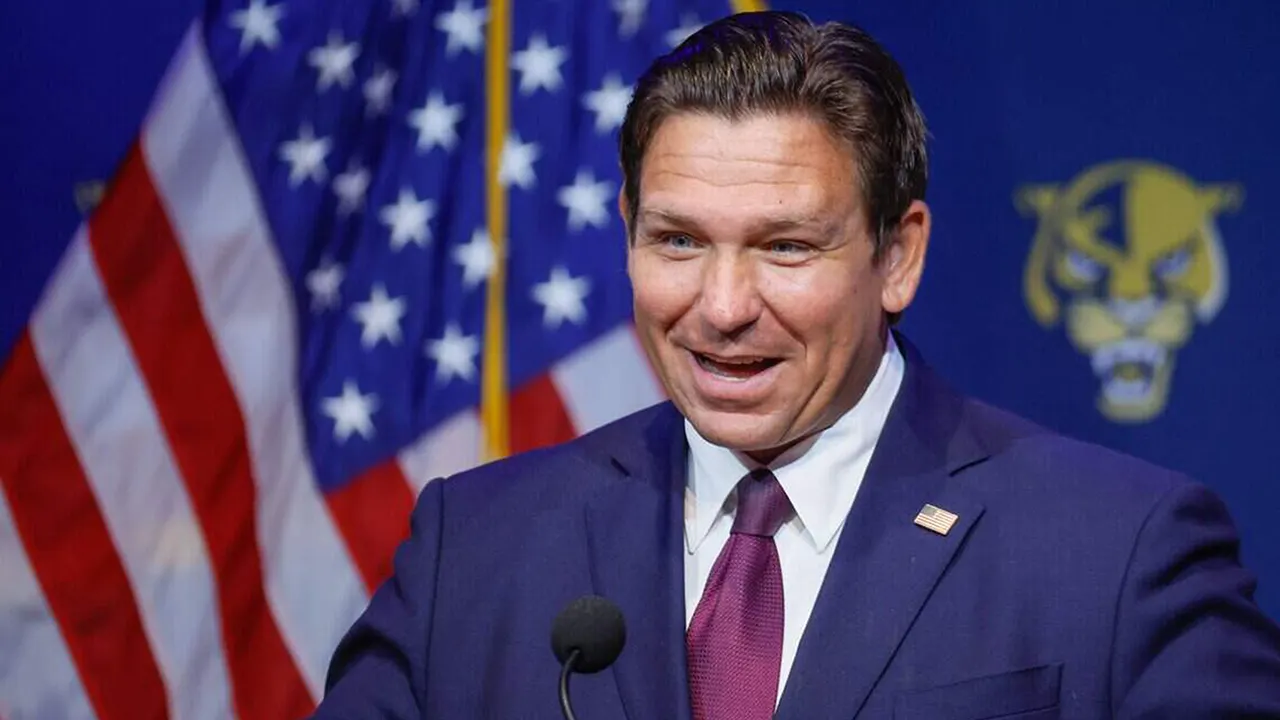
Florida Gov. Ron DeSantis holds a press conference at Florida International University in Miami on Wednesday, Aug. 26, 2026.(Getty Images)
Flock Safety, a prominent player in the ALPR market, has seen rapid expansion, securing contracts with law enforcement agencies, municipalities, and private businesses nationwide. The American Civil Liberties Union (ACLU) estimates approximately 120,000 Flock cameras are currently installed across the U.S., illustrating the scale of the market and the potential financial impact of such regulatory shifts. This widespread adoption underscores the lucrative nature of public safety technology, but also highlights its vulnerability to evolving public sentiment and government oversight.
“I guarantee you every sheriff in Florida can point to examples where it’s been used appropriately and probably effectively. And I have no doubt that that’s the case. But you also have to say, okay, how could this be misused?” DeSantis acknowledged, balancing the perceived benefits against the inherent market risks. The governor’s concern about misuse directly translates into operational risk for vendors. “We know there was an officer in Florida who was using the LPR data to track, like, an ex-girlfriend or something like that. I don’t think we have really strong penalties at all for that type of misuse,” he added, suggesting legislative action could introduce stronger penalties, potentially increasing compliance costs and liability for companies.
Rep. Byron Donalds, R-Fla., joins ‘Varney & Co.’ to discuss the gubernatorial race, his position on data centers and Florida’s ban on flock cameras.
“So I’ve called for legislation that will protect Floridians from allowing the state to turn it into some type of digital prison, digital surveillance state where somebody knows everything about what you’re doing every day of the week,” DeSantis affirmed, signaling a long-term regulatory environment that could be hostile to unchecked data collection technologies.
In response to Fox News Digital, a Flock spokesperson defended their technology, stating, “Flock’s technology is an important public safety tool for law enforcement agencies across Florida, helping officers solve serious crimes, find missing people, recover stolen vehicles and support safer communities. In just the last few weeks in Florida, the technology was used to find missing children, led to the arrest of a murder suspect and assisted in solving numerous other crimes.” The company’s statement also suggested a preference for regulatory engagement over outright bans: “Rather than banning a critical public safety tool, we support thoughtful legislation and strong privacy, transparency and accountability guardrails that ensure technology is used responsibly while preserving law enforcement’s ability to use effective tools to keep people safe.” This indicates an industry awareness of the need for robust governance but underscores the difficulty for tech firms when regulatory bodies opt for prohibition over framework development.
Knox County commissioners Larsen Jay and Andy Fox discuss privacy concerns over flock cameras in their area on ‘The Bottom Line.’
DeSantis’ office did not immediately respond to Fox News Digital’s request for comment.
GET FOX BUSINESS ON THE GO BY CLICKING HERE
Florida’s directive is not an isolated incident but rather mirrors a broader pushback gaining momentum across the country. Texas Gov. Greg Abbott recently halted state funding for Flock cameras, and numerous municipalities nationwide have either terminated or declined to renew contracts with the company. This growing trend of government contract non-renewal and outright bans represents a significant market risk, forcing companies in the public safety tech sector to re-evaluate their sales strategies and product development. Public resistance has further escalated, manifesting in proposed class-action lawsuits and reports of camera vandalism in dozens of states – all factors that erode investor confidence and increase operational costs related to security and legal defense.
READ MORE FROM FOX BUSINESS
Fox News’ Kerri Kupec Urbahn contributed to this report.
Market Impact
Florida’s ban on ALPRs within state rights-of-way sends a chilling signal through the public safety technology market. For companies like Flock Safety, which rely heavily on government contracts and subscription-based access to collected data, this represents a substantial loss of revenue and market share in a key state, potentially impacting their valuation and future investment prospects. The broader surveillance technology sector now faces heightened regulatory scrutiny and the prospect of a fragmented, state-by-state market where operational compliance costs could surge. Investors in “smart city” or AI-driven public safety solutions will likely re-evaluate risk profiles, prioritizing companies with robust data governance, transparent practices, and diversified revenue streams less reliant on potentially volatile government contracts. This move underscores the increasing materiality of data privacy and ethical AI considerations as core financial risks, forcing the industry to adapt or face further legislative and public backlash.