
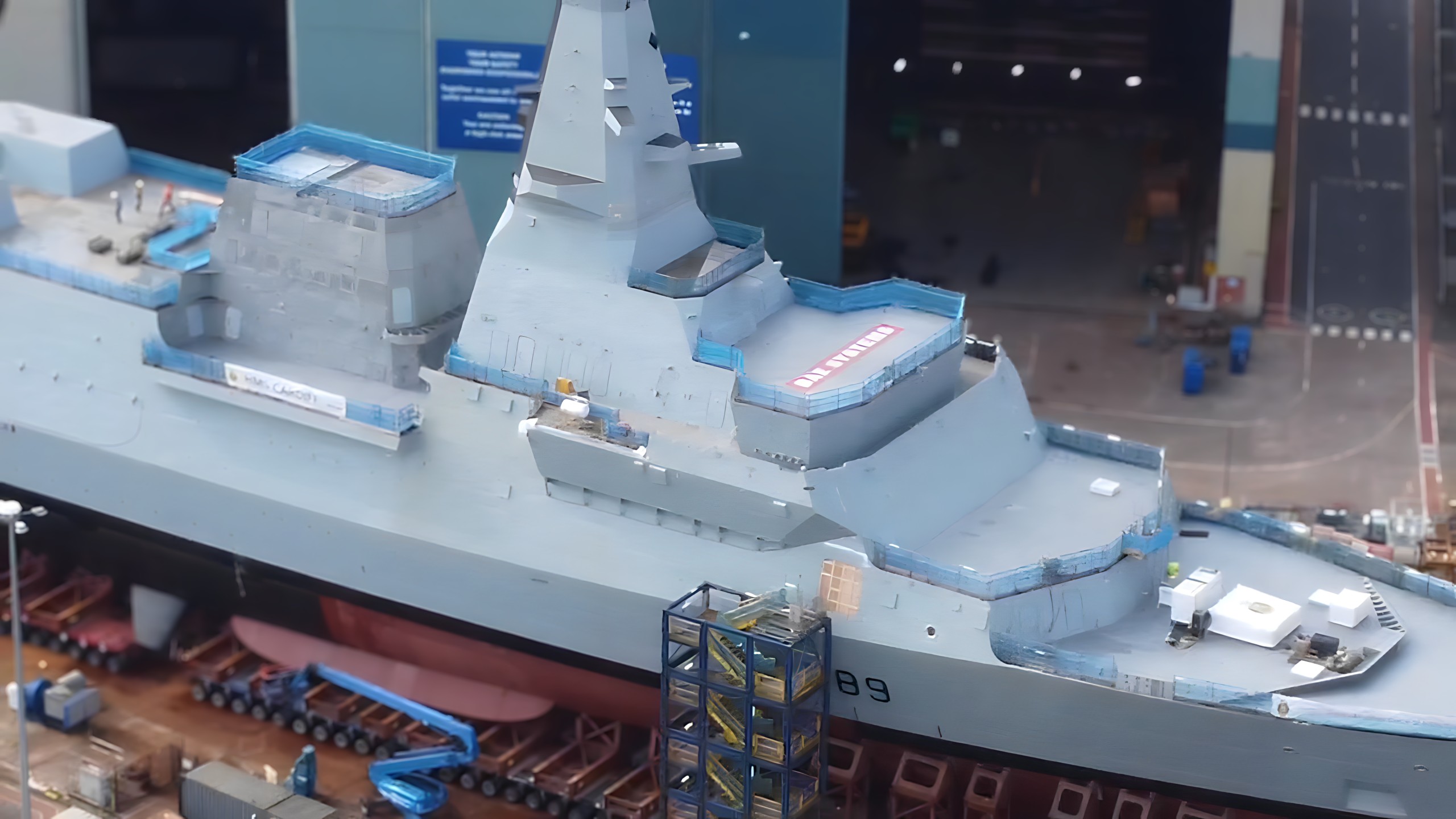
UK Considers Offering Type 26 Frigate Build Slots to Norway Amidst Enhanced NATO Cooperation
The United Kingdom is exploring the possibility of allocating specific build slots for its advanced Type 26 “City-class” anti-submarine warfare frigates to the Royal Norwegian Navy, a move designed to deepen defence cooperation and significantly bolster NATO’s capabilities on its northern flank. This development was recently confirmed by a UK defence minister in a detailed parliamentary response, underscoring the growing strategic partnership between London and Oslo.
James Pollard, the UK Minister for Defence Procurement, provided a written answer to Ben Obese-Jecty, the Conservative Member of Parliament for Huntingdon, who had inquired whether Type 26 build slots had been a topic of discussion during the minister’s talks with his Norwegian counterpart in May. Pollard affirmed that these discussions had taken place, expressing satisfaction with what he termed the “broad and ever-closer strategic partnership” with the Norwegian state secretary on May 19, 2026.
In his statement, Minister Pollard reiterated a position he had previously outlined to Mark Francois, the Conservative MP for Rayleigh and Wickford. He confirmed that the UK is actively collaborating with its Norwegian partners to “assess options for offering Type 26 build slots currently allocated to the Royal Navy to the Royal Norwegian Navy.” Crucially, Pollard provided a firm assurance regarding the UK’s own naval requirements, stating, “The UK Royal Navy will receive all eight Type 26 ships during the late 2020s and 2030s as planned.” This indicates that any reallocation would primarily facilitate Norwegian acquisition without compromising the delivery schedule for the Royal Navy’s own fleet.
Pollard elaborated on the wider strategic benefits of this potential arrangement, describing it as instrumental in forging a joint Anglo-Norwegian force. He highlighted that this initiative forms part of “Norway’s biggest ever defence procurement deal,” which is projected to result in a combined fleet of 13 Anti-Submarine Warfare frigates. This formidable force, comprising eight British and at least five Norwegian vessels, is intended to operate jointly across Northern Europe, thereby “significantly strengthening NATO’s northern flank.”
The Type 26 frigate, officially known as the City class, is a state-of-the-art warship designed specifically for anti-submarine warfare (ASW). These vessels are currently being constructed by BAE Systems at its shipyards on the Clyde in Scotland, with the primary objective of replacing the Royal Navy’s aging Type 23 frigates, which have long served as the backbone of its ASW capabilities. The Type 26 is equipped with advanced sonar suites, a large mission bay capable of deploying unmanned underwater vehicles (UUVs), and a spacious flight deck for the operation of naval helicopters, making it highly effective in detecting and tracking modern, quiet submarines in complex maritime environments.
Norway’s decision last year to select the Type 26 design underscores the warship’s international appeal and advanced capabilities. By joining Australia and Canada as international operators of the British-designed warship, Norway contributes to the creation of a common anti-submarine platform across four allied navies. This commonality fosters greater interoperability, simplifies joint training exercises, and streamlines logistical support, ultimately enhancing the overall cohesion and effectiveness of allied maritime forces.
The emphasis on strengthening NATO’s northern flank is particularly pertinent given the evolving geopolitical landscape. The High North, a region of increasing strategic importance due to its proximity to Russia and vital shipping lanes, has witnessed a noticeable increase in naval activity, including submarine operations. A combined, technologically advanced ASW fleet from the UK and Norway would provide a robust deterrent and a critical defensive capability in this sensitive area, safeguarding transatlantic security and trade routes.
From an industrial perspective, the ongoing production of the Type 26 frigates represents a substantial investment in the UK’s shipbuilding sector. BAE Systems’ facilities on the Clyde are major employers, supporting a highly skilled workforce and preserving crucial industrial capabilities in Scotland. Any potential acceleration or expansion of production to accommodate Norwegian requirements would further consolidate this industrial base, ensuring the long-term viability of advanced warship construction in the UK.
Why This Matters
This evolving defence cooperation between the United Kingdom and Norway, centered around the Type 26 frigate, carries significant implications across several critical domains:
Geopolitical Security and NATO’s Northern Flank:The primary driver behind this initiative is the enhancement of security in the strategically vital Arctic and North Atlantic regions. With increasing activity from potential adversaries, particularly Russian submarines, a joint Anglo-Norwegian anti-submarine warfare fleet provides a formidable defence. Standardizing on the Type 26, a highly capable ASW platform, directly strengthens NATO’s deterrent posture and its ability to protect crucial sea lanes, thereby reinforcing collective security in a sensitive geopolitical theatre.
Enhanced Interoperability and Alliance Cohesion:The adoption of a common naval platform by multiple allied nations—the UK, Norway, Australia, and Canada—is a cornerstone of modern defence strategy. This shared design fosters unparalleled interoperability, simplifying joint operations, standardizing training protocols, and streamlining logistical support and maintenance across different navies. This means that when allied forces operate together, they do so with greater efficiency, less friction, and enhanced overall effectiveness, making the alliance more responsive to global threats.
Industrial and Economic Impact:For the United Kingdom, the continued and potentially expanded production of Type 26 frigates by BAE Systems on the Clyde represents a substantial boost to its defence industrial base. It secures high-value manufacturing jobs, preserves critical engineering skills, and demonstrates the UK’s enduring capability as a leading warship designer and builder. For Norway, this “biggest ever defence procurement deal” signifies a major, strategic investment in its national security, leveraging a proven design while deepening economic and defence ties with a key European ally.
Advancement of Naval Capabilities:The Type 26 “City-class” frigate is at the forefront of anti-submarine warfare technology. Its advanced sensor suites, flexible mission bay, and ability to operate sophisticated naval helicopters and unmanned systems provide a significant leap in capability. This acquisition ensures that both the UK and Norway will possess cutting-edge tools to detect, track, and neutralize modern submarine threats, thereby safeguarding maritime interests and projecting naval power in complex global environments for decades to come.
Reinforcing Bilateral and Multilateral Alliances:Beyond the military hardware, this collaboration underscores a robust and deepening commitment between the UK and Norway, and by extension, within the broader NATO framework. It exemplifies a willingness among allies to pool resources, innovate, and share burdens to address evolving security challenges. This precedent for deeper military and industrial integration highlights the ongoing importance of strong alliances in navigating an unpredictable global landscape.