
Unlock the White House Watch newsletter for free
Your guide to what Trump’s second term means for Washington, business and the world
Key Takeaways
- Geopolitical Risk Premium Eases:Former President Trump’s intervention to de-escalate tensions between Israel and Hizbollah temporarily reduced the geopolitical risk premium embedded in global energy markets, most notably impacting crude oil prices.
- US Diplomatic Influence Critical:The episode underscores the significant and immediate market-moving power of US diplomatic engagement in the Middle East, directly influencing commodity prices, investor sentiment, and regional stability.
- Underlying Volatility Persists:While immediate de-escalation brought relief, the deep-seated regional tensions, coupled with the precariousness of ceasefires and the broader Iran-US negotiations, mean market volatility tied to Middle Eastern geopolitics remains a persistent risk factor for investors.
Israeli Prime Minister Benjamin Netanyahu has come under intense scrutiny from both domestic allies and international observers after unexpectedly retracting threats to launch significant military strikes against Hizbollah targets in Beirut. This dramatic climbdown followed direct and heavy pressure from former US President Donald Trump, sending immediate ripples through global commodity markets.
Netanyahu’s initial declaration on Monday morning, ordering military action in retaliation for Hizbollah’s drone attacks on northern Israel, had immediately ratcheted up geopolitical risk. The directive signaled a severe escalation of hostilities, threatening to shatter a fragile ceasefire between the two sides – a truce that Trump himself had brokered in April. Such an escalation would have typically seen a sharp rise in oil prices, gold as a safe-haven asset, and potentially a flight to quality in bond markets, reflecting investor anxiety over supply disruptions in a critical energy-producing region.
However, the market narrative shifted dramatically after a pivotal call between Trump and Netanyahu on Monday evening. During this exchange, the US president reportedly demanded that Israel abandon its plans for a “major raid.” Confirming the impact of his intervention, Trump subsequently claimed on his Truth Social platform that Netanyahu had “turned his Troops around.” He optimistically stated, “[Hizbollah] agreed to stop shooting at Israel and its soldiers. Likewise, Israel agreed to stop shooting at them. Let’s see how long that lasts — Hopefully it will be for ETERNITY!”
This swift de-escalation immediately translated into a tangible market reaction. Oil prices, which had been poised for a potential surge, instead fell sharply on Tuesday, reflecting hopes of averted conflict. Brent crude, the international benchmark, dropped 1.4 per cent to $93.70 a barrel. US oil prices mirrored this trend, also falling 1.4 per cent to $90.90 a barrel. This movement highlights the extreme sensitivity of energy markets to Middle Eastern geopolitical developments, where any perceived reduction in supply disruption risk can have an immediate downward pull on prices. Conversely, any hint of escalation rapidly inflates the geopolitical risk premium, driving prices higher.
Netanyahu’s unexpected retreat has drawn fire from across the Israeli political spectrum. The decision came amid mounting domestic frustration over the perceived failure to neutralize Hizbollah, with opinion polls suggesting a strong public appetite for more aggressive action. Naftali Bennett, the right-wing former prime minister and a key political rival, accused Netanyahu of “losing control over Israeli sovereignty.” Yair Lapid, leader of the largest opposition party Yesh Atid, lambasted the prime minister for presiding over a “vassal state,” while Gadi Eisenkot of the centrist Yashar party lamented on X (formerly Twitter): “There has never been a prime minister in Israel who accepted such a humiliating demand.”
Even within Netanyahu’s own far-right coalition, dissent emerged. National security minister Itamar Ben-Gvir publicly urged Netanyahu to defy Trump’s demands, tweeting: “You said that a strong prime minister tells the President of the United States — ‘yes’ when possible, and ‘no’ — when necessary. This is the time to tell our friend, President Trump — ‘no’.” He added, “Now is the time to do what is required and necessary to strike Hizbollah, to unleash the hands of our fighters, and to restore security to the north.” Such internal political pressures, particularly ahead of a looming election, add another layer of uncertainty to regional stability, potentially influencing future policy decisions that could impact markets.
Trump’s intervention also coincided with broader US diplomatic efforts concerning Iran. State-affiliated Iranian media reported on Monday that Tehran was suspending negotiations with the US over extending a separate ceasefire between Washington and Iran. The stated reason was Israel’s escalating military campaigns in Lebanon and Gaza. Iran has consistently linked any extension of its ceasefire with the US to a broader truce between Israel and Hizbollah, its most significant regional proxy. The intertwining of these negotiations underscores the complex web of Middle Eastern geopolitics, where developments in one theatre can directly impact others, with significant implications for global energy supply and security.
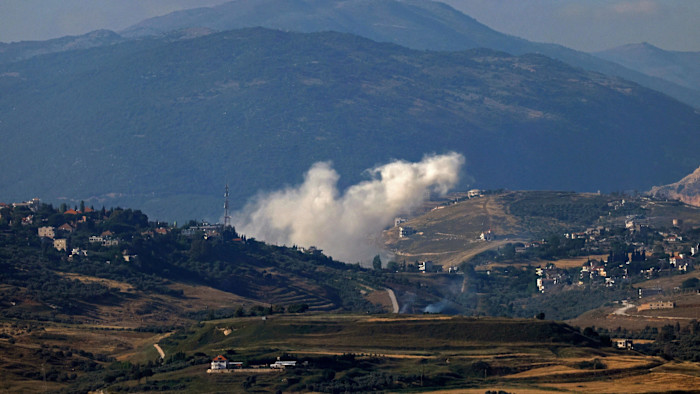
Despite the de-escalation regarding Beirut, Israel continued to carry out air strikes on southern Lebanon. On Tuesday, drone strikes tragically killed eight people, including two children and their father, according to the Associated Press. Lebanon’s state-run civil defence also reported a direct hit on its centre in Kfar Sir, in the Nabatieh district. These continued, albeit localized, hostilities highlight the persistent, simmering conflict that underlies the region, maintaining a baseline level of geopolitical risk for investors.
The recent days have marked the most intense fighting between Israel and Hizbollah since the nominal ceasefire was announced on April 16. The Israeli army’s deeper incursions into Lebanon, the declaration of southern Lebanon as a “combat zone,” and the displacement of hundreds of thousands of Lebanese civilians indicate the severe human and economic cost of this ongoing instability. For Lebanon, a nation already grappling with a profound economic crisis, sustained conflict further undermines reconstruction efforts, deters foreign direct investment, and exacerbates humanitarian challenges, all of which contribute to sovereign risk.
Hizbollah, for its part, has launched repeated salvos of rockets and drones at Israel, forcing Israel to limit educational activities and gatherings in its northern communities. While Hizbollah did not claim any attacks on Israeli territory immediately after Trump’s announcement, it did report targeting Israeli forces attempting to advance into the Lebanese village of Hadatha late Monday night. This continued tit-for-tat dynamic means that while a full-blown war may have been momentarily averted, the region remains a powder keg, necessitating constant vigilance from market participants.
In further media posts after his Lebanon intervention, Trump stated that talks with Iran were “continuing, at a rapid pace.” He later told ABC News that he anticipated an agreement with Tehran to extend the ceasefire and reopen the Strait of Hormuz “over the next week.” The Strait of Hormuz is a critical chokepoint, through which approximately 20% of the world’s petroleum liquids and a significant portion of liquefied natural gas (LNG) pass. Any threat to its free passage, often linked to Iran’s posture, immediately translates into higher shipping costs, increased insurance premiums, and a substantial upward pressure on global energy prices. Trump’s optimistic outlook on reopening the strait is a significant market-positive signal, reducing the perceived risk of supply chain disruptions and inflationary pressures from energy costs.
Additional reporting by Malaika Kanaaneh Tapper in Beirut
Market Impact
The swift de-escalation of the Israel-Hizbollah conflict, primarily driven by US diplomatic intervention, provided immediate relief to global markets, particularly in the energy sector. The retreat from a full-scale military confrontation saw oil prices pull back, easing fears of broader regional instability that could disrupt critical supply routes like the Strait of Hormuz. This temporary reduction in geopolitical risk premium is crucial for central banks grappling with inflation and for consumers worldwide. However, investors must remain cognizant that while an immediate crisis was averted, the underlying tensions and the fragility of regional ceasefires persist. The interplay between US foreign policy, internal Israeli political dynamics, and Iran’s strategic calculations will continue to be a primary driver of market volatility. Future developments concerning the Iran-US ceasefire, the status of the Strait of Hormuz, and any renewed escalation between Israel and Hizbollah will dictate the trajectory of commodity prices, safe-haven demand, and overall investor confidence, underscoring the enduring influence of Middle Eastern geopolitics on global economic stability.