
On June 2, a significant escalation of hostilities occurred between the United States and Iran, marking the fifth day of such exchanges in just over a week. The confrontations involved drone and missile launches by Iran targeting U.S. forces and commercial shipping, met with U.S. responses including the interception of projectiles and targeted airstrikes on Iranian military facilities. This latest round of fighting has placed considerable strain on an “ongoing ceasefire” that American officials maintain remains in effect, raising concerns about the stability of the region and the future of diplomatic efforts between the two nations.
The day’s events commenced with a U.S. military action against an oil tanker, the M/T Lexie. A U.S. aircraft fired an AGM-114 Hellfire missile at the engine room of the vessel, which was reportedly empty and attempting to bypass an American military blockade to reach Iran’s Khang Island. This tactic, employed previously by the U.S. to disable another vessel on May 29, is part of a broader operation initiated on April 13 to enforce sanctions against Iranian oil exports. According to U.S. Central Command (CENTCOM), this blockade has led to the disabling of six vessels and the redirection of 122 others. While such actions have not typically provoked significant military responses from Iranian forces in the past, the incident involving the M/T Lexie quickly escalated into the most substantial tit-for-tat exchange since the ceasefire was established in early April.
Following the tanker incident, CENTCOM reported “attempted attacks by Iran across the Middle East.” Iran launched three one-way attack drones directed towards commercial ships navigating the Persian Gulf. U.S. forces successfully shot down these drones. In response, the U.S. conducted what it termed “self-defense” airstrikes, targeting an “Iranian military ground control station” located on Qeshm Island. This island, strategically positioned off the coast of Iran near the Strait of Hormuz, has been a frequent target of U.S. military actions over the preceding week.
Moments after the drone interceptions, Iran launched ballistic missiles towards Kuwait and Bahrain, both nations hosting U.S. military bases. CENTCOM stated that two missiles fired in the direction of Kuwait either fell short of their target or disintegrated mid-air. Simultaneously, three missiles aimed at Bahrain were intercepted by a combination of U.S. and Bahraini air defense systems. According to the American account, none of these missiles reached their intended targets. This followed a similar incident last week, when Iran reportedly targeted Ali Al Salem Air Base in Kuwait with a ballistic missile, drawing sharp condemnation from U.S. officials.
Iran’s Islamic Revolutionary Guard Corps (IRGC) presented a contrasting narrative of the events, attributing the escalation to the U.S. attack on the M/T Lexie, which they identified as a vessel previously sanctioned by the U.S. for transporting Iranian oil. The IRGC asserted that, in retaliation, its forces launched missiles at a vessel they described as “belonging to the American-Zionist enemy.” Furthermore, the IRGC claimed that U.S. airstrikes on what it referred to as a “communications tower” on Qeshm Island prompted its subsequent launch of ballistic missiles. These missiles were reportedly aimed at the U.S. 5th Fleet Headquarters in Bahrain and an unspecified air base housing U.S. aircraft and helicopters, an apparent reference to Ali Al Salem Air Base. CENTCOM, however, maintained that these missiles did not reach the facilities identified by the IRGC.
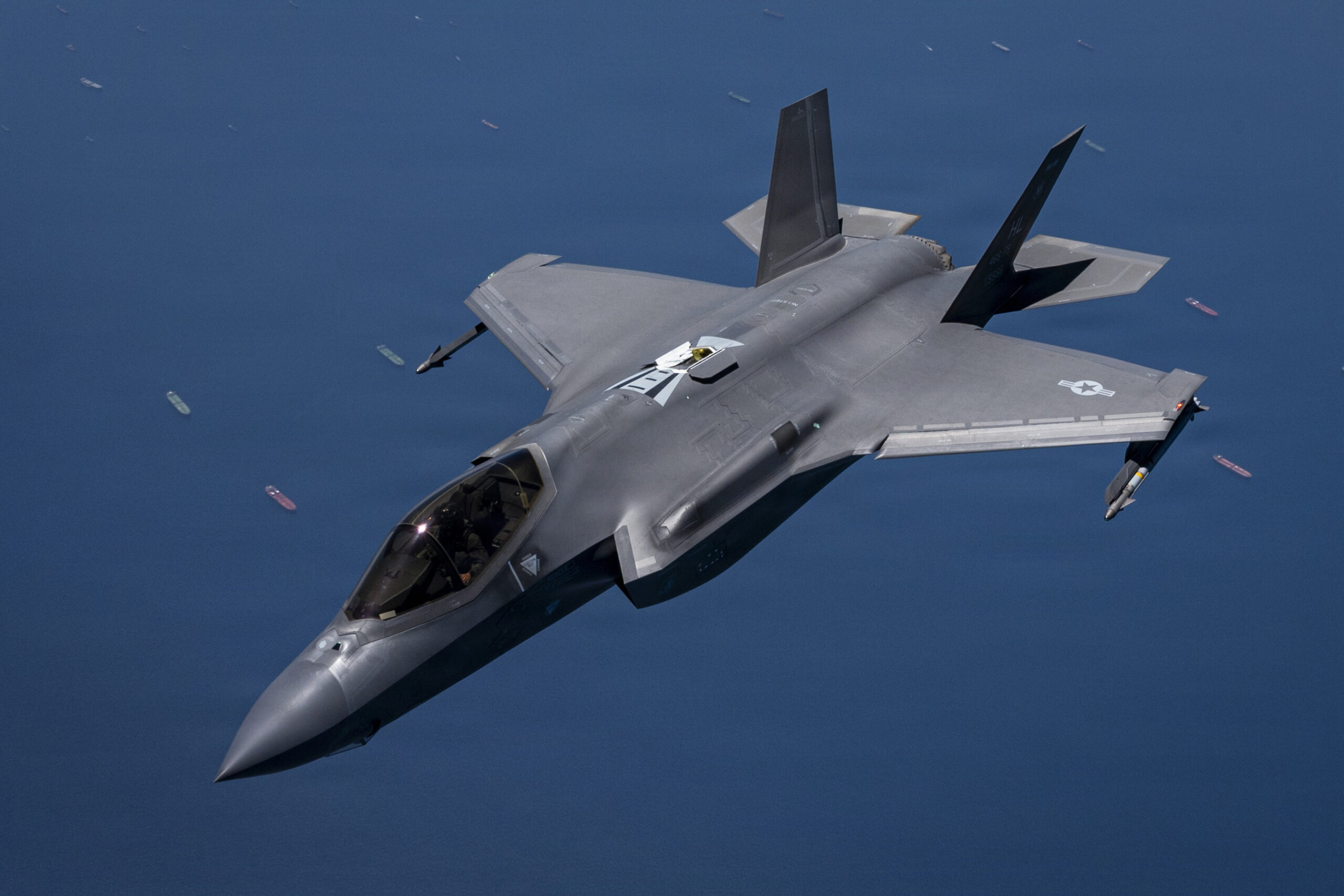
The U.S. military responded with further actions, dispatching fighter aircraft to target Iranian air defenses, another ground control station, and two additional one-way attack drones that CENTCOM assessed as posing a threat to commercial shipping. The June 2 exchanges followed earlier confrontations between the U.S. and Iran on May 25 and May 27, signaling a consistent pattern of low-level conflict.
The recurring nature of these hostilities underscores the fragile state of relations between Washington and Tehran, particularly given the assertion by American officials that an “ongoing ceasefire” remains in effect since early April. The frequency and intensity of the recent clashes, however, appear to challenge the practical efficacy of any such agreement. On May 30 and 31, for instance, the U.S. launched a series of “measured and deliberate” airstrikes on locations in Goruk, Iran, and Qeshm Island. These strikes were conducted in retaliation for Iran’s downing of a U.S. MQ-1 Predator drone. The persistent cycle of provocation and retaliation reached a further peak late on the evening of June 2, when CENTCOM reported that Iran launched yet more drones towards Kuwait, indicating a continued willingness to test the limits of the current, volatile situation.
Why This Matters
The recent escalation of hostilities between the United States and Iran carries significant implications for regional stability, international commerce, and the broader geopolitical landscape. The re-ignition of direct military exchanges, despite U.S. claims of an “ongoing ceasefire,” signals a dangerous erosion of restraint that could easily spiral into a wider, more devastating conflict in the Middle East.
Regional Stability and Alliances:The targeting of Kuwait and Bahrain with ballistic missiles by Iran directly threatens U.S. military personnel stationed in these countries and tests the resolve of critical American allies in the Gulf. Any miscalculation or successful strike against these bases could compel a more forceful U.S. response, potentially drawing other regional actors into the conflict. It also puts immense pressure on countries like Kuwait and Bahrain, who host U.S. forces while seeking to maintain a delicate balance with their larger neighbor, Iran. The stability of the entire Persian Gulf region, a historical flashpoint, is severely jeopardized by this persistent military posturing.
Global Economy and Energy Security:The Strait of Hormuz, located adjacent to Qeshm Island and a focal point of recent U.S. and Iranian military actions, is one of the world’s most critical chokepoints for oil transit. Iran’s actions, including drone attacks on commercial shipping, directly threaten the free flow of international commerce and energy supplies. Disruptions in this vital waterway, even minor ones, can send shockwaves through global energy markets, leading to increased oil prices and economic instability worldwide. The U.S. blockade strategy, aimed at curtailing Iranian oil exports, is itself a significant factor contributing to these tensions, balancing economic pressure against the risk of direct confrontation.
Diplomatic Impasse and Future Negotiations:The repeated exchanges of fire severely undermine any existing or future diplomatic efforts to de-escalate tensions or revive broader negotiations between Washington and Tehran. The concept of an “ongoing ceasefire” appears increasingly tenuous with each incident, making it difficult for either side to build trust or find common ground. Both nations seem to be testing each other’s red lines, inadvertently raising the stakes for any potential dialogue. A sustained period of such military engagement makes it significantly harder to address underlying issues, such as Iran’s nuclear program or its regional proxy activities, through non-military means.
Risk of Miscalculation:The rapid back-and-forth nature of the recent clashes, involving drones, missiles, and airstrikes, significantly heightens the risk of unintended escalation. The downing of an MQ-1 drone by Iran, for instance, prompted retaliatory U.S. airstrikes. Similarly, the targeting of commercial vessels and U.S. military assets could lead to a response that one side perceives as disproportionate, triggering an uncontrollable cycle of retaliation. The complex interplay of ground control stations, air defenses, and various types of munitions in a contested space like the Persian Gulf creates a fertile ground for misjudgment or accidental engagement, with potentially catastrophic consequences.