
Check out what’s clicking on FoxBusiness.com.
Key Takeaways
- A new HHS study suggests Trump-era executive orders, enacted in 2020, significantly lowered insulin costs below $35 for a 30-day supply, predating and challenging the narrative surrounding the 2022 Inflation Reduction Act’s cap.
- The policies targeted various market inefficiencies, including opaque Pharmacy Benefit Manager (PBM) rebate schemes, federally qualified health center (FQHC) discount utilization, and international drug pricing disparities, signaling a multi-pronged approach to market intervention.
- The ongoing political debate over credit for reduced insulin prices highlights persistent regulatory risk and public scrutiny for pharmaceutical manufacturers, PBMs, and healthcare providers, influencing investment sentiment and future policy directions.
A recently uncovered study from the Department of Health and Human Services (HHS) is poised to reshape the discourse around pharmaceutical pricing, particularly concerning insulin. The report, obtained by FOX Business and slated for imminent public release, asserts that policies initiated during President Donald Trump’s first administration were instrumental in driving down the cost of a 30-day supply of insulin for certain patients to below $35.
This finding introduces a critical market context by suggesting that significant price reductions occurred well before the enactment of the Inflation Reduction Act (IRA) in 2022, a piece of legislation frequently credited by the Biden administration for capping insulin costs at $35. The HHS study’s implications extend beyond political attribution, offering valuable insights into the efficacy of different policy levers in a highly complex and often opaque pharmaceutical market.
On July 24, 2020, President Trump signed four executive orders (EOs) specifically aimed at tackling the burgeoning costs of life-saving insulin. Each order targeted a distinct facet of the drug supply chain, reflecting an attempt to introduce competition, transparency, and consumer-centric pricing mechanisms.
The first EO mandated that federally qualified health centers (FQHCs) pass along discounts received from drug manufacturers directly to patients, rather than retaining them. This move was designed to redirect benefits from the highly profitable 340B drug pricing program – which obligates pharmaceutical manufacturers to provide outpatient drugs to eligible healthcare organizations at significantly reduced prices – directly to the end-consumer. Prior to this, FQHCs often retained a portion of these discounts, using them for operational costs, a practice that, while supporting community health, did not always translate to lower out-of-pocket costs for patients at the point of sale. For pharmaceutical companies, this meant greater scrutiny on their discount programs and potential pressure on gross-to-net sales.
The second order opened avenues for state health plans to import “safe” insulin and established a pathway for personal importation waivers at authorized pharmacies. This policy sought to leverage international price differentials, where insulin often sells for significantly less than in the United States, to introduce cheaper supply into the domestic market. While drug importation faces myriad regulatory hurdles, including safety concerns and intellectual property issues, the intent was to stimulate competition and pressure domestic manufacturers to lower prices. This aspect of the policy represented a significant challenge to the traditional closed U.S. pharmaceutical market and its pricing power.
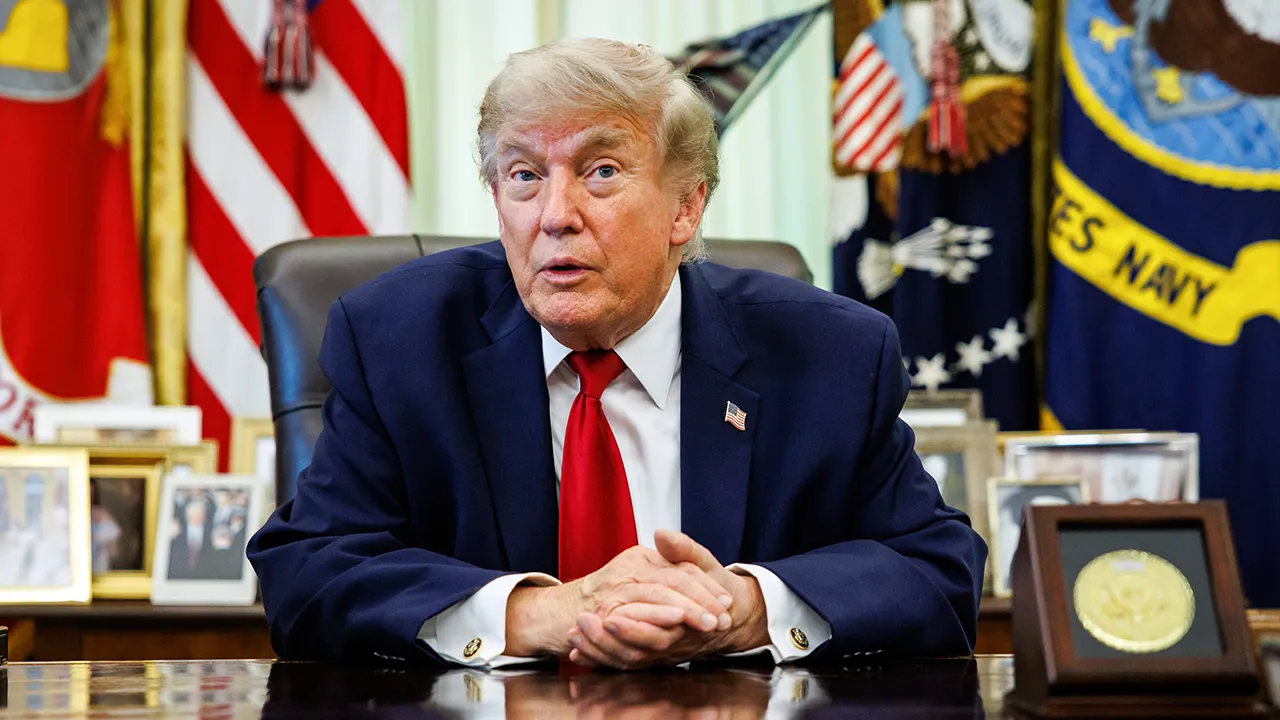
Trump signed four executive orders aimed at lowering costs of the life-saving treatment on July 24, 2020.(Samuel Corum/Sipa/Bloomberg via Getty Images)
The third EO directly targeted the intricate web of “secret deals” involving healthcare middlemen, primarily Pharmacy Benefit Managers (PBMs). It aimed to ensure that drug manufacturing discounts, often in the form of rebates, would flow directly to customers rather than being retained by PBMs. PBMs play a crucial, yet controversial, role in the pharmaceutical supply chain, negotiating prices with manufacturers, developing drug formularies, and processing prescriptions. Their business model heavily relies on rebates, which they often pocket or use to reduce premiums for insurers, but rarely pass directly to patients at the pharmacy counter. This policy sought to inject transparency into a notoriously opaque system, potentially disrupting PBM revenue models and reallocating value closer to the patient.
Finally, the fourth executive order mandated that U.S. consumers should pay the lowest price paid by other developed countries for prescription drugs and opened the door for Medicare to negotiate terms of insulin payments. This “most favored nation” policy aimed to address the persistent disparity between U.S. drug prices and those in other nations with nationalized healthcare systems that typically negotiate lower prices. Furthermore, empowering Medicare, a significant payer in the U.S. healthcare system, to negotiate drug prices has long been a contentious issue, viewed by proponents as a vital tool to control costs and by opponents as a threat to pharmaceutical innovation and R&D investment.
US SHOULDERS DISPROPORTIONATE COST OF NEW MEDICATIONS, REPORT FINDS
The HHS report, supported by a chart tracking commercial and Medicare insulin costs, indicates a near-immediate and tangible reduction in medication prices following these executive actions. This data point is particularly salient given the subsequent passage of the Inflation Reduction Act, which enshrined a $35 insulin cap for Medicare beneficiaries and many commercial plans. The study suggests that the market trajectory for lower insulin costs was already established before the IRA, challenging the dominant narrative.
“While Joe Biden tried taking credit for $35 insulin, the data is clear: this was President Trump’s success alone, and the second Trump administration continues to harness competition and consumer empowerment with TrumpRx to deliver more relief for everyday Americans,” stated White House senior deputy press secretary Kush Desai, underscoring the political implications and the potential use of this report in future electoral campaigns.
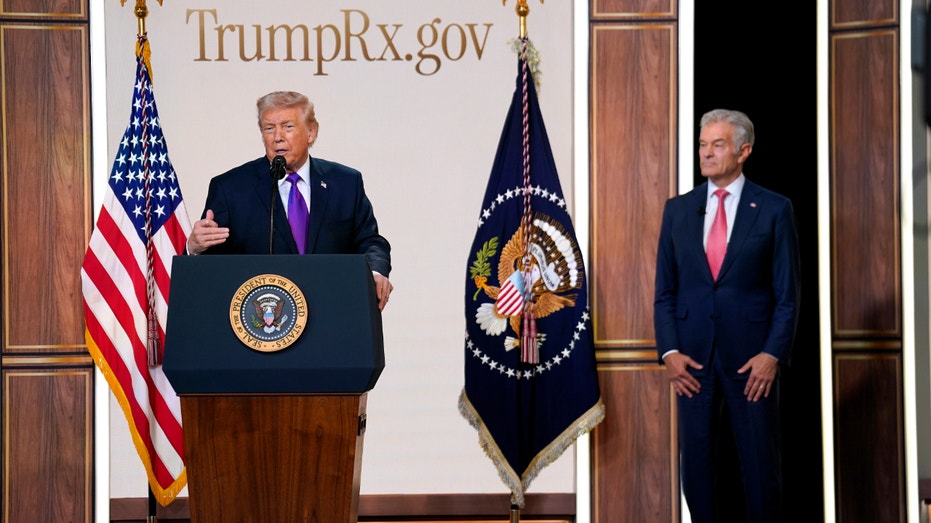
President Donald Trump speaks as Administrator for the Centers for Medicare & Medicaid Services Mehmet Oz looks on during an event on drug pricing in the South Court Auditorium on the White House campus on Feb. 5, 2026, in Washington, D.C.(Nathan Howard/Getty Images)
The pharmaceutical industry’s response to these policy shifts has been one of adaptation and strategic communication. Major insulin manufacturers like Sanofi and Novo Nordisk, who dominate the global insulin market alongside Eli Lilly, have made their own announcements regarding $35 insulin doses. Adam Gluck, head of U.S. corporate affairs at Sanofi, commented in September 2025, “We will continue to work with policymakers and stakeholders across the healthcare system on additional sustainable, long-term solutions to improve access to medicines.” Similarly, Novo Nordisk stated in January 2024, “Novo Nordisk recognizes that some patients find it difficult to pay for healthcare, including insulin. As such, the Company remains committed to reducing the burden of out-of-pocket costs, helping transform the complex pricing system, and fostering better pricing predictability.” These statements reflect an industry grappling with intense public and political pressure, often positioning themselves as part of the solution while navigating complex pricing structures and shareholder expectations.
MERCK, SANOFI ARE LATEST COMPANIES TO ADD MEDICATIONS TO TRUMPRX
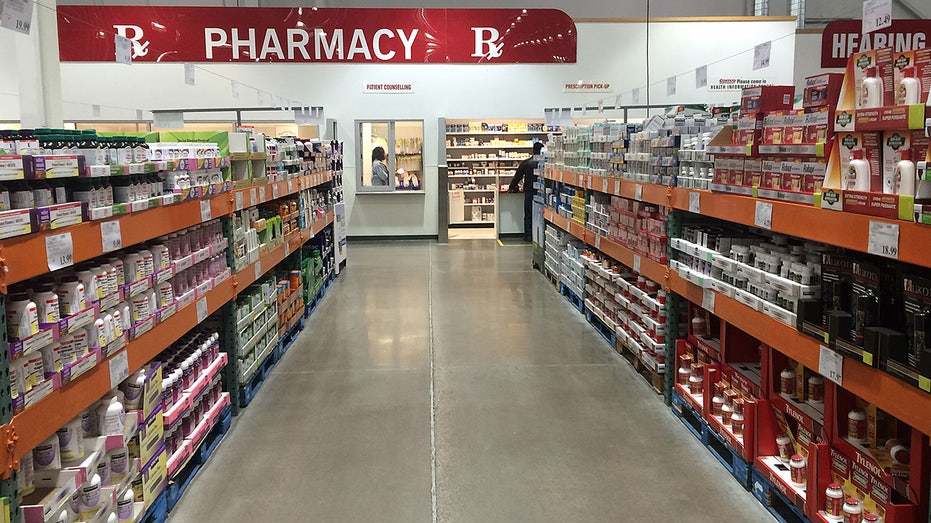
Nonmembers may use Costco pharmacies, the retail giant says on its customer service website.(Toronto Star Archives/Toronto Star via Getty Images)
Looking ahead, the Trump administration believes that further cost reductions will materialize through initiatives like TrumpRx.gov and the strategic application of tariff policies. TrumpRx.gov is envisioned as a digital platform designed to increase transparency and foster competition, potentially bypassing traditional PBM channels. The use of tariffs, while primarily a trade tool, could also be leveraged to influence the pricing of imported pharmaceutical components or finished drugs, adding another layer of complexity to the global supply chain dynamics and potentially driving down costs or, conversely, increasing them depending on retaliatory measures or supply disruptions.
BRISTOL MYERS SQUIBB ADDING 3 MEDICATIONS ON TRUMPRX
GET FOX BUSINESS ON THE GO BY CLICKING HERE
Market Impact
This HHS report introduces significant market uncertainty and re-evaluates the efficacy of different government interventions in drug pricing. For pharmaceutical companies, it underscores the persistent political and regulatory risk associated with pricing strategies, potentially leading to increased R&D focus on non-insulin therapies or accelerated biosimilar development to maintain market share under price caps. PBMs face continued scrutiny and potential disruption to their rebate-driven business models, which could necessitate diversification of services or consolidation within the industry. Investors in the healthcare sector, particularly those with exposure to pharmaceutical manufacturers, PBMs, and specialized healthcare providers, will need to carefully track shifting policy narratives and potential legislative or executive actions. The political contestation over credit for lower insulin costs ensures that drug pricing will remain a high-priority issue, driving volatility and demanding adaptability from all market participants as the healthcare industry navigates an evolving landscape of price transparency, competition, and government oversight.