
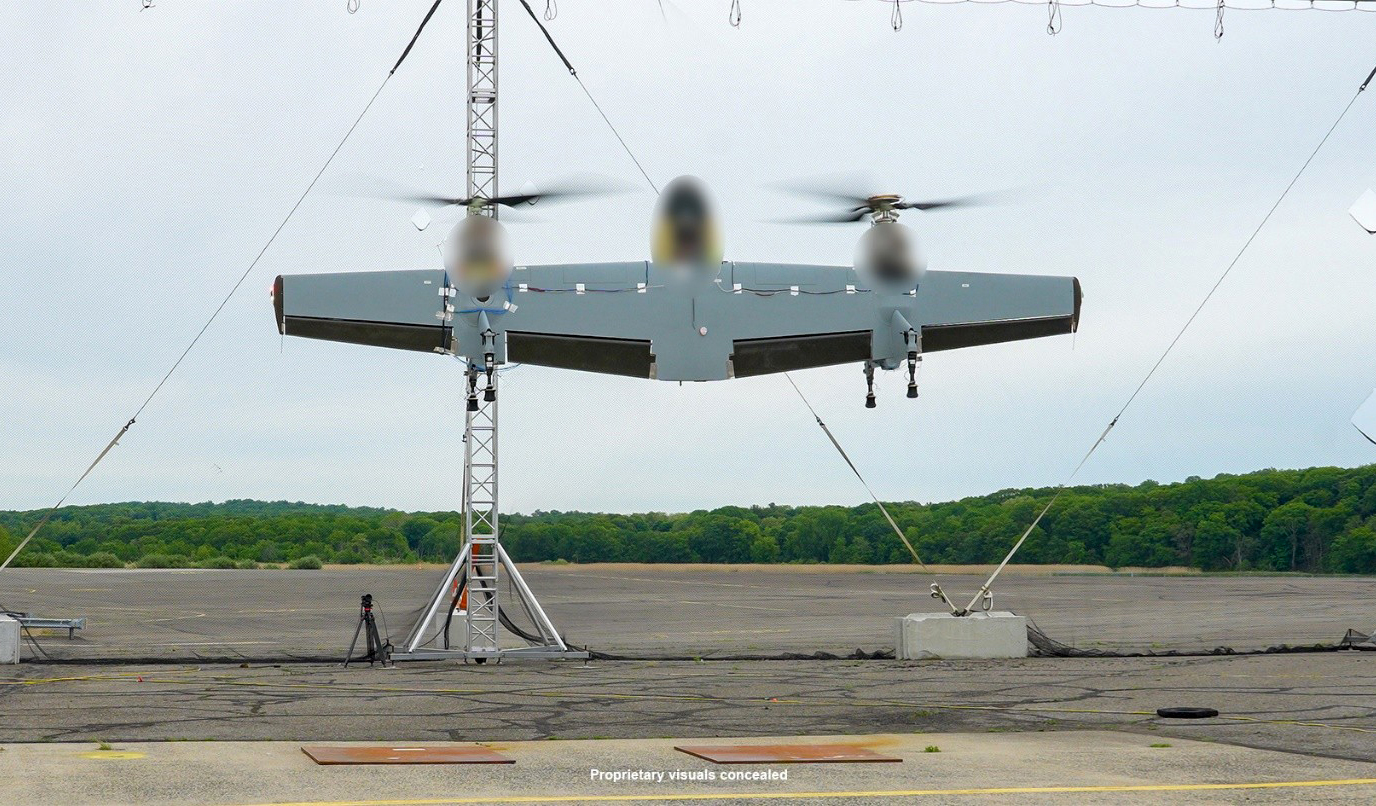
Sikorsky’s Nomad 100 Uncrewed Aircraft System Completes Initial Testing Under DARPA EVADE Program
Sikorsky, a Lockheed Martin company, has announced the successful completion of initial ground and flight testing for its Nomad 100 uncrewed aerial system (UAS). This significant milestone was achieved through a collaborative effort with the Defense Advanced Research Projects Agency (DARPA) as part of its Early VTOL Aircraft Demonstration (EVADE) program. The company stated that these tests represent a crucial step forward in its objective to deliver advanced uncrewed systems designed for personnel operating in complex and contested environments.
The EVADE program, initiated by DARPA, focuses on developing and demonstrating novel vertical take-off and landing (VTOL) aircraft concepts that offer enhanced performance and operational flexibility for future military applications. Sikorsky’s participation in this program underscores a broader industry trend towards integrating advanced autonomous capabilities into future defense platforms. The Nomad 100 is engineered to provide critical support in scenarios where traditional crewed aircraft might face significant risks or operational limitations, thereby aiming to augment human capabilities rather than replace them.
Rich Benton, Vice President and General Manager of Sikorsky, emphasized the company’s strategic vision in a recent press release, stating,“Nomad 100’s ongoing flight testing reflects our commitment to advancing autonomous technology while delivering safe and reliable mission capabilities that equip customers to fill critical operational gaps. Nomad will serve as part of a crewed-uncrewed team complementing missions anywhere from austere forward operating bases to ship decks and unimproved landing zones.”This statement highlights the aircraft’s intended role not merely as an autonomous drone, but as an integral component of a Manned-Unmanned Teaming (MUM-T) concept, designed to work collaboratively with human operators.
Following these initial evaluations, which confirmed fundamental operational capabilities and safety parameters, the Nomad 100 is slated to proceed with an intensive flight test campaign. This next phase will take place at a government facility, where the UAS will undergo rigorous assessment aimed at replicating a diverse array of multirole missions. Such missions are expected to include intelligence, surveillance, and reconnaissance (ISR) tasks, logistical support, and potentially other specialized operations, thereby demonstrating its versatility and robustness in various operational contexts.
A distinctive feature of the Nomad 100 is its innovative rotor blown wing architecture. This design ingeniously combines the vertical lift and hovering capabilities characteristic of a helicopter with the high speed, extended range, and endurance typically associated with a fixed-wing aircraft. The system incorporates a twin prop-rotor configuration, enabling seamless transitions between vertical take-off and landing (VTOL), stable hover flight, and efficient forward cruise on its wing. This allows for runway-independent operation across diverse terrains, including unprepared land sites and maritime platforms such as naval ship decks, significantly expanding its operational footprint and flexibility compared to conventional aircraft.
Sikorsky positions the Nomad as its primary entry into the burgeoning uncrewed market, leveraging decades of expertise in rotorcraft design and advanced autonomy. The platform integrates cutting-edge technologies, including artificial intelligence (AI) for enhanced decision-making, advanced manufacturing techniques for efficient production, and electric propulsion systems for improved efficiency and reduced environmental impact. This combination is intended to produce a high-performance, cost-effective, and scalable VTOL platform capable of meeting evolving defense requirements with agility and adaptability.
A critical component enabling the Nomad 100’s advanced capabilities is Sikorsky’s proprietary MATRIX autonomous technology. DARPA has specifically selected MATRIX as the foundational autonomy solution for all five platforms under the EVADE program, underscoring its proven reliability and sophistication. This same proprietary technology is also integral to other uncrewed platforms developed by Sikorsky, such as the S-70UAS U-Hawk demonstrator and the company’s hybrid electric demonstrator, showcasing its versatility and maturity across different aircraft types and mission profiles.
According to data provided by Sikorsky, the MATRIX system has accumulated an impressive track record, logging more than 1,000 flight hours and undergoing over 500 tests and demonstrations across various applications. Furthermore, it has been instrumental in training more than 100 operators in autonomous flight principles and has been successfully integrated onto more than 20 distinct platforms to date. These statistics highlight the robust development and extensive validation of MATRIX, positioning it as a mature and reliable solution for advanced autonomous flight operations in demanding environments.
Why This Matters
The successful initial testing of Sikorsky’s Nomad 100 Uncrewed Aerial System under DARPA’s EVADE program marks a significant advancement with profound implications for military operations, technological development, and the future landscape of defense capabilities.
Enhanced Operational Flexibility and Reduced Risk:The Nomad 100’s unique rotor blown wing architecture, enabling both VTOL and high-speed flight, provides unprecedented operational flexibility. This capability allows military forces to deploy and recover aerial assets from virtually any location, including austere forward operating bases, small naval vessels, and unimproved landing zones, without reliance on fixed runways. Crucially, by deploying uncrewed systems in contested or high-threat environments, the Nomad 100 significantly reduces the risk to human personnel, allowing for persistent intelligence, surveillance, and reconnaissance (ISR) or critical logistics missions to be carried out where it would be too dangerous for crewed aircraft.
Advancing Manned-Unmanned Teaming (MUM-T):The Nomad 100 is specifically designed to operate as part of a “crewed-uncrewed team.” This Manned-Unmanned Teaming (MUM-T) concept is a cornerstone of future military doctrine, allowing crewed aircraft and their operators to leverage the strengths of autonomous systems. UAS like the Nomad can scout ahead, extend sensor ranges, carry additional payloads, or act as decoys, thereby multiplying the effectiveness and survivability of human-crewed platforms. This integration promises to revolutionize tactical operations, enabling more complex missions with greater efficiency and lower risk across a wide spectrum of military operations.
Technological Convergence and Innovation:The development of the Nomad 100 showcases the powerful convergence of several cutting-edge technologies: advanced aerodynamics (rotor blown wing), sophisticated artificial intelligence for autonomy (Sikorsky’s MATRIX system), advanced manufacturing techniques, and electric propulsion. This synthesis is driving the creation of a new generation of high-performance, cost-effective, and scalable aerial platforms. The maturity of the MATRIX system, evidenced by its extensive flight hours and integration across multiple platforms, demonstrates a robust foundation for future autonomous capabilities across the defense sector and beyond.
Strategic Implications for Defense and Industry:For the United States military and its allies, the Nomad 100 represents a potential leap in capabilities for maintaining air superiority, enhancing logistical support, and improving situational awareness in complex global theaters. For Sikorsky and its parent company Lockheed Martin, it signifies a strategic entry and strong positioning in the rapidly expanding uncrewed aircraft market, leveraging their legacy in aviation with forward-looking autonomous solutions. This program also highlights DARPA’s continued role as a catalyst for disruptive innovation, pushing the boundaries of what is technologically possible in defense applications and fostering a competitive landscape for advanced aerospace solutions.
Ultimately, the progress of programs like the Nomad 100 underscores a fundamental shift in military aviation, moving towards more autonomous, integrated, and flexible systems that can adapt to the evolving demands of modern warfare and global security challenges. The successful development and deployment of such technologies will be critical in shaping the defense strategies and operational effectiveness of nations in the coming decades, offering new paradigms for force projection and protection.