
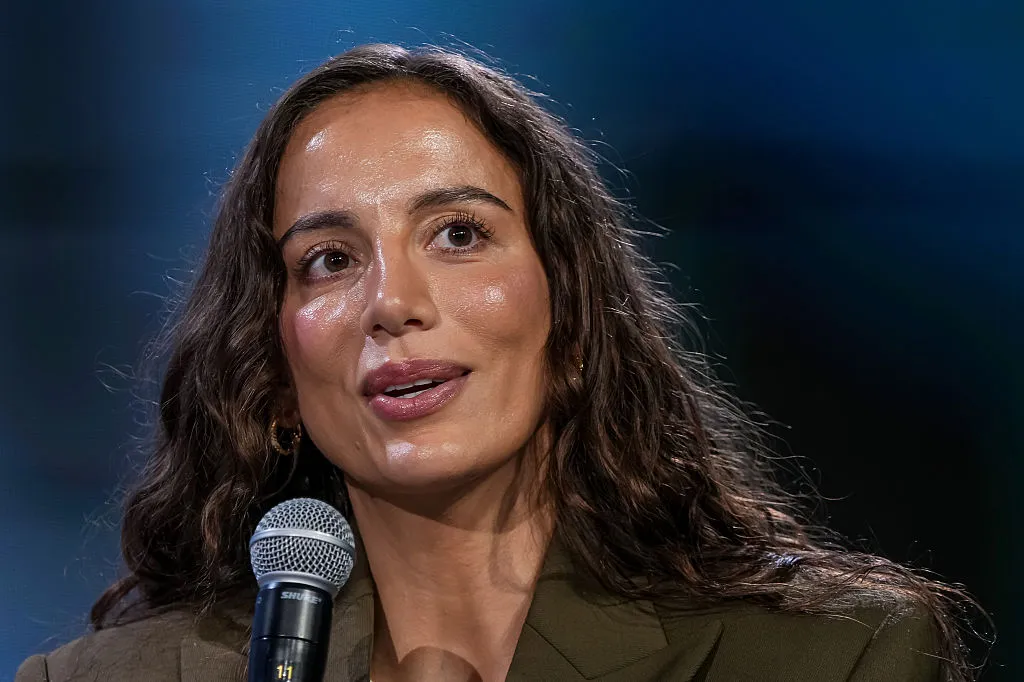
Mira Murati isn’t a natural creature of the conference stage. As the CTO of OpenAI, she was present but rarely the public face of the company. As CEO of her own company, Thinking Machines Lab, she has been even harder to find. So when she sat down with Bloomberg in San Francisco on Thursday — her first major media appearance in roughly 18 months — it was worth paying attention, even if she was careful not to say too much.
Key Takeaways:
- Thinking Machines Emerges from Stealth:After 18 months of quiet development, Mira Murati’s Thinking Machines Lab is stepping into the spotlight, aiming to differentiate itself in the hyper-competitive AI landscape with novel “interaction models.”
- Rethinking AI Interaction:The company is pioneering “interaction models” designed for continuous, real-time processing of audio, text, and video, moving beyond the current prompt-and-response paradigm to foster more natural human-AI communication.
- A Call for Governance & Human Guidance:Murati reflects on the OpenAI “blip,” emphasizing the dangers of concentrated decision-making in AI and advocating for robust governance structures and sustained human involvement to steer AI’s future away from dystopian outcomes.
The tech world rarely sees a figure emerge from the shadows with the gravitas and experience of Mira Murati. For years, as OpenAI’s CTO, she was the architect behind some of the most transformative AI advancements, yet she largely operated behind the scenes, her public appearances measured and strategic. Now, as the CEO of her own venture, Thinking Machines Lab, her reticence has been even more pronounced, making her recent sit-down with Bloomberg’s Emily Chang a highly anticipated event – her first major media engagement in approximately 18 months. This was not merely an interview; it was a calculated unveiling, a deliberate reintroduction of a pivotal figure and her ambitious new enterprise to a market hungry for innovation and leadership.
Thinking Machines Emerges from the AI Crucible
The timing of Murati’s public re-emergence is no coincidence. For the better part of a year and a half, Thinking Machines Lab has been operating in a largely clandestine mode, a common strategy for ambitious startups in the capital-intensive world of frontier AI. During this period, the company has diligently focused on critical foundational work: securing vital capital, assembling a formidable team of researchers, and quietly shipping its initial product, Tinker. Tinker, an API designed for fine-tuning open-source AI models, hints at the company’s technical depth and its practical approach to empowering developers.
In the interim, the AI landscape has transformed into a veritable supernova of activity, with competitors vying aggressively for talent, customers, and media attention. OpenAI, Murati’s former home, remains a constant fixture in the news cycle, its every move scrutinized. Anthropic has demonstrated remarkable momentum, establishing itself as a formidable rival with its focus on AI safety. Even Elon Musk’s xAI, now integrated into SpaceX, is generating significant gravitational pull with its anticipated public offering. In such an environment, the luxury of operating “heads down” eventually gives way to a strategic imperative: to make some noise, to assert one’s presence, and to remind the market that a significant player is not just existing, but actively innovating.
Redefining Human-AI Interaction: A Glimpse into “Interaction Models”
Murati leveraged her Bloomberg appearance precisely for this purpose, offering a tantalizing preview of what Thinking Machines is calling “interaction models.” She described these not as an incremental improvement, but as a fundamentally different kind of AI interface, poised to redefine how humans engage with artificial intelligence. Unlike the prevalent turn-based, prompt-and-response dynamic that characterizes most AI products today – a somewhat clunky, transactional back-and-forth – Thinking Machines’ models are engineered for continuous, real-time processing. They are designed to ingest and interpret streams of audio, text, and video in rapid 200-millisecond intervals.
The underlying vision is profound: to enable AI to perceive and respond to the nuanced texture of human communication. This includes the subtle cues we often overlook in current AI interactions – the natural interruptions that punctuate human dialogue, the mid-thought corrections, even the pauses for reflection or deliberation. By processing information in something closer to real-time, these models aim to foster a more fluid, intuitive, and genuinely collaborative experience with AI. Murati, however, was careful to frame this as an initial stride, a promising first step rather than a completed product, maintaining a strategic silence on any specific release dates.
The Echoes of OpenAI: Reflections on the “Blip” and Governance
The interview also inevitably revisited the episode that thrust Murati into the global spotlight: the tumultuous week in November 2023 when OpenAI’s board controversially ousted Sam Altman, and she was appointed interim CEO. Internally, the event became known simply as “the blip.” Murati articulated a clear sense of purpose throughout that chaotic period, asserting that her decisions were driven by an unwavering commitment to protect the company’s mission and its dedicated team. From her perspective, this guiding principle made her choices feel obvious, even as the situation externally appeared to be spiraling out of control. She starkly stated that OpenAI would have “imploded” had it not been for her crucial involvement during that intense five-day stretch and its immediate aftermath.
Yet, she also offered a candid acknowledgment of the complexities involved. While her intent was clear, she conceded that clarity of intent does not always equate to clarity about consequences. In retrospect, Murati admitted she would have pushed harder for more comprehensive information, a more robust transition plan, and greater transparency. Notably, she refrained from directly stating whether she believes the outcome of that period was ultimately favorable, leaving room for interpretation on her final assessment of the leadership reshuffle.
Pressed on whether she still trusts her former boss, Sam Altman, Murati artfully sidestepped the personal question. Instead, she redirected the conversation toward a broader, more systemic concern that she reiterated multiple times: the perilous concentration of consequential decision-making in too few hands, a problem she sees not only at OpenAI but pervading the entire burgeoning AI industry. Her primary worry, she explained, is less about the individual character of any specific leader – though she acknowledged that individual integrity matters – and more about the alarming absence of robust structural checks and balances. “Good people make bad calls. Well-intentioned organizations drift,” she observed, implying that too much industry discourse has fixated on individual virtue and far too little on establishing resilient governance frameworks to safeguard against missteps.
Building a Frontier Lab: Talent, Turbulence, and a Different Kind of Competition
Emily Chang also politely inquired about the recent departures of several high-profile researchers from Thinking Machines in recent months – a sensitive topic Murati has largely avoided publicly. Murati downplayed these exits, explaining that building a frontier AI laboratory from scratch inherently compresses years of typical organizational volatility into a mere matter of months. This accelerated pace, she suggested, naturally leads to a higher rate of personnel movement. While she acknowledged that the lure of nine-figure compensation packages – now standard currency in the intense war for AI talent – undeniably captures imaginations, she posited that financial incentives are rarely the entire narrative behind such decisions. In a moment of understated humor that elicited laughter from the audience, Murati remarked on her own competitive drive: “When I wake up in the morning, I am not thinking about how to kill the competitor.” This statement subtly underscored her focus on internal innovation rather than external rivalry.
Charting the Human Course: Murati’s Vision for AI’s Future
Naturally, the conversation broadened to encompass the larger trajectory of AI and its profound implications for humanity. This included grappling with the growing anxieties surrounding mass job displacement and the more chilling prospect of AI being weaponized to create chemical weapons – a stark contrast to the initial narrative of AI empowering human potential. Murati, with her Albanian heritage and measured Eastern European accent, offered a thoughtful and nuanced response. She firmly pushed back against the reductive framing of an inevitable dystopia or an equally inevitable utopia.
Instead, she argued that neither outcome is predetermined. The present moment, she stressed, is the critical juncture that will ultimately shape which path humanity takes. Her message was clear and emphatic, echoing a sentiment she expressed repeatedly during the interview: if humans relinquish control and “take their hands off the wheel too soon,” the future will indeed look “very different, and not better.” It’s a powerful call to active, conscious stewardship, underscoring her belief that the future of AI is not a passive destiny but an active construction, one that demands vigilant human guidance and responsible governance.
Bottom Line: A New Voice in AI’s Evolving Narrative
Mira Murati’s re-emergence is more than just a media appearance; it signifies the deliberate launch of Thinking Machines Lab as a serious contender in the fiercely competitive AI landscape. Through a blend of strategic product preview, candid reflection on past crises, and a persistent advocacy for structural governance, Murati is positioning herself and her company as a thoughtful, technically proficient, and ethically minded force. Her call for human stewardship in guiding AI’s trajectory resonates deeply, suggesting that Thinking Machines aims not just to build powerful models, but to build them responsibly. As the AI narrative continues to evolve at breakneck speed, Murati’s voice—measured, experienced, and focused on long-term implications—will undoubtedly be one to watch, shaping both the technology and the discourse around it.
When you purchase through links in our articles, we may earn a small commission. This doesn’t affect our editorial independence.
Source:{feed_title}
{content}