
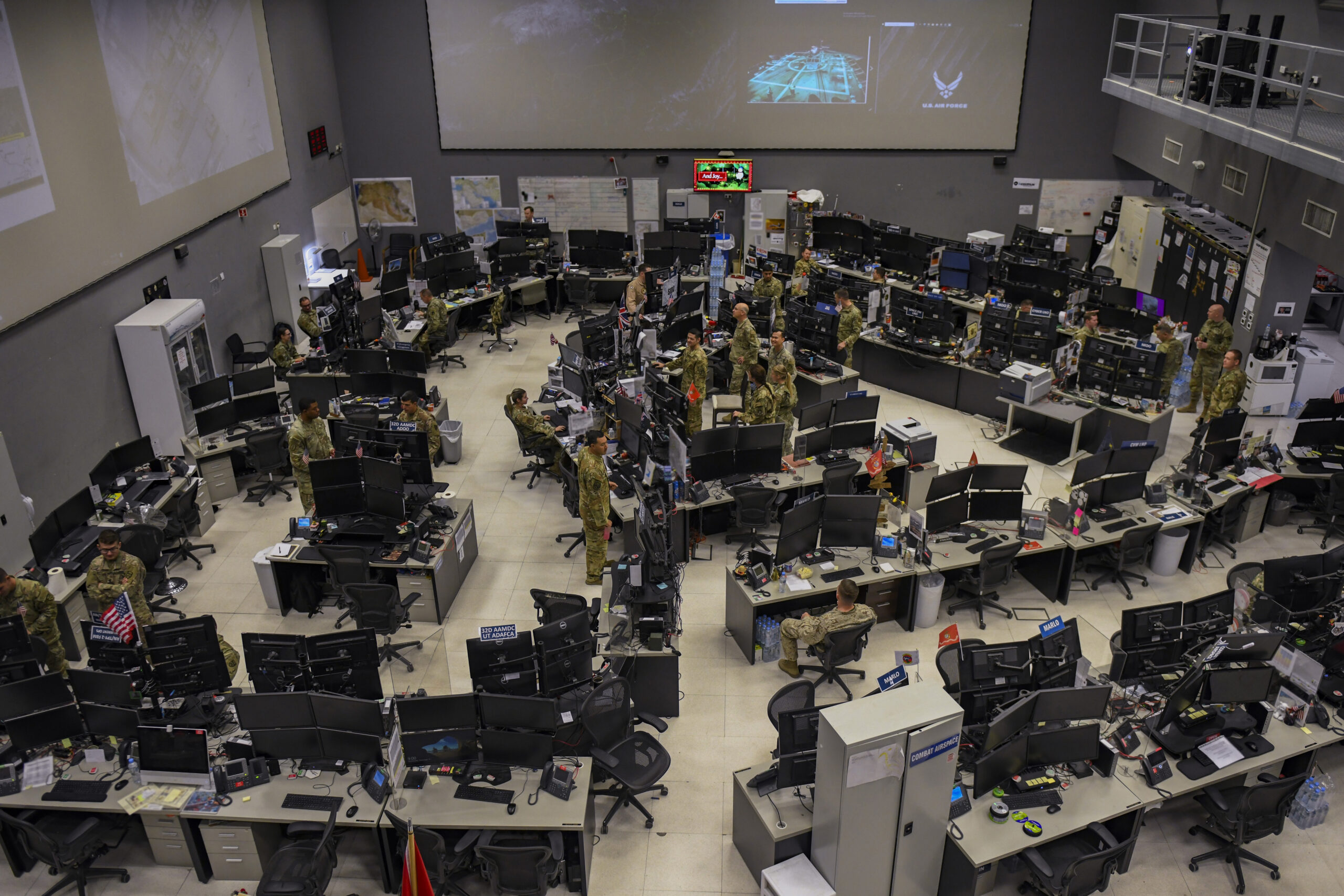
The primary command center responsible for directing American air campaigns in the Middle East for over two decades sustained severe damage during the recent conflict with Iran, according to a senior U.S. official and other individuals with knowledge of the attack. The facility, known as the Combined Air Operations Center (CAOC) at Al Udeid Air Base in Qatar, was not actively in use at the time of the strike, and no injuries were reported.
Multiple Iranian missiles impacted the CAOC at Al Udeid Air Base during the initial weeks of the U.S. war with Iran, rendering the installation inoperable. Despite this significant damage, the Iranian missile strikes did not disrupt Operation Epic Fury’s air campaign, which commenced on February 28, nor did they impede the more limited airstrikes conducted since a provisional ceasefire was established in early April.
U.S. military command, anticipating that Iran would target the forward-deployed facility, had proactively directed the air campaign from a command center located at Shaw Air Force Base in South Carolina since the operation’s inception. Personnel who would typically staff the CAOC at Al Udeid had been relocated away from the base prior to the outbreak of the conflict.
The damage to the CAOC at Al Udeid Air Base had not been publicly disclosed until now.
The strategic location of the CAOC near Iran and the extent of the damage it incurred have prompted discussions regarding the feasibility and necessity of its reconstruction. The CAOC falls under the purview of U.S. Air Forces Central (AFCENT), which serves as the air component of U.S. Central Command (CENTCOM). A spokesperson for CENTCOM declined to comment on the matter.
The history of the CAOC dates back several decades to the need for a centralized air command post during Operation Desert Shield, which preceded the Desert Storm campaign. This requirement arose as the United States and its allies converged in the region in response to Iraq’s invasion of Kuwait in August 1990. The initial command center was established in a series of temporary tents within a Riyadh parking lot, later relocating to Prince Sultan Air Base. A dedicated, permanent CAOC facility was completed just months before the September 11, 2001, terrorist attacks. This center subsequently operated continuously, orchestrating the air war in Afghanistan, the 2003 invasion of Iraq, and subsequent military operations. The U.S. Air Force formally designates its Air Operations Centers (AOCs) as a weapons system, known as Falconer.
Following the overthrow of Saddam Hussein in 2003, and amid growing discomfort within Saudi Arabia regarding the substantial American military presence in the Kingdom, the CAOC was strategically relocated to Al Udeid Air Base in Qatar.
At Al Udeid, a new, hardened bunker-like structure was constructed, emerging from the desert landscape. This $60 million facility, fortified by razor wire, was intricately connected by 67 miles of high-capacity fiber-optic cable, ensuring robust communications capabilities.
The Combined Forces Air Component Commander (CFACC) holds the critical responsibility for planning and executing air operations across the entirety of the CENTCOM area of responsibility. The CFACC also simultaneously commands U.S. Air Forces Central (AFCENT). This operational theater is vast, extending from the Red Sea to the Turkish border and encompassing regions from Syria to Afghanistan.
AFCENT’s 609th Air Operations Center oversees the operations of both the CAOC located at Shaw Air Force Base and the one at Al Udeid.
Historically, the CAOC at Al Udeid was instrumental in directing air campaigns for Operation Enduring Freedom in Afghanistan, Operation Iraqi Freedom, Operation Inherent Resolve against the Islamic State group in Iraq and Syria, and more recent operations targeting Houthi forces in Yemen.
However, Iran, possessing a substantial arsenal of thousands of ballistic missiles and drones, presented a significantly more challenging threat.
In a prior incident, Iran conducted a limited retaliatory attack after the June 2025 “Midnight Hammer” operation, which targeted three Iranian nuclear sites. During that event, Iran launched 14 missiles at Al Udeid, corresponding to the 14 GBU-57 Massive Ordinance Penetrator bombs dropped by B-2 Spirit stealth bombers. Only one of these missiles successfully penetrated defenses, causing damage to a radome.
In Operation Epic Fury, U.S. and Israeli forces initiated the conflict by directly targeting the Iranian leadership, resulting in the deaths of Ayatollah Ali Khamenei, the country’s supreme leader, and other high-ranking officials. In response, Iran demonstrated significantly less restraint than in previous engagements, launching widespread attacks against military bases throughout the Gulf region.
“Any facility that’s above ground is vulnerable today, and so any critical nodes we build in the future need to be built underground, and be hardened,” stated retired Lt. Gen. David A. Deptula, who served as the director of the CAOC during the initial months of Operation Enduring Freedom and also played a pivotal role in the air war command center during Operation Desert Storm.
Lt. Gen. Derek C. France, the current Air Forces Central commander and CFACC, along with his predecessors and other CENTCOM leadership, had anticipated for years that Al Udeid would be a primary target during any major conflict. Consequently, they had regularly conducted operations from the command center at AFCENT’s U.S. headquarters at Shaw Air Force Base.
The strategic effort to transition more air operations to the CAOC at Shaw gained significant momentum under Gen. Kenneth F. McKenzie Jr., who served as CENTCOM’s commander from 2019 to 2022. AFCENT has incrementally relocated a growing number of its personnel, including foreign liaison officers, to South Carolina. Concurrently, it maintained the CAOC in Qatar as a parallel operational capability, even continuing to invest in its infrastructure, including a $3 million upgrade completed in 2020.
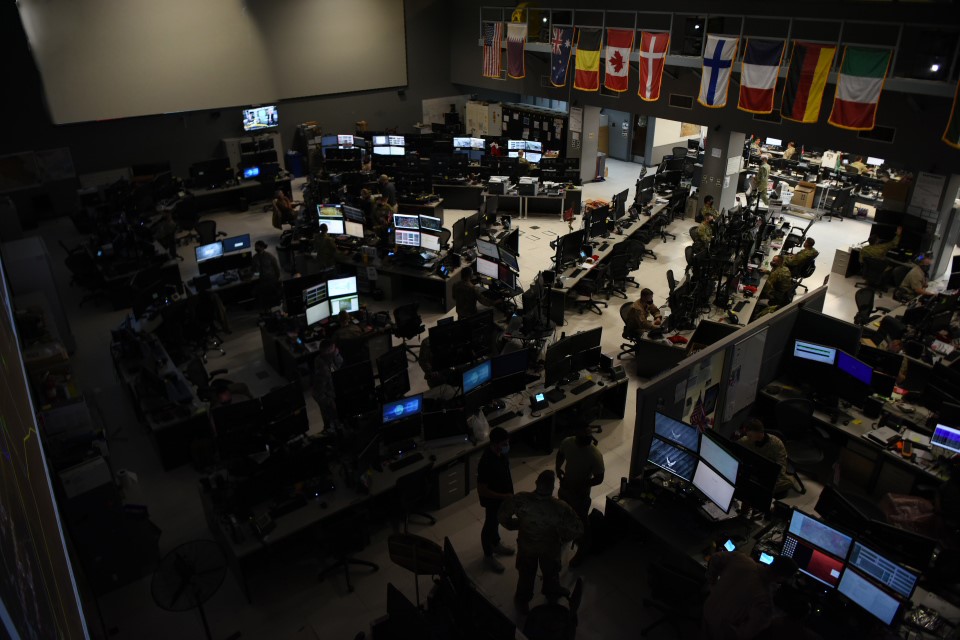
The CAOC at Shaw Air Force Base has maintained the capability to coordinate high-end combat operations for several years, according to statements from both current and former U.S. officials. By 2024, personnel staffing the CAOC were split approximately 50-50 between the two locations, with each site housing between 300 and 400 personnel. Since then, the CAOC at Shaw has continued its expansion, with the explicit goal of assuming all operational responsibilities if circumstances necessitated.
In late February, as the United States initiated Operation Epic Fury against Iran, Al Udeid Air Base, situated directly across the Persian Gulf from Iran, was almost immediately targeted.
“Nothing that has happened has not been expected,” commented a former military official who served in both the CAOCs at Shaw and Al Udeid. “AFCENT was definitely very prepared. There’s not too much that has happened that we have not gone through. We exercised it, we talked about it, we wargamed it.”
Nevertheless, the Iranian attacks on Al Udeid have prompted significant strategic questions.
“The acceleration of the reliability and bandwidth increase in modern telecommunications allows you to disperse your facilities. Epic Fury was run from the United States to a large degree,” added Lt. Gen. Deptula, who also serves as the dean of AFA’s Mitchell Institute for Aerospace Studies. “In the past, because of adversary limited reach, we assumed we had sanctuary and for efficiency we used what have now become highly vulnerable centralized nodes for command and planning. Today, if they’re going to be forward, they need to be dispersed, they need to be hardened, and they need to operate in a much more networked fashion.”
Beyond Al Udeid, Iran has also launched attacks against numerous American and partner facilities across the Middle East. These extensive Iranian aerial barrages have resulted in the deaths of seven U.S. service members on the ground and caused the destruction of costly radars, aircraft, and other critical infrastructure. A total of thirteen service members have been killed in action during the ongoing conflict.
Al Udeid Air Base, situated a 45-minute drive from downtown Doha, represents a multi-billion-dollar joint U.S.-Qatari installation featuring numerous hardened structures and permanent facilities. This vast expanse of concrete in the desert provides living quarters for over 10,000 service members and serves as the forward headquarters for both CENTCOM and AFCENT. Prior to the conflict with Iran, it stood as America’s largest military base in the Middle East.
Before the commencement of Operation Epic Fury, the majority of personnel and aircraft were relocated off the base. However, some essential personnel remained, including U.S. Army Soldiers tasked with operating Patriot ballistic missile interception batteries.
“A massive effort was undertaken before this conflict to move as many humans off of targets to other places and maintain operational security about where they might be to minimize the space with which Iran could hit,” stated Secretary of Defense Pete Hegseth during April testimony before the Senate Armed Services Committee.
The nature of Iran’s attacks has led Pentagon officials to suggest that the U.S. military footprint in the Middle East may undergo significant changes in the future.
“We don’t know what our future posture is going to be,” Jules “Jay” Hurst III informed the Senate Appropriations Subcommittee on Defense last month. “We don’t know how those bases would be reconstructed.”
Why This Matters
The severe damage to the Combined Air Operations Center (CAOC) at Al Udeid Air Base in Qatar represents a significant event with broad implications for U.S. military strategy, regional security, and the future of military infrastructure. While the proactive relocation of personnel prevented casualties and ensured the continuity of Operation Epic Fury, the incident underscores several critical points.
First, it highlights a fundamental shift in the nature of modern warfare and the vulnerability of traditional, centralized military command facilities. For decades, large, fixed bases like Al Udeid served as cornerstones of forward-deployed power projection. Iran’s successful strike, despite U.S. anticipation, demonstrates the increasing sophistication and reach of adversaries’ precision strike capabilities, particularly regarding ballistic missiles and drones. This event reinforces the expert opinion that future critical nodes require hardening, dispersal, and underground construction to withstand such attacks.
Second, this incident validates the U.S. military’s long-term strategic adaptation to a more contested operational environment. The gradual shift of command responsibilities and personnel to the CAOC at Shaw Air Force Base in South Carolina, initiated years ago, proved prescient. This move illustrates a broader trend towards leveraging advanced telecommunications and networked operations to enable geographically dispersed command and control, reducing reliance on vulnerable forward bases. The success in maintaining operational continuity during a major conflict, despite a direct hit on a key facility, provides a blueprint for future command structures.
Third, the attack raises profound questions about the future of U.S. military posture in the Middle East. Al Udeid Air Base, a multi-billion-dollar investment and the largest U.S. base in the region, now faces an uncertain future regarding reconstruction and its role. Pentagon officials have openly stated that the U.S. footprint in the Middle East may look “very different” moving forward. This could signify a move away from large, conventional bases towards more agile, temporary, or smaller, highly hardened sites, or a greater emphasis on “over-the-horizon” operations conducted from outside the immediate theater of conflict.
Finally, the event serves as a stark reminder of Iran’s growing military capabilities and its willingness to escalate conflicts. The deliberate targeting of a major U.S. command center, following an operation that targeted Iranian leadership, signals a significant increase in Iran’s assertiveness and its capacity to project power within the region. The broader destruction of U.S. and partner infrastructure and the casualties sustained by service members across the Middle East further emphasize the escalating threat landscape. The strategic decisions made in response to this damage will shape regional security dynamics and influence how the United States approaches military presence and power projection in volatile areas for years to come.