
Pankaj Khanna, the chief executive of Heidmar Maritime Holdings, has drawn parallels between his past as a seafarer in a conflict zone and the current plight of thousands of sailors in the Persian Gulf. Khanna recounted an experience during the 1991 Persian Gulf War where a Scud missile passed overhead, instilling significant fear among the crew onboard.
Today, an estimated 11,000 seafarers find themselves stranded in the Persian Gulf amid ongoing hostilities. Unlike in previous conflicts, modern communication technology provides these sailors with real-time updates and livestreams of attacks occurring nearby, in addition to directly witnessing explosions from their vessels.
Mr. Khanna, 55, characterized this constant exposure to information and events as “psychologically very traumatic,” highlighting the unique stress of the current situation.
Recent events include three commercial vessels reportedly hit by U.S. forces within the past week, with one incident resulting in three fatalities. This brings the total number of seafarers killed since the conflict began to 14. Since February 28, a total of 46 attacks on international ships have been recorded in and around the Strait of Hormuz. The majority of these incidents have been attributed to Iran, with some attributed to the United States.
The conflict in the Persian Gulf is now nearing its 15th week, placing substantial strain on the global shipping industry. The pressure extends to the seafarers onboard, the shipowners and operators facing daily losses estimated in the hundreds of thousands of dollars, and the clients awaiting the delivery of essential oil and goods. The unfolding situation jeopardizes not only the safety of individuals operating in the affected zone but also the stability and functionality of the global economy.
A cautious calm was observed in the Gulf on Friday, fueled by expectations that a potential agreement to cease fighting might be imminent. However, Mr. Khanna expressed skepticism regarding these hopes, stating, “We have heard this like 20 times. So what are the prospects? I don’t know.”
Even in the event of a reopening of the strait, he emphasized that ships would require a clear “framework” indicating safe passage zones before attempting to depart, remarking, “We need to know which parts of the strait are clear.”
Heidmar Maritime, an Athens-based company, manages a fleet of 60 vessels globally, operating in diverse regions including European, South American, and Northern Asian coasts, as well as the Red Sea. The company recently reported one of its ships being attacked by Somali pirates just two weeks prior.
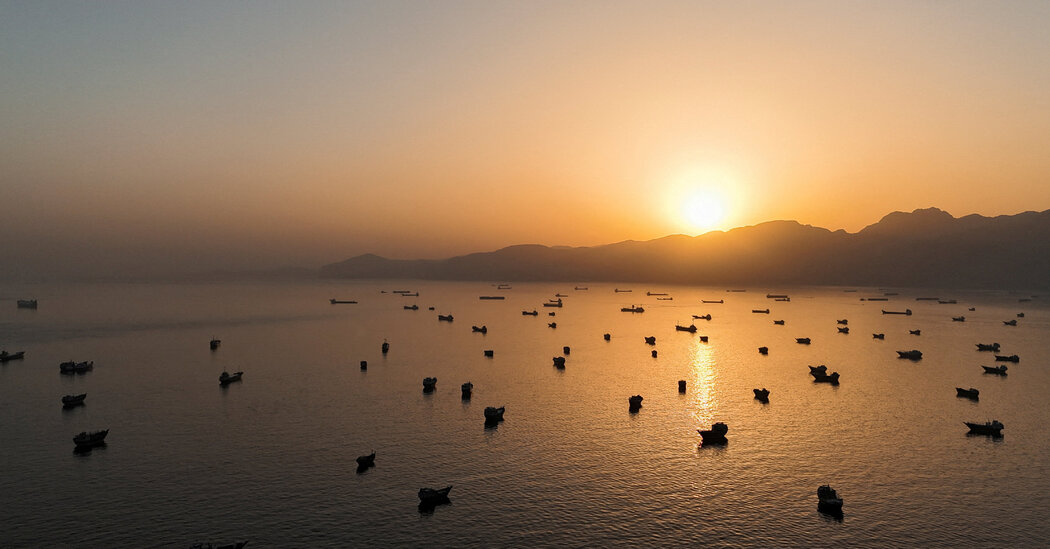
Currently, approximately 500 large vessels operated by established companies, including a Heidmar Maritime ship carrying Saudi crude oil, have been stranded in the Persian Gulf since the initial stages of the conflict in late February. While some vessels have managed to depart during brief periods of reduced tension, recent data from Lloyd’s List Intelligence indicates a slowdown in departures as hostilities have intensified.
Industry leaders anticipate that even if a peace agreement is reached, conditions for shipping businesses are unlikely to revert quickly to their pre-war state. Rodolphe Saadé, chief executive of the French shipping giant CMA CGM, articulated this sentiment during a French parliamentary hearing on Tuesday.
CMA CGM, the world’s third-largest container line, currently has 11 vessels stranded in the Gulf, though three others have successfully exited. Mr. Saadé stated, “I won’t be fixated on the idea that the Strait of Hormuz is going to reopen and everything will return to how it was,” expressing concern about future instability. He further added, “Even if a solution for peace is put in place in the coming weeks, there’s no guarantee there won’t be another crisis later on, and we can’t be prisoners to Hormuz.”
The ongoing effective blockade of the Strait of Hormuz imposes significant financial burdens on shipowners. Marine insurance fees to exit the Gulf can reach as high as $6 million to $7 million, according to Mr. Khanna of Heidmar Maritime. This adds to accumulating insurance premiums and the expiration of perishable cargoes. Paradoxically, some shipping companies have experienced increased tanker rates and the necessity for longer rerouted journeys around hazardous areas like the Red Sea, which has, in some instances, led to higher revenues.
Iran has reportedly offered a mechanism for safe passage for ships currently stuck in the Gulf, contingent upon the payment of a fee. However, existing sanctions imposed on Iran by the United States and European nations legally prohibit companies with American or European affiliations from making such payments. The shipping industry has historically advocated for unrestricted passage through the strait as vital for global trade. Nevertheless, the escalating operational costs and prolonged delays have begun to challenge this unified stance.
Evangelos Marinakis, owner of a major Greek shipping enterprise, publicly suggested at a recent Athens conference, as reported by TradeWinds, that paying a fee of $100,000 or $200,000 to Iran for safe passage might be preferable to the strait remaining closed. Meanwhile, the psychological and operational pressure on seafarers continues to intensify.
Mohamed Arrachedi, the Middle East coordinator for the International Transport Workers’ Federation, a prominent seafarers’ union, reports a constant influx of WhatsApp messages from sailors requesting repatriation or reporting instances of unpaid wages.
Mr. Arrachedi noted a shift in morale: “They were hopeful, but now, observing that it is starting again, people are not only anxious, worried and concerned, but people are desperate.”
In recent weeks, reports from seafarers indicate a growing scarcity of fresh fruit and vegetables, a more pronounced issue than in the initial weeks of the conflict. Some crews are reportedly subsisting solely on dry food. Access to drinking water has also become problematic, as vessels typically need to be underway in deep water to generate their own supply.
Michelle Wiese Bockmann, an analyst at the maritime intelligence firm Windward, summarized the predicament, stating, “It’s kind of like being on the front line of a war that you have absolutely no involvement in. You don’t have a dog in the fight, and you’re just there.”
Peter Eavis contributed reporting.
Why This Matters
The escalating crisis in the Persian Gulf’s shipping lanes carries profound implications that extend far beyond the immediate region, affecting global trade, humanitarian concerns, and geopolitical stability.
Global Economic Impact:The Strait of Hormuz is a critical choke point for international maritime trade, particularly for oil and gas shipments. Its disruption directly impacts energy prices and supply chains worldwide. With hundreds of vessels stranded and transit costs soaring due to increased insurance premiums and rerouting, consumers globally face the prospect of higher prices for goods and services. Prolonged disruptions threaten to destabilize global markets and could contribute to inflationary pressures.
Humanitarian Crisis for Seafarers:The estimated 11,000 seafarers trapped in the conflict zone face significant psychological trauma, isolation, and increasingly, shortages of essential provisions like fresh food and water. Their inability to leave, coupled with the constant threat of attack and the psychological toll of real-time conflict information, constitutes a humanitarian crisis. This situation underscores the often-overlooked human cost of global commerce and the vulnerability of maritime workers.
Supply Chain Vulnerability:The reliance on key maritime passages highlights the fragility of global supply chains. The current situation in the Persian Gulf, alongside other piracy incidents, forces a re-evaluation of shipping routes, security measures, and international cooperation to safeguard crucial trade arteries. This could lead to long-term shifts in shipping strategies, potentially increasing transit times and costs even after the immediate conflict subsides.
Geopolitical Ramifications:The conflict involves various state and non-state actors, with attacks attributed to both Iran and the United States. The situation reflects heightened regional tensions and the complex interplay of international sanctions, national interests, and maritime security. The inability to ensure safe passage, even through negotiated fees, points to deep-seated diplomatic challenges and the difficulty of de-escalation in a strategically vital area. The crisis serves as a stark reminder of how regional conflicts can quickly develop into international economic and humanitarian challenges.
Long-term Industry Shifts:The uncertainty surrounding the Strait of Hormuz’s future reliability, as noted by shipping executives, may prompt permanent changes in maritime logistics. Companies might invest in alternative routes, larger vessel capacity to mitigate transit risks, or reconfigure supply chains away from perceived high-risk areas. This could reshape global shipping networks and trade patterns for years to come, potentially leading to increased operational complexity and costs for the industry.