

Carlo Ancelotti. The name itself evokes an image of serene authority, a man whose gentle demeanor belies a mind as sharp as any tactical razor in world football. He isn’t just a manager; he’s a master psychologist, a strategic puppeteer, and a political savant. His record at Real Madrid is not merely a list of trophies – two league titles, three Champions League crowns – but a testament to his unparalleled ability to weave disparate egos into a cohesive, unstoppable force. We saw it at AC Milan, at Chelsea, at Paris Saint-Germain, and Bayern Munich; wherever Don Carlo plants his flag, championships often follow.
Former disciples like Xabi Alonso and Alvaro Arbeloa, who themselves attempted to tread the hallowed Santiago Bernabéu touchlines, can certainly attest to the sheer difficulty of replicating Ancelotti’s alchemic touch. They floundered where he soared, proving that controlling a constellation of Galácticos demands more than just tactical nous – it requires a profound understanding of human nature, a skill Ancelotti possesses in abundance. Crucially, he is equally adept at managing upwards, a rare political genius capable of keeping the notoriously demanding Real Madrid president Florentino Perez firmly onside, even when the winds of public scrutiny blew gale force.
But has he just pulled off his greatest, most Machiavellian feat yet? Has Carlo Ancelotti, the architect of tranquility, truly manipulated the footballing narrative by including a 34-year-old Neymar in Brazil’s World Cup squad for the 2026 spectacle, a tournament many believe will be his swansong, if he even features?
The choice itself was a seismic shock. Ancelotti opted for the fading star, a Neymar who, despite his legendary status, was hardly setting the pitch alight with Santos. Six goals and two assists in 2026 – statistics that scream “past his prime” rather than “World Cup contender.” This, while the younger, fitter, and emphatically in-form Chelsea forward Joao Pedro was tearing up the Premier League. Ancelotti’s public justification felt like a carefully crafted deflection: “We evaluated Neymar throughout the year, and we saw that in this last period he played consistently and improved his physical condition.”
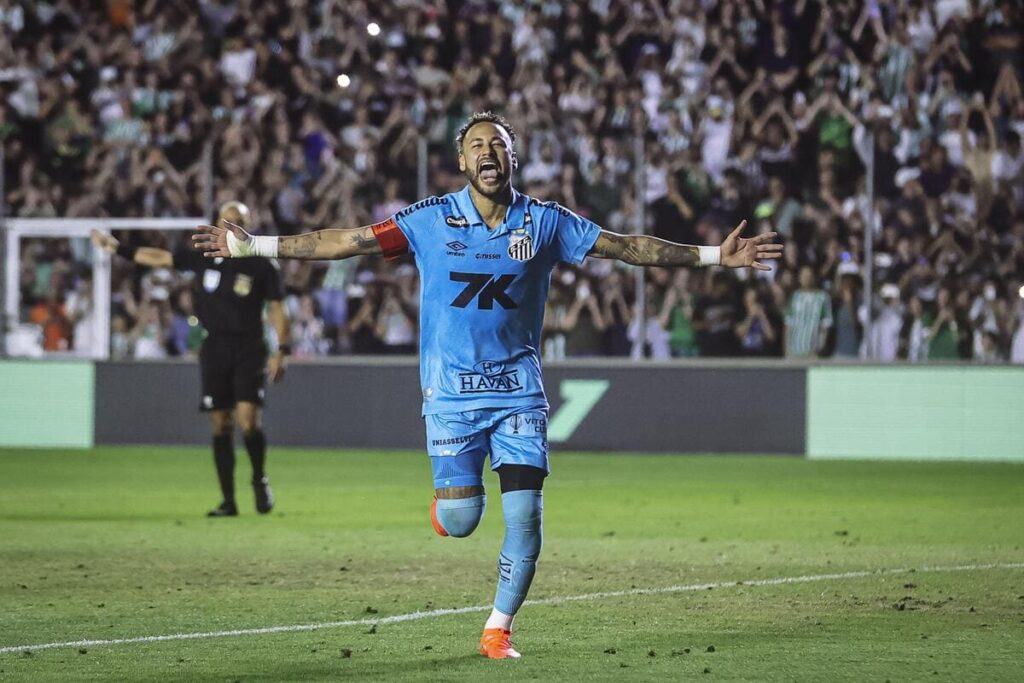
Calf strain makes Ancelotti’s Neymar claims seem questionable
The truth, however, was starkly contradictory. Brazil’s record scorer, with 79 goals in 128 international appearances, had shown no significant physical resurgence. The cruel irony was laid bare for all to see: he sustained a calf strain the night before the squad was named! A testament, perhaps, to his “improved physical condition.”
No matter. Neymar was in. And across Brazil, a collective sigh of relief, thick with nationalistic fervor, swept the nation. The clamour for the former Barcelona and PSG prodigy to grace another World Cup had reached a fever pitch, escalating by the week. Social media campaigns, viral hashtags, and impassioned pleas from current and former Selecao legends all coalesced into an unrelenting wave of pressure on Ancelotti. Neymar hadn’t featured for Brazil since suffering an ACL injury in his left knee in October 2023, yet the country demanded his return.
It seemed, on the surface, that the Italian maestro had finally caved, selecting a player he didn’t truly want, bowing to the wishes of a football-mad populace. Yet, delving deeper, this narrative feels too simplistic for a mind as intricate as Ancelotti’s.
Neymar is currently a significant doubt for Brazil’s opening game against Morocco on Saturday night. More astonishingly, reports suggest he had to agree to extraordinary conditions prior to his inclusion, paramount among them an acceptance that he would not be a part of the starting XI. This is a truly remarkable concession for a player who has, for over a decade, been the undisputed central figure for both club and country, carrying the hopes of a nation on his slender, often injured, shoulders.
So, if his role is to be nothing more than a glorified benchwarmer, a cameo appearance, a late-game prayer, why is he going? The arguments are familiar: his status as an elder statesman, a source of reassurance for younger talents like Vinicius Jr., who has openly spoken of looking up to him. He could inspire others, be a positive dressing room presence, a beacon of experience. But are these abstract benefits truly enough to warrant a place over Joao Pedro, a clinical predator who netted 20 goals for Chelsea last season, embodying the very essence of current form and fitness?
The sensible, objective answer is an emphatic no.
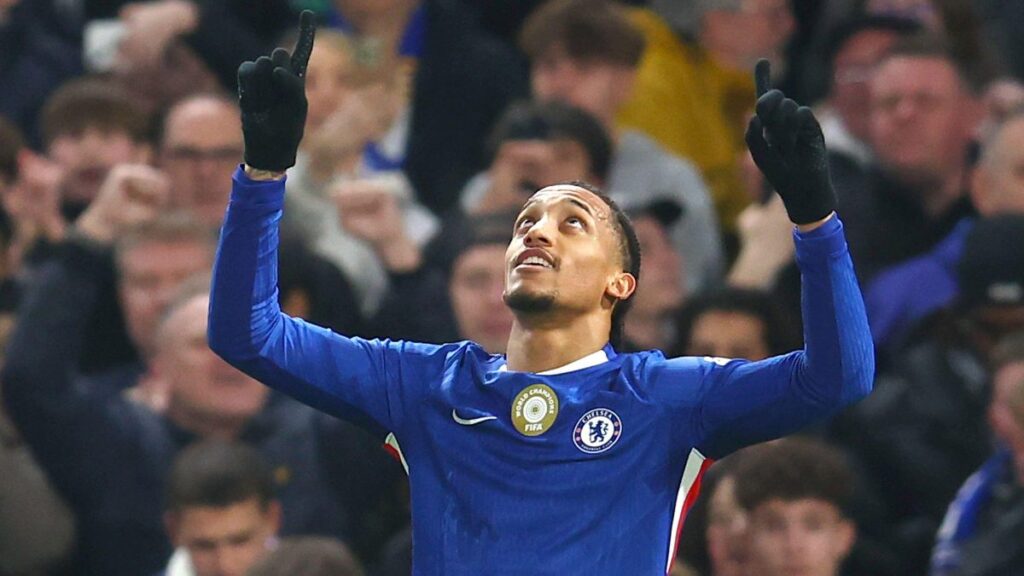
Clever Ancelotti thinking long-term
The true reason for Neymar’s inclusion, then, lies not in sentiment or tactical genius, but in pure, unadulterated self-preservation on Ancelotti’s part. The 67-year-old is no fool; he will know, deep down, that this is not a vintage Brazil side. This Selecao, while possessing flashes of brilliance, lacks the cohesive tactical identity and sheer depth of past champions. A midfield triumvirate of Casemiro, Bruno Guimarães, and Lucas Paquetá, while hardworking, will struggle to impose itself on the world elite. The glaring absence of a truly recognised, consistent number nine will further blunt their attacking edge. Getting past the quarter-final stage would be a significant achievement.
If Ancelotti senses that an early, or at least unremarkable, exit is inevitable, then the question becomes: is it better to crash out having sided with the national sentiment, or having defied it? The answer for a pragmatist like Ancelotti is an easy one. By selecting Neymar, he has ingeniously insulated himself from the most venomous personal criticism that would have otherwise been unleashed upon him. He’s deflected the blame, diffused the pressure. And having just signed a four-year contract extension, Ancelotti is playing the ultimate long game, laying the groundwork for future campaigns.
Game Highlights: Brazil vs. Morocco (World Cup Opener)
The Lusail Stadium crackled with anticipation for Brazil’s World Cup opener against Morocco. The roar for Neymar, warming up with intent, was deafening, a stark contrast to the polite applause for the starting XI. Ancelotti’s selections underscored his measured approach: Richarlison leading the line, Vinicius Jr. and Rodrygo providing width, and the workmanlike midfield of Casemiro, Guimarães, and Paquetá tasked with control. The game itself was a cagey affair.
23rd Minute: Morocco Scare!A defensive lapse from Marquinhos allowed En-Nesyri to break free, forcing a crucial save from Alisson Becker. The crowd held its breath, a tangible tension permeating the stadium. Brazil looked disjointed, lacking the fluidity and incisiveness expected of them. The camera panned to Ancelotti, stoic in the dugout, and then to Neymar, stretching on the sidelines, a ghost of a smile playing on his lips.
41st Minute: Vinicius Jr. Magic!Against the run of play, Vinicius Jr. ignited the left flank, a blur of step-overs and blistering pace. His cut-back found Richarlison, whose first-time shot was parried by the Moroccan keeper. The follow-up from Rodrygo trickled wide. It was a moment of individual brilliance, but the collective lacked rhythm. The clamour for Neymar from the stands intensified, a constant hum of expectation.
68th Minute: Ancelotti’s Moment of Truth.With Brazil still locked in a goalless stalemate, the pressure mounted. Ancelotti finally turned to his bench, but it was Antony for Rodrygo, and then Gabriel Martinelli for Richarlison. The stadium collectively groaned. No Neymar. The tactical switch aimed to inject fresh legs and pace, but the fundamental issue – a lack of creative spark in the final third – persisted.
89th Minute: Brazil Snatch a Goal!Just as the match seemed destined for a frustrating draw, a moment of individual brilliance from Vinicius Jr. saw him weave through two defenders and unleash a powerful shot. The rebound fell kindly to Martinelli, who poked it home. A collective eruption of relief, not joy. The performance had been unconvincing.
90+2 Minute: Neymar Enters the Fray.With literally seconds remaining, Ancelotti gave the fans what they wanted. Neymar replaced Paquetá, entering to a thunderous ovation. He touched the ball twice, a neat flick, a simple pass, before the final whistle blew. It was a symbolic gesture, a crowd-pleasing cameo, proving the very point of his inclusion: minimal impact, maximum political benefit. Ancelotti had delivered a win, however unconvincing, and appeased the masses, all without risking his long-term strategy on a player not yet fit for purpose.
The Prediction
Don’t expect Neymar to make any significant, game-changing impact at this World Cup, if he even appears for more than fleeting moments. And certainly, don’t delude yourself into thinking he will be a central figure for Brazil moving forward, beyond this symbolic pilgrimage. His call-up was not what it seemed; Neymar is merely a carefully positioned puppet, a political shield for a manager who is acutely aware of his team’s limitations and his own long-term job security. Once again, Don Carlo, the master manipulator, has played an absolute blinder. Brazil will likely navigate the group stage, perhaps even scrape through the Round of 16, but their journey will end no later than the quarter-finals, where their lack of cutting-edge brilliance and tactical cohesion will be exposed by a more formidable opponent. Neymar will watch most of it from the bench, a gilded prisoner of Ancelotti’s genius.