
Balaena Acquires APCL Group, Creating Extensive UK-Mediterranean Maritime Hub
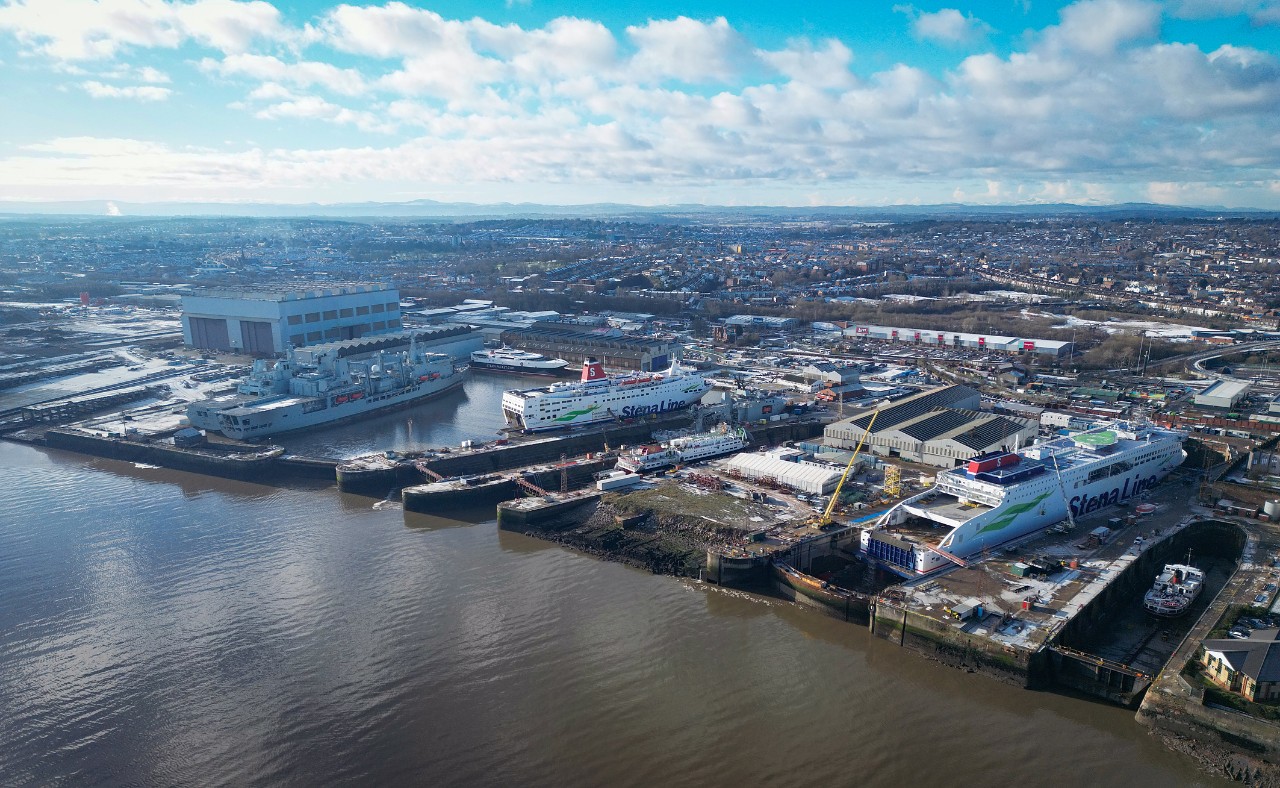
The maritime engineering and shipbuilding group Balaena announced on Wednesday its acquisition of APCL Group. This strategic move unifies the historic Cammell Laird yard at Birkenhead, A&P Tyne, and A&P Falmouth with Balaena’s existing facilities in Gibraltar and Cornwall. The newly formed entity establishes a comprehensive network of twelve dry docks spanning key locations across the United Kingdom and the Mediterranean.
Balaena, which previously owned the Gibdock dry dock and dockyard facility in Gibraltar alongside a shipyard in Padstow, Cornwall, characterized the acquisition as a significant step in its mission to expand and enhance Britain’s naval shipbuilding and ship repair capability and capacity. APCL Group operates prominent shipyards on Tyneside through A&P Tyne, at Birkenhead via Cammell Laird, and in Falmouth through A&P Falmouth and the Falmouth Docks and Engineering Company.
According to the company, the enlarged group is positioned to provide increased support for UK defence interests, simultaneously offering one of the country’s most extensive commercial ship repair and refit networks. This network will cater to operators across the offshore energy, cargo, cruise, and ferry sectors, delivering enhanced drydocking, hull fabrication, and life-extension services. Operating under a unified Balaena brand, the combined business will employ a workforce exceeding two thousand people across its sites in Gibraltar, Padstow, Tyne, Birkenhead, and Falmouth.
Simon Gillett, founder and group chief executive of Balaena, stated that the company was “delighted to welcome APCL Group into Balaena.” He affirmed that the acquisition reinforces a long-term commitment to British maritime capability, with objectives to create jobs, expand apprenticeship opportunities, and drive innovation. This, he noted, aligns with the ambitions outlined in the UK’s Strategic Defence Review and its broader Industrial Strategy. By integrating Balaena’s strategic vision with APCL’s skilled teams, Gillett believes the group is “strengthening the UK’s ability to deliver for both the Royal Navy and the global commercial maritime sector,” while also investing in the development of the next generation of British shipbuilders and engineers.
David McGinley, chief executive of APCL Group, described the deal as “an exciting new chapter for APCL and our workforce.” He emphasized that joining Balaena “secures the future of our shipyards,” facilitates new investment in digital and green shipbuilding technologies, and renews the company’s commitment to collaborating with local communities on the Tyne, at Birkenhead, and in Falmouth “to create jobs, apprenticeships, and lasting prosperity.”
Balaena has outlined plans for substantial investment in modernizing APCL’s facilities. This includes expanding capacity for ship repair, offshore fabrication, and the development of low-emission propulsion systems. Furthermore, a new national skills and apprenticeship programme is slated for launch, developed in partnership with local colleges and maritime training bodies across its operational regions.
The shipyards involved in this acquisition possess significant strategic importance within the British naval support landscape. Cammell Laird, one of the most historically renowned names in British shipbuilding, famously constructed the polar research vessel RRS Sir David Attenborough and maintains a consistent portfolio of dry dock and refit work for the Royal Navy and Royal Fleet Auxiliary on the Mersey. A&P Falmouth has long served as a principal refit and maintenance yard for the Royal Fleet Auxiliary’s tankers and support ships, while A&P Tyne has undertaken crucial fabrication work for both offshore energy and defence programmes. The consolidation of these facilities with Gibdock, a frequent port of call for Royal Navy vessels operating in and through the Mediterranean, creates a robust repair network strategically positioned across several of the fleet’s most critical operational routes.
This acquisition also marks a continuation of a period of consolidation within the British shipbuilding and repair sector. Recent examples include Navantia UK’s takeover of former Harland and Wolff yards. This trend aligns with the UK government’s stated intentions, articulated through the Strategic Defence Review and its national shipbuilding strategy, to bolster the domestic industrial base essential for the Royal Navy’s ongoing expansion and modernization plans.
Why This Matters
The acquisition of APCL Group by Balaena represents a significant development for the United Kingdom’s maritime industrial base, with wide-ranging implications for national defence, economic growth, and the future of commercial shipping. This consolidation creates a more integrated and geographically extensive network of repair and shipbuilding facilities, a move that could enhance the UK’s strategic capabilities and bolster its economic resilience.
From a defence perspective, this integrated network offers increased capacity and flexibility for the maintenance and refit of Royal Navy and Royal Fleet Auxiliary vessels. By centralizing operations under a single banner, the UK’s naval fleet gains access to a more streamlined and responsive repair infrastructure across key operational zones, from the English Channel to the Mediterranean. This can reduce downtime for critical naval assets, improve operational readiness, and potentially lessen reliance on overseas facilities for complex repairs. It directly supports the objectives of the Strategic Defence Review to strengthen domestic defence industrial capabilities and ensure the long-term viability of the Royal Navy.
Economically, the acquisition promises to safeguard and create thousands of jobs across strategic maritime regions, including Merseyside, Tyneside, Cornwall, and Gibraltar. Balaena’s commitment to investment in facility modernization, capacity expansion, and a new national skills and apprenticeship programme is crucial for fostering local economic prosperity and developing a skilled workforce for the future. This investment in modern digital and green shipbuilding technologies positions the UK to be a leader in sustainable maritime engineering, attracting further contracts and innovation in areas like offshore energy and low-emission propulsion systems, which are vital for the global transition to cleaner energy.
Furthermore, this move strengthens the UK’s position in the global commercial maritime sector. By offering enhanced drydocking, hull fabrication, and life-extension services across an expanded network, the combined entity can better compete for international contracts, serving a broader array of offshore energy, cargo, cruise, and ferry operators. This robust commercial capability complements the defence work, ensuring a diverse and resilient business model that can weather fluctuations in either market. The consolidation also signals a proactive approach to bolstering the UK’s industrial strategy, aiming to grow high-value manufacturing and engineering sectors that contribute significantly to the national economy and global competitiveness.