
Unlock the Editor’s Digest for free
Roula Khalaf, Editor of the FT, selects her favourite stories in this weekly newsletter.
Key Takeaways:
- Geopolitical Shift & Resource Access:The targeted killing of Tren de Aragua leader Héctor Guerrero signals a new era of US-Venezuelan security cooperation under the Trump administration’s backing of Delcy Rodríguez, directly correlating with efforts to open Venezuela’s vast oil and mineral reserves to foreign investment and the potential unwinding of sanctions.
- Commodity Market Stability:Enhanced security and stability in critical resource-rich regions like Bolívar state, coupled with new foreign investment laws, could significantly de-risk exploration and production, potentially increasing global supply of commodities like crude oil, gold, and strategic minerals, influencing their respective market prices.
- Investor Confidence & Risk Premium:The decisive action against a major transnational criminal organization, framed as a joint effort, aims to reduce Venezuela’s perceived political and operational risk premium. This could encourage hesitant international investors to re-evaluate opportunities in a nation previously seen as too volatile, contingent on sustained rule of law and economic reforms.
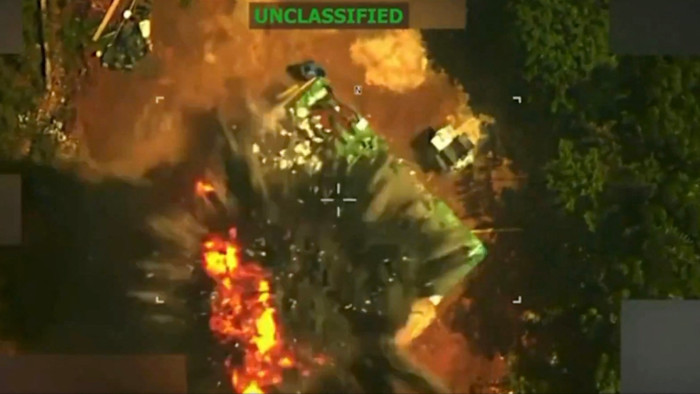
Washington D.C./Caracas –In a development set to reverberate across regional security and global commodity markets, the US military executed a lethal strike inside Venezuela, eliminating Héctor Guerrero, the notorious leader of the Tren de Aragua gang. President Donald Trump’s administration announced on Friday night that the operation, carried out by the US military’s Southern Command, signals a decisive shift in US engagement with Venezuela, directly linking security stabilization to the potential unlocking of the nation’s immense economic potential.
Héctor Guerrero, known by his moniker “El Niño” (the kid), was killed in what President Trump described in a Truth Social post as a “swift and lethal” operation. Crucially for market observers, Trump emphasized the “close coordination with our friends in Venezuela, with whom we are working very well,” underscoring a new alignment between Washington and Caracas. The President characterized Guerrero as the head of “one of the most bloodthirsty Terrorist Organizations on Planet Earth,” highlighting the strategic importance of neutralizing such an entity for regional stability and, by extension, the investment climate.
Defence secretary Pete Hegseth corroborated the details on X, noting a “kinetic strike” on a “compound in Venezuela” earlier this week. The US had recently designated Tren de Aragua, a burgeoning prison gang with a menacing presence across the Americas, as a terrorist organization earlier this year, signaling a heightened focus on its destabilizing activities. Hegseth’s statement, “The operation underscores the shared US and Venezuelan commitment to take the fight to narco-terrorists and deny them any safe haven in our hemisphere,” speaks volumes to a strategic realignment. This framing is essential for investors, as a perceived commitment to combating organized crime directly impacts the rule of law and the security of assets within a nation.
The Venezuelan government, through its communications ministry, confirmed the strike as part of a broader joint operation with the US against organized crime groups in Venezuela’s southern Bolívar state. This region is not merely a stronghold for gangs but a treasure trove of mineral wealth, making its pacification critical for economic development. The ministry’s statement, “The operation was supported by advanced technology and carried out through co-operation and intelligence sharing between the authorities of both countries,” reinforces the narrative of a robust, collaborative effort.
This high-profile elimination of a criminal kingpin comes against a backdrop of significant geopolitical shifts. Following the US special forces’ arrest of Venezuela’s autocratic president Nicolás Maduro on January 3, the Trump administration has demonstrably pivoted its support towards Delcy Rodríguez, Maduro’s deputy. This backing is explicitly tied to a quid pro quo: Rodríguez’s government opening up the country’s vast oil and mineral reserves to foreign investment in exchange for a gradual unwinding of debilitating US sanctions. For energy markets, this has been a closely watched development. Venezuela, an OPEC member, boasts the world’s largest proven oil reserves, and any pathway to increasing its output holds substantial implications for global supply, refining capacity, and crude pricing.
Guerrero’s killing closely follows a series of military strikes by Venezuela’s armed forces in Bolívar state. This region, a sprawling landscape of illegal gold mines, is often plagued by violent gangs and Colombian guerrillas. The nexus between illicit mining and organized crime poses a severe impediment to legitimate economic activity and state control. Rodríguez’s government has actively pursued reforms aimed at unlocking this region’s potential, passing laws to open the largely undeveloped mining sector to foreign investors. This mirrors a similar law for oil and gas approved in January, signaling a comprehensive strategy to monetize Venezuela’s natural resources under new political leadership and security guarantees.
The prospect of foreign direct investment flowing into Venezuela’s mining sector, rich in gold, diamonds, coltan, and other strategic minerals, is a significant draw. However, the presence of entrenched criminal networks like Tren de Aragua has historically deterred major players. The security operations, while disruptive for local residents – with reports of people fleeing and fears for missing relatives among young miners – are being framed by the US and Venezuelan governments as a necessary precursor to establishing the rule of law and creating a stable environment for legitimate enterprise. This reduction of “above-ground risk” is paramount for international mining conglomerates considering multi-billion dollar investments.
According to Venezuelan authorities, Guerrero made a dramatic escape from the Tocorón prison in 2023, the very facility that served as the operational base for Tren de Aragua, an organization he founded over a decade ago. The US had placed a substantial $5 million bounty on his head, underscoring his importance to regional crime syndicates. His removal is seen as a blow to the transnational criminal enterprise that traffics in drugs, humans, and illegal arms across the continent, disrupting illicit supply chains that often feed into the global black market economy.
President Trump concluded his Truth Social post with a stark warning: “Tren de Aragua terrorists no longer have safe haven in Venezuela or anywhere else. Under my leadership, we will find these vicious murderers and drugs lords anytime, anyplace, and send them to the depths of hell where they belong.” Such resolute rhetoric, when backed by demonstrable action, aims to project strength and stability, critical elements for restoring investor confidence in a nation long associated with political instability and economic uncertainty.
Market Impact:
The elimination of Héctor Guerrero, coupled with the explicit US-Venezuelan cooperation and the ongoing political transition, injects a degree of cautious optimism into the long-term outlook for Venezuelan assets. For energy markets, the prospect of an expedited unwinding of sanctions and increased oil production capacity represents a potential downside risk for crude prices, particularly if global demand softens. Major oil companies will be watching closely for concrete details on concession terms and investment protection under the new legal frameworks. Similarly, in the metals market, enhanced security in Bolívar state could pave the way for legitimate mining operations to scale up, potentially adding to global gold and strategic mineral supplies. Beyond commodities, this diplomatic and security shift could begin to chip away at Venezuela’s substantial risk premium, potentially making its distressed sovereign debt more attractive to speculative investors. However, sustained foreign direct investment will hinge on consistent improvements in the rule of law, transparent governance, and the complete dismantling of criminal networks, all of which remain significant hurdles despite this week’s decisive action.