
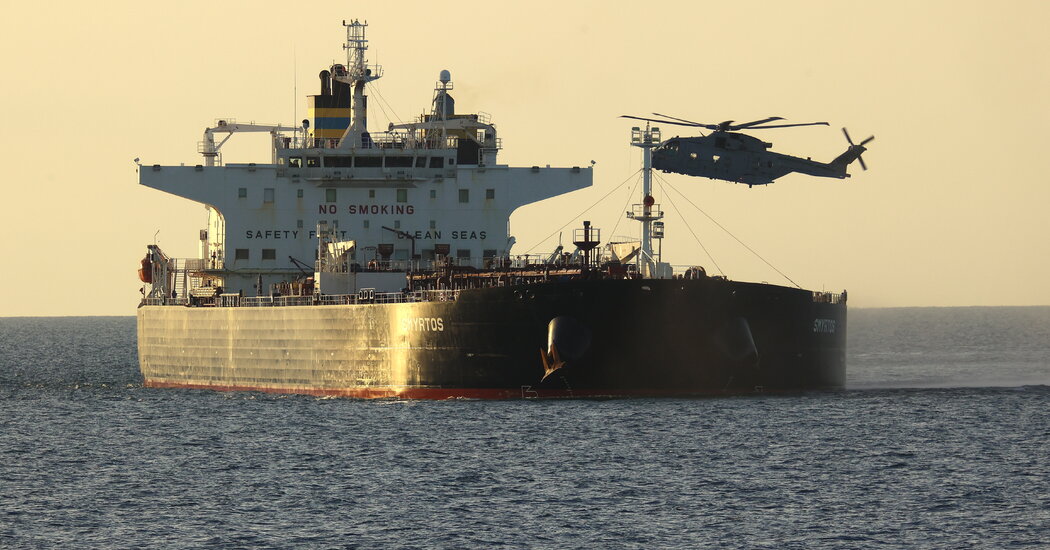
British military forces successfully intercepted and boarded an oil tanker suspected of belonging to Russia’s “shadow fleet” in the English Channel on Sunday, according to a statement from the British Ministry of Defense. The vessel, identified as theSmyrtos, was boarded by Royal Marine Commandos and specially trained law enforcement officers during a six-hour operation. This action marks a significant development in international efforts to enforce sanctions against Russia.
The operation, which commenced in the early hours of Sunday morning, received comprehensive support from British military ships and aircraft, ensuring a secure and efficient boarding process. Following the intervention, theSmyrtoswill be held and subjected to further monitoring off the southern coast of England. Prime Minister Keir Starmer commented on the operation, stating, “This operation delivers yet another blow to Russia and reminds those fueling Putin’s war in Ukraine that they cannot hide.” This statement underscores the UK’s commitment to disrupting Russia’s capacity to finance its ongoing conflict.
The interception targets Russia’s “shadow fleet,” a complex network of maritime vessels characterized by opaque ownership structures and often older, less maintained ships. This fleet serves a crucial role in enabling Russia to circumvent international sanctions, particularly those related to oil exports, which were imposed following its full-scale invasion of Ukraine. By operating outside conventional shipping regulations and registries, these vessels facilitate the covert transport of Russian crude oil and refined products globally, providing a vital economic lifeline to the Kremlin.
According to intelligence estimates from the British government, this shadow fleet comprises over 700 vessels. It is believed to be responsible for transporting approximately 75 percent of Russia’s sanctioned oil exports. A significant concern raised by British authorities is the age and condition of these vessels; more than 70 percent are reported to be over 15 years old, raising potential environmental and safety risks in international waters. The British government has so far imposed sanctions on more than 500 vessels identified as part of this shadow fleet.
This operation represents the first instance where British forces have independently taken action to intercept a vessel suspected of belonging to the Russian shadow fleet. Previously, British military assets had supported international partners, such as earlier this year when they assisted the United States in the seizure of the oil tankerMarinerain waters between Iceland and Scotland. U.S. officials stated that theMarinerahad violated sanctions by transporting oil on behalf of Venezuela, Russia, and Iran.
Following theMarineraoperation, the British government initiated a review into how its forces could undertake similar unilateral actions against sanctioned vessels transiting through its territorial waters or areas of interest. This culminated in a decision in March, led by Prime Minister Starmer, to authorize British armed forces and law enforcement officers to board suspected shadow fleet vessels, aligning these actions with international maritime law.
The operation against theSmyrtoswas conducted in “close coordination” with France, underscoring ongoing bilateral cooperation on maritime security and sanctions enforcement. France has also been actively engaged in similar efforts. Earlier this month, French authorities, with British support, detained the oil tankerTagorin the Atlantic Ocean, approximately 400 nautical miles west of Brittany, suspecting it was part of the Russian shadow fleet. French authorities indicate that theTagormarks the fourth suspected shadow fleet vessel they have boarded since September 2023, demonstrating a concerted European effort to counter sanctions evasion.
This decisive military action unfolds amidst a sensitive political climate within the United Kingdom. Just last week, Defense Secretary John Healey and Armed Forces Minister Al Carns both resigned from their positions, citing disagreements over the government’s proposed military funding plans. A new British defense investment plan is anticipated to be unveiled ahead of an upcoming NATO summit scheduled for next month. However, upon his departure, Mr. Healey publicly cautioned that the military spending levels advocated by Prime Minister Starmer “falls well short” of the resources required to adequately protect Britain’s interests.
The domestic political upheaval also coincides with a period of heightened tensions between the United Kingdom and Russia. British officials have reported a series of incursions by Russian naval vessels and aircraft near the British coast. These actions are widely interpreted as attempts to test Britain’s military response capabilities and to map critical underwater infrastructure, including vital data and energy cables, which are essential for national security and economic stability.
Former Armed Forces Minister Al Carns commented on Sunday regarding the previous reluctance to board Russian shadow tankers, explaining to the BBC that a contributing factor was the presence of “a Russian frigate in the Channel protecting some of those ships coming through.” He emphasized the need to meet “the right parameters” — encompassing legal and cargo-related requirements — before initiating a boarding operation. Mr. Carns added that the successful Smyrtos operation is likely a precursor to more such interventions in the future.
Why This Matters
The interception of theSmyrtoscarries significant implications across several dimensions, from global economics and international law to maritime security and domestic politics:
Sanctions Enforcement and Economic Impact:This operation directly challenges Russia’s ability to finance its military actions in Ukraine by disrupting a critical revenue stream. Russia’s “shadow fleet” is instrumental in circumventing international sanctions, including the G7 price cap on oil. Each successful interdiction adds pressure and increases the operational costs for Russia, potentially forcing it to rely on even more marginal vessels or incur higher insurance and shipping expenses. This directly impacts the Kremlin’s financial capacity to sustain its war effort.
Maritime Security and Environmental Risks:The nature of the shadow fleet — comprising often older, less maintained vessels operating with opaque ownership — poses substantial risks to maritime safety and the environment. These ships may lack proper certification, insurance, or crew training, increasing the likelihood of accidents, collisions, or oil spills in vital international shipping lanes like the English Channel. Such incidents could have severe ecological and economic consequences. Intercepting and monitoring these vessels can mitigate these inherent risks, upholding the broader principles of lawful and safe conduct at sea.
Assertion of Sovereignty and International Law:For the United Kingdom, this unilateral action reaffirms its resolve to enforce international sanctions within its maritime jurisdiction and demonstrates its commitment to upholding international law. It sets a notable precedent, signaling to other nations that direct action against sanctions evasion is a viable and increasingly prioritized strategy. This strengthens the global front against illicit maritime activities and reinforces the credibility of the international sanctions regime.
Geopolitical Signaling and Deterrence:The operation sends a clear and unambiguous message to Moscow and to other entities involved in facilitating sanctions evasion that Western nations, particularly the UK, are prepared to take robust, direct action. It showcases the UK’s operational capabilities and its unwavering commitment to contributing actively to broader Western security objectives, even amidst its own domestic political challenges. This can serve as a deterrent to future illicit shipping activities and consolidate the unity of countries committed to enforcing sanctions.
Domestic Political Repercussions:For Prime Minister Starmer’s government, this high-profile action provides an opportunity to demonstrate strong leadership on the international stage. It can help to counter recent criticisms concerning defense spending and reassure the public of the government’s commitment to national security and global stability. The successful operation may bolster public confidence in the UK’s ability to project power and uphold its values in a challenging geopolitical environment.
Future Implications:This interception could mark a turning point in the enforcement of sanctions against Russia’s shadow fleet, potentially leading to a more aggressive and proactive approach by Western navies. It may also provoke a response from Russia, possibly in the form of increased naval presence or more sophisticated evasion tactics. The incident highlights the growing importance of maritime surveillance, intelligence sharing, and interdiction capabilities for nations seeking to enforce international norms and protect their strategic interests in a complex and contested global maritime domain.