

The roar of the AT&T Stadium faithful reverberated across North Texas, setting the stage for what promised to be an electrifying opening salvo in Group F of the 2026 World Cup. This wasn’t just another group stage fixture; this was a clash of footballing philosophies, a battle between a traditional powerhouse and a surging dark horse, the Netherlands against Japan. The stakes were monumental, the air crackled with anticipation, and from the first whistle, this encounter delivered on every ounce of its promise.
For the Oranje, under the astute guidance of the legendary Ronald Koeman, this tournament represents more than just a shot at glory – it’s a relentless pursuit of destiny. Three times runners-up, the Netherlands carry the weight of expectation that only a nation of their footballing pedigree, yet without the ultimate prize, can understand. From the tactical masterclasses of 2010 to the gritty defiance of 2014, their journey has been a rollercoaster of exhilarating highs and agonizing lows. This squad, a blend of battle-hardened veterans and prodigious young talent, arrived in Dallas with a singular objective: to finally etch their name onto football’s most coveted trophy.
Standing in their way, however, were the Samurai Blue of Japan, a team that has transformed from perennial underdogs into genuine contenders. Their journey to an eighth consecutive World Cup finals was nothing short of breathtaking, a qualification campaign adorned with over 50 goals and a swagger born from confidence. Recent friendly encounters have only amplified the buzz, with dominant victories over footballing giants like Brazil and England serving notice that this Japanese side fears no one. Their intricate passing, relentless pressing, and lightning-fast transitions have turned them into a captivating spectacle, threatening to rip up the established order and carve their own path in football history.
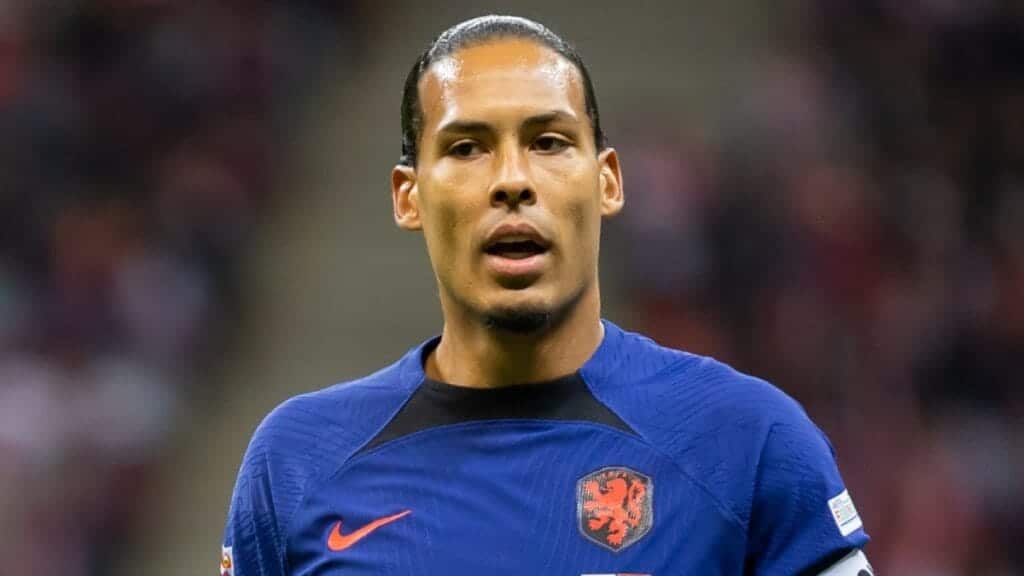
Netherlands Team Analysis
Ronald Koeman’s Netherlands arrived with a clear identity: defensive solidity, midfield control, and blistering pace on the wings. The presence of Virgil van Dijk at the heart of the defence is non-negotiable, his leadership and aerial dominance forming the bedrock of their structure. Alongside him, the burgeoning talent of Van Hecke and the athleticism of Micky van de Ven provide an agile yet formidable backline, flanked by the marauding Denzel Dumfries and the dependable Van de Ven. In midfield, the maestro Frenkie de Jong orchestrates play, his vision and passing range pivotal to transitioning defence into attack. He’s ably supported by the powerful Ryan Gravenberch and the dynamic Tijjani Reijnders, offering both bite and creativity. Upfront, the trident of Gakpo, Malen, and Summerville promises goals, with their speed, dribbling, and clinical finishing capable of unlocking even the most stubborn defences. Koeman’s XI suggests a pragmatic yet potent approach, ready to absorb pressure and strike with lethal efficiency.
Netherlands XI:Verbruggen; Dumfries, Van Hecke, Van Dijk, Van de Ven, Gravenberch, De Jong, Summerville, Reijnders, Gakpo, Malen.
Japan Team Analysis
Japan, under their visionary coach Hajime Moriyasu, have cultivated a high-octane, attacking brand of football that has mesmerized fans and dismantled opponents. Their qualification campaign was a testament to their offensive firepower and tactical flexibility. The selection of Zion Suzuki in goal speaks volumes about their commitment to youth, while the defensive trio of Taniguchi, Watanabe, and Ito provides a blend of experience and modern ball-playing capabilities. The midfield is where Japan truly shines, a hive of technical brilliance and tireless work rate. Takefusa Kubo and Ritsu Doan are the creative sparks, capable of unlocking defences with a single touch or a surging run. Daichi Kamada, the experienced head, pulls the strings, dictating tempo and providing crucial link-up play. Upfront, the relentless pressing of Daizen Maeda combined with the pace of Keito Nakamura ensures that Dutch defenders will have no moment of respite. This is a team built on relentless energy, collective understanding, and moments of individual genius.
Japan Starting XI vs Netherlands:Zion Suzuki (Parma 🇮🇹); Shogo Taniguchi (STVV 🇧🇪), Tsuyoshi Watanabe (Feyenoord 🇳🇱), Hiroki Ito (Bayern 🇩🇪); Takefusa Kubo (Real Sociedad 🇪🇸), Ritsu Doan (Eintracht 🇩🇪), Daizen Maeda (Celtic 🏴), Keito Nakamura (Reims 🇫🇷), Daichi Kamada (Palace 🏴); Kyogo Furuhashi (Celtic 🏴), Kaoru Mitoma (Brighton 🏴).
Game Highlights
The whistle blew, and the energy exploded onto the pitch! From the first minute, Japan’s high press was relentless, unsettling the Dutch backline. In the 12th minute, a moment of brilliance. Takefusa Kubo, dancing past two defenders on the right flank, unleashed a wicked curling shot that Verbruggen could only parry into the path of a lurking Daizen Maeda, who bundled it home. **GOAL JAPAN! 1-0!** The Samurai Blue were flying, their intricate passing triangles causing constant headaches for De Jong and Gravenberch in midfield.
The Netherlands, however, are not easily rattled. They absorbed the pressure, slowly asserting their dominance in possession. Just before halftime, in the 43rd minute, a corner swung in by Reijnders found the towering figure of Virgil van Dijk. He rose above everyone, his header thundering past Suzuki into the net. **GOAL NETHERLANDS! 1-1!** The equalizer was a testament to Dutch resilience and set-piece prowess, sending both teams into the break level, but with the momentum shifting.
The second half began with renewed vigour from both sides. Gakpo and Malen started to find more space on the wings, testing the Japanese full-backs. In the 65th minute, Cody Gakpo, receiving a perfectly weighted pass from Frenkie de Jong, shimmied past Watanabe and coolly slotted the ball into the bottom corner. **GOAL NETHERLANDS! 2-1!** The Oranje had completed the turnaround, their quality shining through.
But Japan refused to yield. Kaoru Mitoma, introduced as a substitute, immediately injected pace and unpredictability. In the 80th minute, a blistering counter-attack saw Mitoma ghost past Dumfries, his cut-back finding Daichi Kamada on the edge of the box. Kamada’s first-time strike was precise, curling just inside the post, leaving Verbruggen helpless. **GOAL JAPAN! 2-2!** The stadium erupted! Both teams pushed for a winner in a frantic final ten minutes, with chances falling to both Summerville and Kyogo Furuhashi, but neither could find the decisive touch. The final whistle blew, sealing a thrilling draw that lived up to all expectations.
Prediction
This match showcased the very best of what both nations offer. The Netherlands demonstrated their traditional strengths – defensive organisation, aerial threat, and moments of individual brilliance. Japan, meanwhile, proved their status as genuine dark horses with their relentless energy, technical finesse, and unwavering belief. While a draw leaves both teams with a point, it feels like a victory for Japan, who went toe-to-toe with a European giant and emerged unbowed. The Oranje will reflect on periods of control, but also on moments where they struggled to contain Japan’s electric attack. Looking ahead, I predict that this result will spur Japan on to top the group, leveraging their momentum and explosive attack. The Netherlands will likely qualify as runners-up, needing to address defensive vulnerabilities, but their experience and quality will see them through. This game was a pulsating indicator that Group F is wide open, and the journey to the final will be anything but predictable!
Where to watch Netherlands v Japan
Netherlands versus Japan kicked off on Sunday at 9pm UK time. You can watch it on ITV 1 and stream via ITVX.
Click HERE for a full World Cup TV guide
Key Match Statistics
- This will be the Netherlands’ 12th World Cup appearance. No other team has finished runner-up as often as the Dutch without ever winning the trophy (three times – 1974, 1978, 2010).
- The Netherlands have won 54.5% of their matches at the World Cup (30 out of 55, shoot-outs excluded) and only Brazil (66.7%) and Germany (60.7%) have a higher win rate in the history of the tournament. The Dutch are also only four away from reaching 100 goals at the World Cup.
- Excluding penalty shootouts, the Netherlands have lost only one of their last 19 World Cup matches (W14 D4). That sole defeat came in the 2010 final against Spain (0-1 after extra time). Meanwhile, their last loss in a group stage match dates back to 1994, a 0-1 defeat to Belgium.
- This will be Japan’s eighth consecutive World Cup appearance – a run stretching back to 1998. It’s the second-longest run of consecutive participations by an Asian nation behind Korea Republic’s current run of 11 consecutive World Cup tournaments.
- Japan have never advanced beyond the round of 16 at the World Cup. In fact, they hold the record for the most matches played without ever reaching the quarter-finals at the tournament (25).
- Japan scored more goals than any other team in the AFC qualifiers for the 2026 World Cup – they found the net 54 times, which included a 3-0 forfeit victory against North Korea. Outside of the hosts, Japan were the first nation to qualify for the FIFA World Cup 2026.