
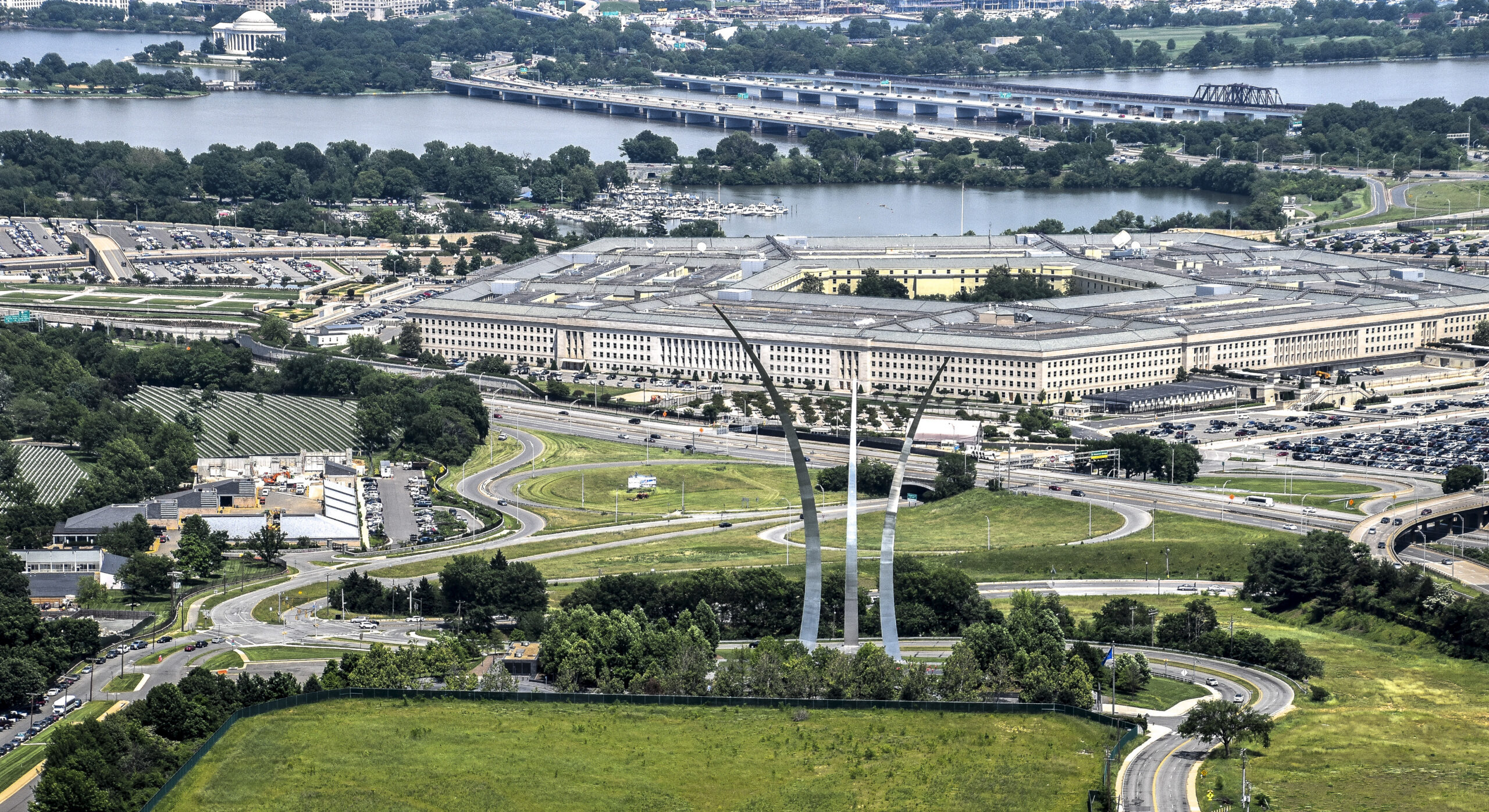
The United States Department of Defense (Pentagon) is reportedly developing contingency budget plans amidst growing uncertainty surrounding a proposed $350 billion defense reconciliation bill for Fiscal Year 2027. Key members of Congress have expressed wavering support for the substantial package, which, if not passed, could force the Pentagon to make difficult trade-offs between expensive, high-tech weaponry and its expanding arsenal of lower-cost autonomous systems.
The Pentagon’s overall budget request for FY2027 stands at $1.5 trillion, structured in an unconventional manner. A significant portion, $1.15 trillion, is slated to proceed through the standard congressional appropriations process. However, the remaining $350 billion is earmarked for passage via budget reconciliation, a legislative procedure that allows certain budget-related bills to pass with a simple majority vote in the Senate, bypassing the usual 60-vote filibuster threshold. This process, while streamlining passage, demands strict party unity within the majority party—currently the Republicans—for success in both the House and Senate.
The legislative window for passing such a reconciliation bill, which would be the third of its kind in approximately a year, is rapidly closing. With midterm elections just months away, a shift in congressional control to Democrats would almost certainly lead to the blocking of any Republican-led reconciliation efforts. In recent weeks, President Donald Trump and Defense Secretary Pete Hegseth have actively urged Republican lawmakers to advance the legislation. Senator Lindsey Graham (R-S.C.), Chairman of the Senate Budget Committee, and Representative August Pfluger (R-Texas), Chairman of the Republican Study Committee, have both publicly voiced their support and pledged to introduce the necessary legislation.
Despite these endorsements, other influential Republican lawmakers have expressed indifference or skepticism about their party’s ability to coalesce around another reconciliation bill, particularly after months of intensive work on the two preceding packages. Todd Harrison, a senior fellow at the American Enterprise Institute, noted to Air & Space Forces Magazine, “I think it is looking harder and harder by the day for the Pentagon to get the reconciliation package through. It’s not impossible, and I think there’s still a chance, but I think at this point it most likely would not happen until after the November election in the lame duck session of Congress.” A “lame duck” session refers to the period between the election and the new Congress taking office, often used to pass legislation that might be difficult to achieve otherwise.
The stakes for the Pentagon are considerable. The reconciliation package represents a substantial 23 percent of the proposed defense budget and is specifically allocated to critical, high-priority areas. These include bolstering the nation’s supply of crucial munitions, expanding the domestic drone industrial base, and acquiring advanced F-35 fighter jets.
Detailed breakdowns reveal the specific reliance on this funding. The Air Force, for instance, is counting on $16 billion from reconciliation for major acquisitions, including $2.3 billion to procure 14 F-35s and over $2.9 billion for advanced munitions such as Joint Air-to-Surface Standoff Missiles (JASSM) and Joint Advanced Tactical Missiles (JATM). Similarly, the Space Force has requested $12 billion via reconciliation to fund the Air Moving Target Indicator program and to further develop and procure the Space Data Network.
Should Congress fail to pass the reconciliation bill, the Pentagon may be compelled to reallocate funds, potentially cutting existing expensive programs from its base budget to accommodate these high-priority items. Undersecretary of Defense for Research and Engineering Emil Michael highlighted this challenge at a June 12 Hudson Institute event, stating, “I think if we’re forced into that position, you just make other trade-offs, like against exquisite weapons and systems.” He pointed to the Pentagon’s strategic plan to invest nearly $54 billion in autonomous warfare capabilities, questioning, “How much of those are we willing to sacrifice in place of low-cost autonomous weapons?”
An alternative funding mechanism could emerge in the form of a planned supplemental spending package. The White House is currently preparing such a request primarily to cover the costs associated with the conflict in Iran. Acting Pentagon comptroller Jules “Jay” Hurst III informed lawmakers in May that the Iran conflict had incurred approximately $29 billion in costs, a figure that did not include estimated expenses for repairing over a dozen U.S. bases in the Middle East damaged by Iranian attacks. Secretary Hegseth indicated that the Pentagon would present a supplemental request to Congress when “it’s relevant and required.”
While a supplemental package could offer a “relief valve” if reconciliation falters, according to Capital Alpha Partners analyst Byron Callan, it is almost certainly going to be less expansive than the $350 billion reconciliation bill. Callan estimated that such a supplemental might range from $50 billion to $70 billion, a figure significantly larger than the $29 billion initially cited for the Iran conflict but still a fraction of the reconciliation proposal.
Like Harrison, Callan has not entirely ruled out the possibility of the reconciliation bill passing, but he remains generally pessimistic. Earlier in the month, Senator Susan Collins (R-Maine) and Senator Mitch McConnell (R-Ky.), who chair the Senate Appropriations Committee and its defense subcommittee, respectively, both expressed doubt about the package’s prospects. Representative Brian Fitzpatrick (R-Pa.), a crucial swing vote in the House, has also reportedly stated that a third reconciliation bill is “not happening.” Callan explained the legislative challenge, noting, “The problem is you’re really only dealing with a one- or two-vote margin in the House,” though he conceded that reconciliation would face an easier path in the Senate.
Harrison emphasized that Pentagon officials “have to be concerned and have to start thinking through what is the game plan of how do you prioritize what you want in the base budget if reconciliation doesn’t come through, because it’s not as if reconciliation was a bunch of lower priority items that are just extra things to fund.” While specific programs vulnerable to cuts are difficult to predict, Harrison suggested that the E-7 battle management aircraft could be at risk, given its initial exclusion from the budget rollout in April. The Air Force subsequently announced in May that it was working on a $1.5 billion budget amendment to restore funding for the E-7A Wedgetail in fiscal 2027, a decision made possible by the prospect of a larger overall defense budget.
Despite the prevailing congressional skepticism, Undersecretary Michael appeared publicly unconcerned at the Hudson Institute event, stating, “Congress does appropriations, that’s what they do. We receive them, and we do the best we can. There’s no alternative.” However, Callan strongly believes that defense and service budget officials are already actively drafting alternative financial plans. “I’d be shocked if they were somehow oblivious to this whole set of variables,” Callan asserted. “I’m sure the comptroller’s office and the services are kind of playing with” budget numbers. He added that publicly revealing such backup plans could give Congress “an easy out to say, ‘OK, we don’t have to do reconciliation because they’ve got this other plan.’”
A substantial portion of the reconciliation funding, according to Harrison, is slated for Defense-wide accounts. For example, the Defense Autonomous Working Group (DAWG) is allocated $53.6 billion in reconciliation funding over five years. Harrison suggests that if reconciliation fails, the Pentagon could request a smaller, more immediate allocation, such as $10 billion for the current year, without significantly altering their long-term autonomous warfare strategy.
Callan also highlighted the political realities influencing congressional decisions: “A lot of these advanced programs, like what’s in the DAWG, don’t employ a lot of people who vote, and that’s just the reality of Congress right now. Production lines in Texas, California, the Southeast, and Midwest—that’s probably what’s going to drive Congress to keep things flowing, not necessarily autonomous drones.” This suggests that programs with visible job creation and economic impact in key states may receive preferential treatment over less tangible, albeit strategically important, advanced technologies.
Why This Matters
The uncertainty surrounding the $350 billion defense reconciliation bill carries significant implications for U.S. national security, military strategy, and the defense industrial base:
Impact on National Security and Readiness:A failure to pass this bill could directly affect the Pentagon’s ability to acquire critical munitions, advanced fighter jets like the F-35, and develop its drone industrial base. These investments are deemed crucial for maintaining U.S. military superiority, deterring adversaries, and responding effectively to global threats. Delays or cuts could leave gaps in readiness and technological advantage.
Future of Defense Strategy:The debate highlights a fundamental tension within defense planning: how to balance investment in traditional “exquisite weapons” with the rapid development of lower-cost autonomous systems. The reconciliation package is a key enabler for the latter, and its potential failure forces difficult choices that could shape the future direction of U.S. military doctrine and capabilities, particularly in an era of increasing great power competition.
Economic and Industrial Base Ramifications:Large defense spending bills have significant economic impacts, supporting numerous jobs in the defense industry and related sectors across the country. Specific programs tied to the reconciliation package, such as F-35 production lines or drone development initiatives, represent substantial contracts for defense contractors. Any reduction in funding could lead to job losses and affect the health and innovation capacity of the U.S. defense industrial base.
Congressional Dynamics and Governance:This situation underscores the challenges of legislative budgeting in a politically divided environment, especially with narrow majorities. The reliance on complex procedures like reconciliation, and the difficulty in achieving bipartisan consensus, can delay or derail critical government functions, including national defense funding. It also showcases the interplay between strategic defense needs and domestic political considerations, such as job creation in specific congressional districts.
Global Perception and Alliances:The U.S. defense budget signals its commitment to global security to both allies and potential adversaries. A perceived weakening or uncertainty in U.S. defense investment could influence the confidence of allies and potentially embolden competitors, impacting geopolitical stability and the effectiveness of U.S. foreign policy.