
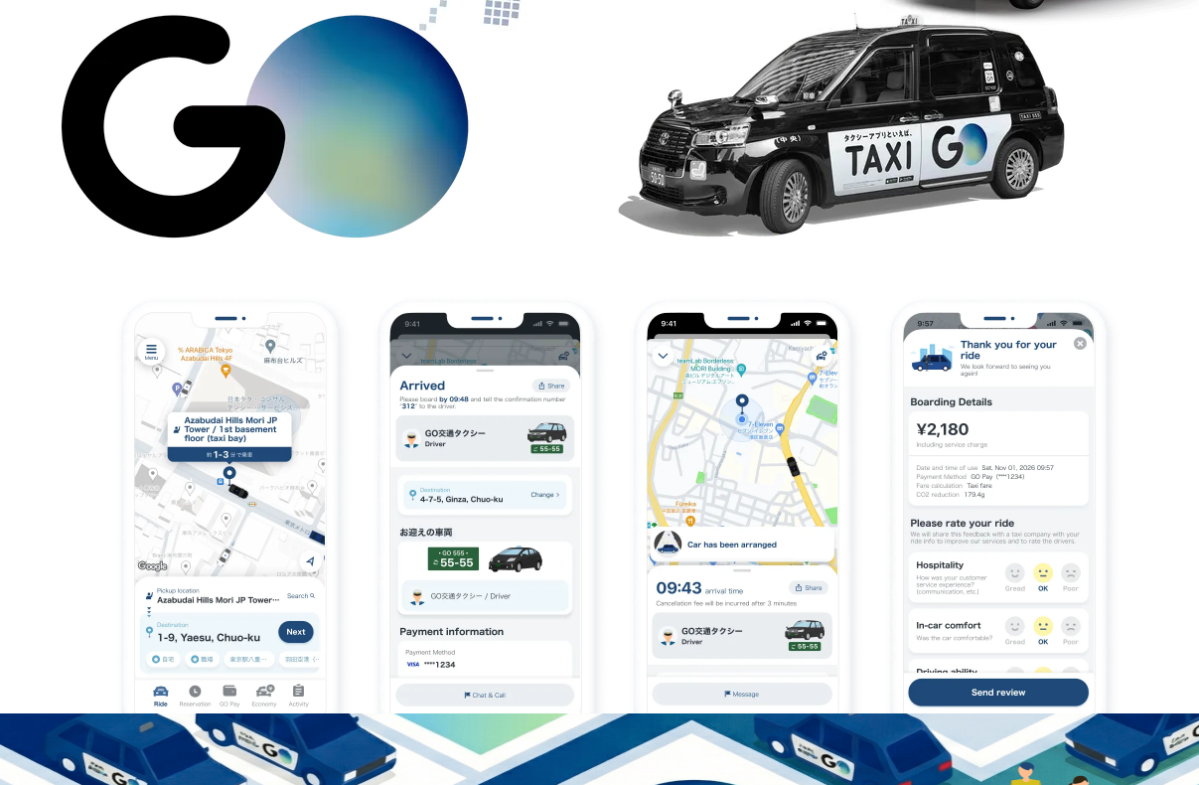
Go’s IPO — Japan’s biggest so far this year — has done more than provide a much-needed boost to the country’s languishing listing season. It has also supplied the taxi-hailing app with the capital required to address an existential issue: Japan’s shortage of drivers.
Go, which went public Tuesday, plans to use the ¥88.6 billion ($553 million) raised in its IPO to expand its robotaxi business and make acquisitions, according to a company spokesperson.
Key Takeaways
- Strategic Capital Boost:Go’s ¥88.6 billion ($553 million) IPO, Japan’s largest this year, provides crucial capital to accelerate its robotaxi ambitions and execute strategic acquisitions, countering a generally quiet listing season.
- Addressing Driver Shortage:The investment directly targets Japan’s critical taxi driver shortage, a demographic challenge exacerbated by an aging population and restrictive ride-share regulations, positioning autonomous vehicles as a long-term solution.
- Collaborative Autonomy & Market Dominance:Go leverages its strong market share (80% of Japan’s taxi app market) and strategic partnerships, notably with Waymo, to pursue driverless operations without direct investment in autonomous driving R&D, while also enhancing its traditional business for international travelers amidst growing competition.
Go’s Landmark IPO Fuels Robotaxi Future Amidst Japan’s Critical Driver Crisis
Japan’s capital markets recently witnessed a much-needed shot in the arm with the initial public offering (IPO) of Go, the nation’s leading taxi-hailing application. Surpassing all other listings this year, Go’s debut not only invigorated a typically quiet period for public offerings but, more importantly, armed the company with substantial capital – ¥88.6 billion ($553 million) – earmarked for an ambitious pivot towards robotaxis. This strategic financial injection is a direct response to one of Japan’s most pressing demographic and logistical challenges: a severe and worsening shortage of professional drivers.
The IPO’s Significance in a Cautious Market
Go’s successful public offering on Tuesday stands out in a Japanese listing season characterized by governmental advice for startups to consider mergers and acquisitions over going public. This backdrop makes Go’s ability to attract significant global institutional investment all the more remarkable, drawing funds from powerhouses like BlackRock, Wellington Management, and M&G Investment Management. Their participation underscores a clear signal regarding where international capital sees viable growth opportunities within Japan’s intricate economic landscape.
While the initial market enthusiasm saw Go’s stock pull back to ¥2,314 by Friday, slightly below its offering price of ¥2,400, such fluctuations are not uncommon in the immediate aftermath of an IPO. The true measure of this listing’s success lies in the strategic capital it provides, enabling Go to pursue its stated goals of expanding its robotaxi business and facilitating strategic acquisitions both within and outside the traditional taxi industry.
Confronting Japan’s Looming Driver Shortage
At the heart of Go’s robotaxi ambitions lies a profound human problem. Japan’s taxi industry is grappling with a severe and rapidly escalating driver shortage. Data cited from Japan’s Ministry of Land, Infrastructure, Transport and Tourism reveals an alarming 20% decline in the number of taxi drivers in recent years. This trend is inextricably linked to Japan’s aging population, a demographic reality that suggests this figure is unlikely to recover organically. The dwindling workforce not only strains existing services but also poses significant challenges for urban mobility, tourism, and access to essential services, particularly in rural areas.
Despite the introduction of ride-share services in Japan in 2024, their impact on alleviating the shortage has been minimal. Restrictive regulations, such as the requirement for ride-share drivers to be employed by a licensed taxi company and limitations to specific operational zones, have created significant hurdles. These constraints prevent the flexible, on-demand driver supply model that has proven effective in other global markets, leaving the core issue largely unaddressed. This regulatory environment effectively funnels innovation back into the established taxi framework, creating a unique pressure for companies like Go to find solutions that work within, or strategically redefine, the existing paradigm.
Go’s Strategic Vision: From Dominance to Autonomy
Established in 1977 as a taxi operator, Go has evolved into Japan’s undisputed leader in ride-hailing. Its app boasts an impressive 35 million downloads, integrates with 85,000 partner vehicles, and commands an overwhelming 80% share of Japan’s taxi app market by usage time, covering 46 of the nation’s 47 prefectures. This formidable market presence provides Go with an unparalleled platform from which to launch its next-generation mobility solutions.
The company firmly believes that robotaxis will play a pivotal role in its future, though the exact timeline for widespread deployment remains fluid. Go has strategically partnered with Waymo, Alphabet’s autonomous driving subsidiary, and Nihon Kotsu, one of Japan’s largest taxi operators, to advance its driverless technology goals. According to a company spokesperson, Go’s role within this formidable alliance is focused on strategic coordination, rather than direct investment in the complex and capital-intensive development of autonomous driving systems themselves – a pragmatic approach previously highlighted by CEO Hiroshi Nakajima in Nikkei Asia. This allows Go to leverage cutting-edge AD tech from Waymo while concentrating its resources on market integration, operational scalability, and regulatory navigation.
While a firm timeline for fully driverless operations has not been set, Go’s cautious approach emphasizes safety and regulatory compliance. The spokesperson clarified, “We plan to begin driving fully autonomously, without a human specialist present, when we validate our technology and receive approval to do so.” This patient, validation-driven strategy reflects the significant technological and legal hurdles that must be overcome before autonomous vehicles can become a ubiquitous reality.
Enhancing the Present and Navigating Competition
Even as it eyes the autonomous future, Go is not neglecting its traditional business. The company is actively seeking innovative ways to enhance its competitive edge and service offerings. Notably, it has forged partnerships with major international payment and hailing platforms such as Kakao T, Alipay, and WeChat Pay. These integrations allow inbound travelers from South Korea, China, and Taiwan to seamlessly hail Go-affiliated taxis directly through their familiar local apps, significantly improving convenience and expanding Go’s reach to the lucrative tourism market.
The autonomous mobility space in Tokyo is also attracting fierce competition. Go is not alone in its bet on a robotaxi future. In March, a powerful consortium comprising Uber, Wayve, and Nissan announced ambitious plans to pilot robotaxi services in Tokyo by late 2026. This marks Uber’s inaugural autonomous vehicle partnership in Japan, with the service slated to utilize Nissan Leaf electric vehicles powered by Wayve’s AI Driver technology, all bookable via the Uber app. Furthermore, Uber has also teamed up with S.Ride to facilitate international visitor bookings, mirroring similar arrangements by Didi Mobility Japan, a joint venture between SoftBank and Didi Chuxing. This burgeoning ecosystem of partnerships and pilot programs indicates a clear, collective drive towards redefining urban transportation in Japan, making Go’s strategic maneuvers all the more critical.
Bottom Line
Go’s substantial IPO represents more than just a financial milestone; it is a strategic declaration of intent to tackle Japan’s critical driver shortage head-on through technological innovation. By leveraging its dominant market position, partnering with global leaders like Waymo, and wisely allocating its newfound capital, Go is positioning itself at the forefront of Japan’s autonomous mobility revolution. While the road to widespread robotaxi deployment is long and fraught with technical and regulatory challenges, Go’s dual strategy of enhancing its established ride-hailing service for a global audience while aggressively pursuing a driverless future underscores its commitment to fundamentally reshaping urban transportation in a uniquely challenging, yet opportunity-rich, market.
When you purchase through links in our articles, we may earn a small commission. This doesn’t affect our editorial independence.
{content}
Source:{feed_title}