
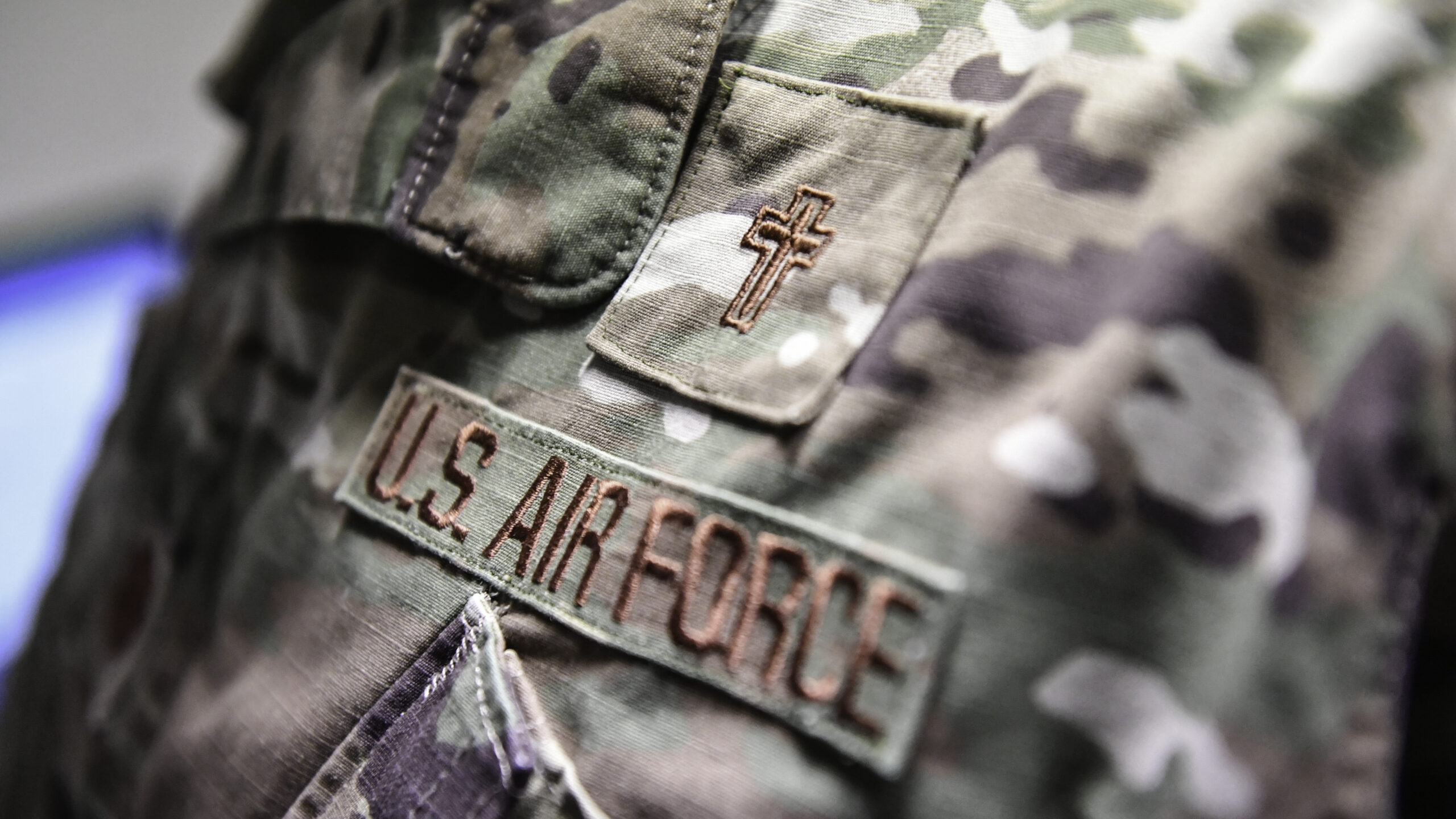
The Department of the Air Force (DAF) has issued new guidance clarifying the implementation of a recent policy change affecting chaplains’ uniforms. This update directs all Airmen and Guardians to continue treating chaplains as commissioned officers, despite a directive to remove rank insignia from their operational camouflage pattern (OCP) uniforms.
The DAF’s announcement, released on June 17, applies to all personnel across the Air Force and Space Force. It follows a mandate from Defense Secretary Pete Hegseth, issued approximately three months prior, which instructed the Chaplains Corps to replace traditional uniform rank insignia with appropriate religious affiliation symbols. The primary objective of this original directive was to enhance the approachability of chaplains for lower-ranking service members.
Background to the Policy Change
On March 25, Secretary Hegseth publicly emphasized his rationale for the change, stating in a social media post that a chaplain is “first and foremost, a chaplain, and an officer, second.” This statement underscored the intent to prioritize the chaplain’s spiritual and pastoral role, aiming to foster an environment where service members feel less intimidated by military hierarchy when seeking guidance or support.
The directive, while intended to improve accessibility, prompted various concerns among some retired Air Force leaders. Among those who voiced apprehension was former Air Force Chief of Chaplains, retired Maj. Gen. Steven Schaick. In March, Schaick stated that he had always viewed his identity as simultaneously an officer and a chaplain, suggesting that the two roles were intrinsically linked and equally vital to his effectiveness within the military structure. Similarly, former Chief Master Sergeant of the Air Force Gerald Murray also expressed reservations, arguing that the display of rank provides chaplains with a crucial element of credibility and authority, which they have earned through their service and position within the military organization.
Department of the Air Force Guidance
In response to these concerns and to provide clear operational instructions, the new Air Force guidance, detailed in a May 15 memo, aims to reconcile the new uniform policy with established military customs and courtesies. The memo specifies that chaplains will now wear their designated religious affiliation insignia on their OCP uniforms. However, it clarifies that chaplains will continue to display their standard rank insignia when wearing their service dress uniform, maintaining traditional appearances in formal settings.
Brian Scarlett, the principal deputy assistant secretary of the Air Force for manpower and reserve affairs, addressed the potential for confusion directly in the June 15 memo. He affirmed that the “removal of rank insignia from OCP uniform does not alter established customs and courtesies.” This statement underscores the Air Force’s intent to uphold the status and respect afforded to chaplains despite the visual change on their field uniforms.
Clarifying Customs and Courtesies
The Air Force’s June 17 announcement provides specific instructions for how personnel should interact with chaplains in OCPs. Given that all military chaplains hold commissioned officer status, the guidance states that junior enlisted personnel and noncommissioned officers “will use the chaplain insignia itself as the visual cue to initiate a salute,” irrespective of the chaplain’s specific grade or rank. This ensures that the customary respect for an officer is maintained.
For most routine operations at the wing or delta level, Airmen and Guardians are generally expected to be familiar with their chain of command and the leadership within their respective units. Commissioned officers are typically aware of the rank of assigned chaplains in their units, and therefore, the junior officer is expected to initiate the salute as per standard protocol. However, the guidance also anticipates less clear-cut situations.
In instances where an individual’s rank cannot be visually determined, such as when a chaplain in OCPs approaches an officer from another branch, the department’s advice is straightforward: “when in doubt, salute.” The announcement further clarifies that in such scenarios, standard military courtesy dictates that individuals should “mutually exchange a salute and a verbal greeting.” This ensures that respect is demonstrated without requiring immediate visual confirmation of rank.
Regarding verbal address, standard customs dictate that chaplains may be addressed either by their military rank (e.g., “Major Smith”) or by their title, “Chaplain.” The guidance stipulates that when exact rank is necessary for protocol or administrative reasons and is not visibly present on the uniform, it should be established through a verbal introduction or greeting, such as “Good morning, Major [Name].” This ensures administrative clarity while preserving the spirit of approachability.
Historical Context of Military Chaplains
The role of chaplains within the U.S. military has a long and distinguished history, dating back to July 29, 1775. On this date, the Continental Congress authorized the appointment of one chaplain for each regiment in the Continental Army, assigning them pay equivalent to that of a captain, according to the U.S. Army Historical Foundation. Since their inception, chaplains have served on the front lines of every conflict, providing crucial spiritual and emotional support to service members.
Chaplains often serve as essential resources for troops navigating profound challenges, including coping with loss, addressing personal problems, and dealing with the aftermath of accidents, suicides, and combat fatalities. Their unique position allows them to offer confidential counsel and spiritual guidance across various faiths, making them a vital component of service member well-being and morale. The recent policy adjustment reflects an ongoing effort to optimize their effectiveness in this critical support role within the contemporary military environment.
Why This Matters
This policy change and subsequent clarification carry significant implications for the U.S. Air Force and Space Force, touching upon military culture, leadership dynamics, and the critical support network for service members. First, it represents a deliberate attempt to balance military hierarchy with accessibility. By removing rank insignia from operational uniforms, the Department of Defense aims to make chaplains more approachable, particularly for junior enlisted personnel who might feel intimidated by a senior officer’s rank when seeking personal or spiritual counsel. This could potentially foster greater trust and openness, leading to more service members utilizing chaplain services for mental, emotional, and spiritual well-being.
Second, the Air Force’s detailed guidance underscores the enduring importance of military customs and courtesies. The directive to continue treating chaplains as commissioned officers, despite the visual absence of rank, reinforces the principle that respect for authority is foundational to military order. It highlights the unique status of chaplains, who must navigate the dual roles of spiritual leader and military officer. The clarification on saluting and addressing chaplains seeks to prevent confusion and maintain decorum, ensuring that the intent of approachability does not inadvertently erode professional military standards or the respect due to an officer.
Third, this decision reflects an ongoing internal dialogue within the military about identity and mission. The concerns raised by retired leaders like Maj. Gen. Steven Schaick and Gerald Murray illuminate the perception that rank contributes to a chaplain’s credibility and authority within the command structure. Their perspectives suggest that an officer’s rank is not merely a symbol of seniority but also an identifier of earned trust and the ability to operate effectively within a hierarchical organization. This policy therefore contributes to a broader discussion about how specialized roles, particularly those focused on personal care and well-being, integrate into a rigid military structure.
Finally, while this specific guidance pertains to the Air Force and Space Force, the initial directive originated from the Secretary of Defense, suggesting a potential future for similar clarifications across other military branches. The outcome of this implementation in the DAF could serve as a precedent or learning experience for the Army, Navy, and Marine Corps, as they too grapple with how to best support their chaplains and the service members they minister to. This policy is not just a uniform change; it’s an evolving experiment in fostering a more supportive and accessible environment for military personnel while upholding the core tenets of military professionalism.