
Programme Euston: Major Defence Investment for UK Submarine Fleet and Scottish Economy Under Scrutiny
The Ministry of Defence (MOD) has affirmed that Programme Euston, a critical initiative for the Royal Navy’s submarine fleet, represents one of the most substantial and sustained government investments in Scotland over the coming decades. This commitment is expected to stimulate increased employment and training opportunities in the local area as the project progresses.
This assessment was articulated by Lord Coaker, Minister of State at the Ministry of Defence, in response to a written parliamentary question. Lord Beamish, a Labour peer, had sought clarification regarding the government’s evaluation of the number of apprenticeships anticipated to be created in Scotland and the North-East of England as a direct result of the programme.
Lord Coaker reiterated the MOD’s position, describing Programme Euston as a singularly significant and enduring government investment in Scotland. He emphasized that the initiative is projected to boost local employment and training, simultaneously driving “regional economic skills and social/environmental benefits further afield.” This broad statement underscores the government’s expectation of widespread positive impacts beyond the immediate project site.
However, when pressed for specific figures concerning job and apprenticeship creation, Lord Coaker indicated that the commercial strategy for delivering the dock and shoreside components of the programme is still undergoing finalization. These details will be determined as part of the overarching investment decision, which is slated for announcement following the publication of the comprehensive Defence Investment Plan. Consequently, the precise number of UK-based jobs and apprenticeships that will be generated “can only be assessed following completion of the procurement process,” according to the minister.
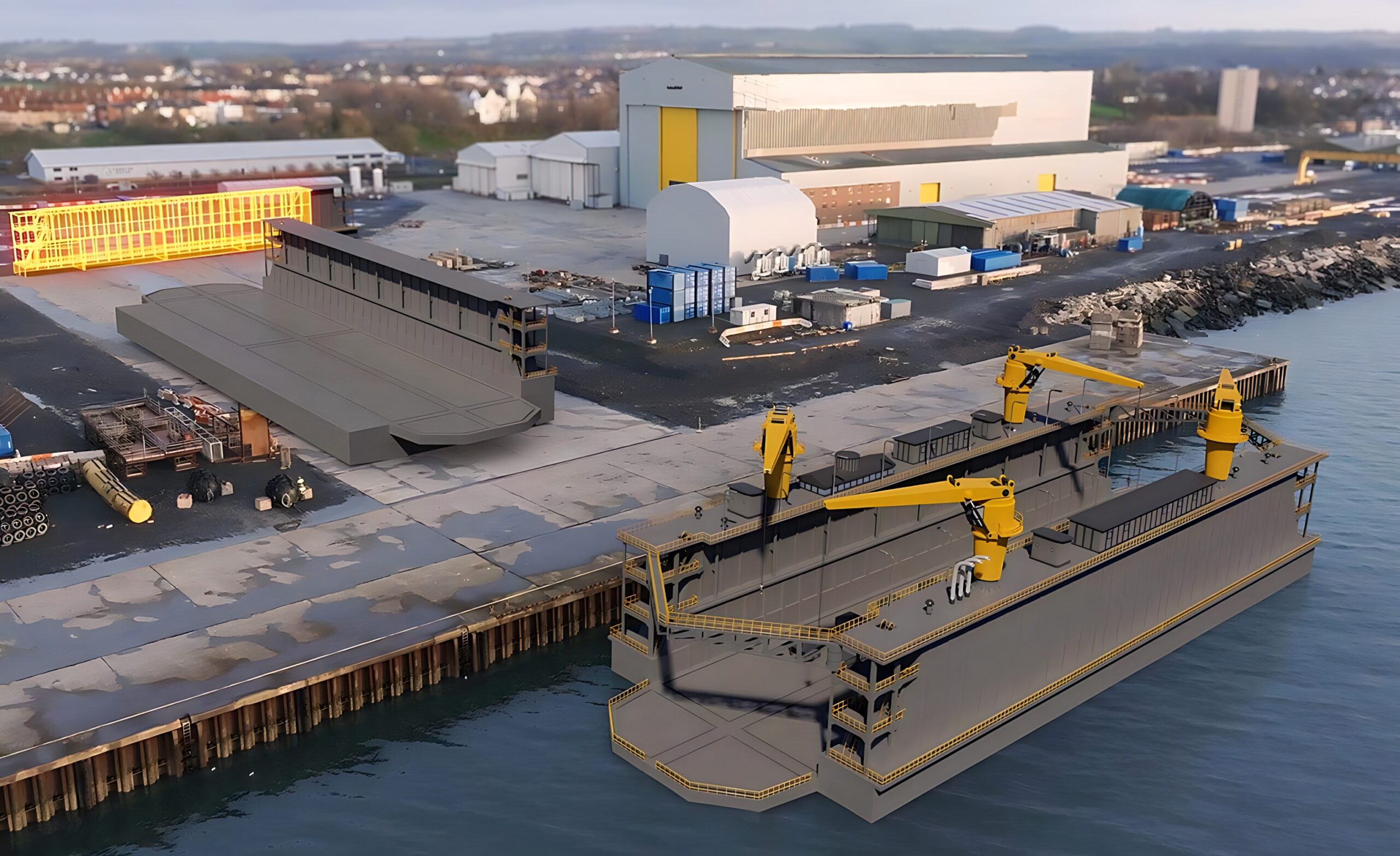
Programme Euston is the Royal Navy’s strategic initiative to construct two state-of-the-art floating dry docks. These facilities are designed to establish a resilient, out-of-water engineering and maintenance capability for its submarine fleet stationed at His Majesty’s Naval Base Clyde. The project aims to achieve operational readiness by the early 2030s. A Programme Business Case, detailing the strategic rationale and financial justification, is anticipated in the middle of the current year, with subsequent procurement decisions to follow. The substantial scale of this investment, predominantly concentrated on the Clyde, forms the basis for the minister’s characterization of it as a decades-long economic stimulus for Scotland, even as the exact employment benefits remain contingent upon the as-yet-undecided procurement outcomes.
The critical investment decision, which will define the commercial model and consequently the employment landscape, is inextricably linked to the forthcoming Defence Investment Plan. This pivotal spending document, which the government has committed to publishing before next month’s NATO summit, has emerged as the central determinant for a multitude of capability and industrial decisions across the defence sector.
A key unresolved question surrounding Programme Euston pertains to the actual location where the docks will be constructed, as no contract award location has yet been designated. Navantia UK’s Methil yard in Fife has publicly positioned itself as a strong contender for the work, leveraging its recent transformation following the successful Seahorse barge project as evidence of its capabilities. Simultaneously, trade unions have intensified their advocacy for the work to remain within the United Kingdom. GMB Scotland, a prominent union, has previously issued a stark warning to former Defence Secretary John Healey, cautioning that outsourcing the construction of these critical docks abroad would constitute “national self-harming on a grand scale,” implying significant economic and strategic repercussions.
The Minister’s remarks concerning the magnitude of the Scottish investment are highly likely to directly influence the ongoing debate regarding the proportion of the work, and subsequently the number of jobs, that will ultimately be secured within the United Kingdom. This tension highlights the broader policy challenge of balancing strategic defence needs with domestic industrial capacity and economic development objectives.
Why This Matters
Programme Euston represents more than just a defence infrastructure project; its ramifications extend across national security, economic development, industrial policy, and political accountability. Understanding its significance requires examining its multi-faceted impact.
National Security and Strategic Capability
At its core, Programme Euston is vital for the United Kingdom’s national security. HM Naval Base Clyde is home to the Royal Navy’s entire submarine fleet, including the Vanguard-class submarines that carry the UK’s nuclear deterrent (Trident). Maintaining and servicing these sophisticated vessels requires highly specialized and reliable infrastructure. The planned floating dry docks will provide a “resilient out-of-water engineering capability,” meaning submarines can be lifted out of the water for maintenance, repairs, and upgrades, ensuring their operational readiness and extending their service life. A robust maintenance capability is paramount for the continuous at-sea deterrence posture and for sustaining the UK’s conventional submarine fleet, which plays a crucial role in intelligence gathering, anti-submarine warfare, and protecting national interests. Any delays or deficiencies in this capability could have profound implications for the UK’s defence posture and its ability to project power and influence globally.
Economic Impact and Regional Development
The MOD’s assertion that Programme Euston will be one of the most significant government investments in Scotland over decades underscores its potential economic impact. Such a large-scale project can act as a substantial economic anchor, particularly for regions like the Clyde and potentially Fife. The construction phase alone would generate demand for skilled labour, materials, and support services. Beyond construction, the long-term maintenance of the dry docks and the continuous servicing of the submarine fleet would create sustained, high-value employment opportunities, fostering a skilled workforce in engineering, manufacturing, and related technical fields. This aligns with government objectives for “levelling up” and promoting regional growth, by potentially stimulating local supply chains, attracting further investment, and retaining talent within Scotland. The “regional economic skills and social/environmental benefits” mentioned by Lord Coaker suggest a broader vision for community development and capacity building, offering apprenticeships and training that could uplift local economies for generations.
Industrial Policy and Sovereignty Debate
The debate surrounding where the dry docks will be built is central to the UK’s industrial policy and its strategic sovereignty. Trade unions, such as GMB Scotland, have forcefully argued that manufacturing such critical defence infrastructure abroad would equate to “national self-harming.” This argument highlights concerns over the erosion of domestic shipbuilding and engineering capabilities, the potential loss of highly specialized skills, and the economic leakage from public investment. Retaining the work within the UK would preserve critical industrial capacity, foster innovation in a strategic sector, and ensure that the economic benefits of taxpayer-funded projects are reinvested domestically. Furthermore, building key defence assets within the UK reduces reliance on foreign supply chains, which can be vulnerable to geopolitical shifts or disruptions, thereby enhancing the nation’s strategic autonomy and resilience in defence procurement.
Political Ramifications and Government Accountability
The progression of Programme Euston carries significant political weight. The government’s ability to deliver on its promises of investment and job creation in Scotland will be closely scrutinized, particularly given the ongoing debates about regional economic equity and the future of the Union. Transparency in the procurement process and the eventual disclosure of job figures will be crucial for maintaining public trust. The project’s dependence on the forthcoming Defence Investment Plan also highlights the intricate planning and political decisions involved in managing a nation’s defence budget. The outcome of the NATO summit, which predicates the release of this plan, will further contextualize the UK’s defence spending priorities and commitments, making Programme Euston a touchstone for the government’s strategic and economic policies.