
U.S. Central Command Strikes Iranian Facilities Following Commercial Ship Attack in Strait of Hormuz
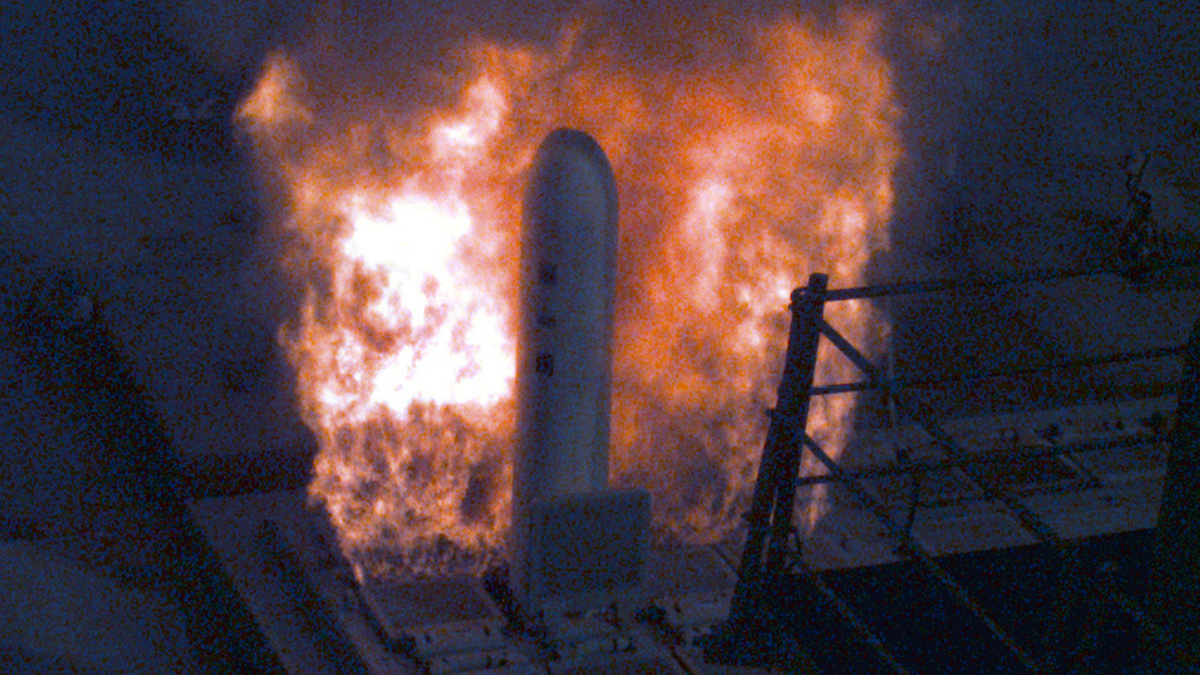
United States Central Command (CENTCOM) forces conducted retaliatory strikes against Iranian missile and drone storage facilities, as well as coastal radar positions, on June 26. This action was taken in response to an Iranian drone attack the previous day on a commercial cargo ship transiting the Strait of Hormuz, a critical international waterway.
The U.S. military operation targeted sites within Iran, following the June 25 incident in which the Singapore-flagged cargo vessel M/V Ever Lovely was struck by a one-way attack drone. The attack occurred as the ship was exiting the Strait of Hormuz, sailing along the Omani coast. In a statement issued from its headquarters in Tampa, Florida, CENTCOM confirmed its forces had “conducted strikes against Iran, June 26, as a powerful response to yesterday’s attack on a commercial ship that was transiting the Strait of Hormuz.” The statement further specified that “U.S. aircraft struck Iranian missile and drone storage locations and coastal radar sites after Iran hit M/V Ever Lovely on June 25 with a one-way attack drone.”
CENTCOM characterized the Iranian strike on the commercial ship as a violation of an existing understanding or “ceasefire” between the two sides, aimed at de-escalation in the region. The command asserted, “The unwarranted aggression against commercial shipping by Iranian forces clearly violated the ceasefire.” Furthermore, CENTCOM emphasized the broader implications of such actions, stating, “Iran’s dangerous behavior undermined freedom of navigation as commerce increasingly flows through the vital international trade corridor.” While U.S. officials refer to a standing ceasefire or agreement, details regarding its formalization or specific terms have not been publicly elaborated, and Iran has not officially commented on the existence of such an understanding in the context of this incident.
The Strait of Hormuz, a narrow choke point between the Persian Gulf and the Gulf of Oman, is one of the world’s most strategically important waterways. An estimated one-fifth of the world’s total oil consumption, along with a significant portion of liquefied natural gas (LNG), passes through this strait daily, making its security paramount for global energy markets and international trade. Disruptions or threats to navigation in this area carry substantial economic and geopolitical risks.
CENTCOM reaffirmed its commitment to maritime security in the region, stating that its forces continue to provide safe passage coordination and support to commercial vessels navigating the strait. The command’s statement underscored the U.S. military’s ongoing presence, declaring, “The U.S. military remains present and vigilant to ensure all aspects of the agreement with Iran are adhered to, obeyed, and in full force and effect.” This commitment highlights the U.S. posture of maintaining regional stability and safeguarding international maritime law, particularly in areas critical for global commerce.
The drone strike on the M/V Ever Lovely, while causing no reported casualties, triggered significant concern within the maritime industry. The incident prompted a precautionary planned evacuation of over 11,000 sailors from the wider merchant fleet operating in the region, underscoring the immediate human and operational impact of such attacks on commercial shipping. The exact extent of the damage to the M/V Ever Lovely was not immediately disclosed, but the vessel was reported to be operational after the strike.
Prior to the official announcement of the U.S. strikes, President Donald Trump addressed reporters, hinting at a forthcoming response. When asked about potential U.S. action following the Iranian attack, President Trump stated, “you’ll see.” He had earlier publicly accused Iran of what he termed a “foolish violation of the truce,” echoing CENTCOM’s assertion of an established understanding between the parties. These remarks indicated a strong presidential intent for a direct response to the maritime incident.
Internationally, concerns over the security of the Strait of Hormuz have been consistently high. Earlier in the week, British Defence Secretary Dan Jarvis addressed the RUSI Land Warfare Conference, indicating that British armed forces were among those preparing to ensure the continued freedom of navigation in the Strait of Hormuz. He cited this task alongside other critical operational demands, including the protection of vital underwater infrastructure in the High North and securing airspace in the Middle East. Such statements reflect a broader international consensus on the importance of maintaining open and secure maritime routes and a shared responsibility among allied nations.
These events unfold against a backdrop of prolonged tensions between the United States and Iran, often manifesting in the Persian Gulf region. Both nations have accused each other of destabilizing actions, and incidents involving maritime assets have frequently escalated these geopolitical frictions. The recent exchange of strikes marks a direct military response from the U.S. to an alleged Iranian provocation, signaling a potential shift in the dynamics of engagement in the region. This pattern of action and reaction underscores the fragile security environment and the constant risk of miscalculation in one of the world’s most sensitive geopolitical flashpoints.
Why This Matters
The recent U.S. retaliatory strikes against Iranian targets in response to the drone attack on a commercial vessel carry significant implications for regional stability, global trade, and international relations.
- Escalation of Tensions:The direct military response by the United States to an alleged Iranian provocation marks a notable escalation in the simmering tensions between Washington and Tehran. While previous incidents have often involved proxy forces or more ambiguous actions, these strikes represent a clear and overt military engagement. This raises concerns about a potential tit-for-tat cycle of retaliation, increasing the risk of a wider conflict in an already volatile region. The explicit naming of Iran as the aggressor and the swift, public military response could reshape the parameters of future interactions.
- Global Energy Security:The Strait of Hormuz is the world’s most crucial oil transit chokepoint, facilitating the passage of roughly 20% of the world’s petroleum liquids and a significant portion of its liquefied natural gas. Any disruption, or even the perception of heightened risk, can lead to immediate spikes in global oil and gas prices, impacting economies worldwide. The attack on the M/V Ever Lovely, regardless of its ultimate intent, directly threatened this vital artery of global energy supply. The U.S. response aims to deter future attacks and reassure commercial shipping, but the continued presence of threats keeps global energy markets on edge and highlights their vulnerability to regional conflicts.
- Freedom of Navigation and International Law:The U.S. government explicitly framed its actions as upholding freedom of navigation and responding to a violation of international maritime law. Protecting commercial shipping lanes from state or non-state actors is a fundamental principle of international order, crucial for global trade. Should such attacks become more frequent or severe, it could compel shipping companies to reroute vessels, increase insurance premiums, and ultimately raise the cost of goods for consumers globally, or even pose existential risks to maritime trade. The precedent set by responding to such an attack underscores the international community’s commitment to these principles.
- Precedent and Deterrence:The U.S. strikes establish a precedent for how the United States might respond to perceived Iranian aggression against commercial targets. It aims to act as a deterrent, signaling that attacks on international shipping will not go unanswered. However, the effectiveness of this deterrence depends on Iran’s interpretation and subsequent actions, which could either lead to de-escalation or further confrontation. The specific targeting of missile and drone storage facilities also indicates an attempt to degrade Iran’s capability to conduct similar attacks in the future.
- Regional Alliances and Diplomacy:The involvement and statements from allies like the United Kingdom underscore the international dimension of these security challenges. Such incidents often trigger diplomatic efforts to de-escalate, but they also test the resolve and unity of international coalitions committed to maintaining security in critical regions. The lack of clarity around the “ceasefire” referenced by CENTCOM also highlights challenges in diplomatic communication and understanding between the parties, making effective de-escalation strategies more complex.