
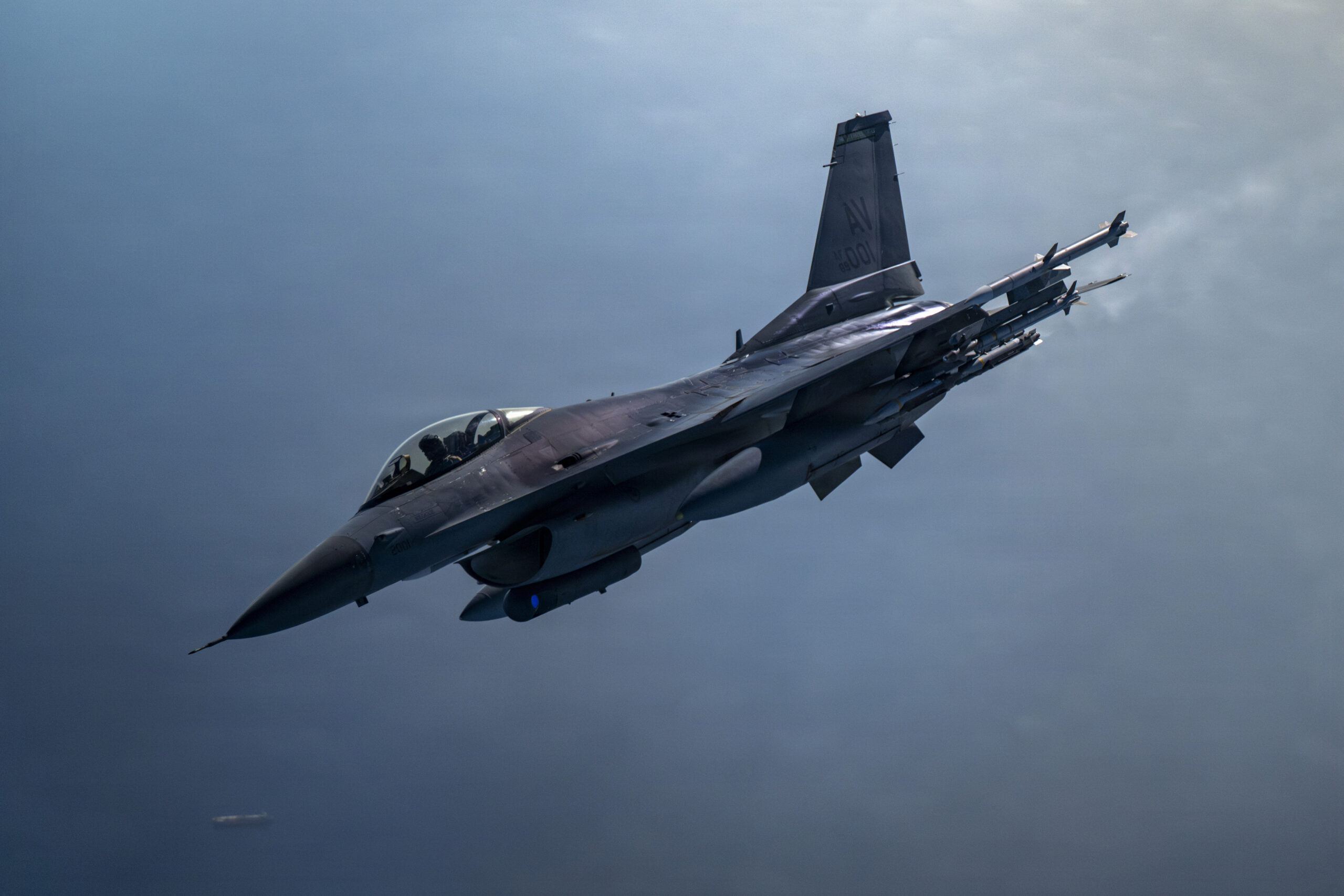
On June 26, the U.S. military conducted a series of airstrikes against targets in Iran. This action followed an Iranian drone attack on a commercial vessel in the Strait of Hormuz the previous day. These two incidents have tested the fragility of a recently established ceasefire and ongoing diplomatic efforts between the United States and Iran.
U.S. Central Command (CENTCOM) reported that American aircraft struck Iranian missile and drone storage facilities, as well as coastal radar sites. CENTCOM described these airstrikes as a “powerful response” to Iran’s June 25 assault on the M/V Ever Lovely, a Singapore-flagged container ship, which was targeted by a one-way attack drone.
In a statement, CENTCOM asserted, “The unwarranted aggression against commercial shipping by Iranian forces clearly violated the ceasefire.” The command further stated that “Iran’s dangerous behavior undermined freedom of navigation as commerce increasingly flows through the vital international trade corridor.”
Earlier on the day of the U.S. strikes, President Donald Trump stated via social media that Iran’s attack involved at least four one-way attack drones, three of which were reportedly “knocked down” by U.S. forces. While a CENTCOM spokesperson did not explicitly confirm U.S. forces’ involvement in intercepting the Iranian drones, other U.S. officials reportedly corroborated President Trump’s account.
President Trump characterized the incident on social media, writing, “Obviously, this is a foolish violation of our Ceasefire Agreement.”
Open-source flight tracking data indicated that approximately six U.S. Air Force aerial refueling tankers and a U.S. Navy P-8 Poseidon maritime patrol aircraft were operating over the Persian Gulf and the Strait of Hormuz around the time the U.S. airstrikes were carried out.
In response to the U.S. actions, Iran’s Islamic Revolutionary Guard Corps (IRGC) claimed, without providing substantiating evidence, that it had “thwarted and foiled the attack,” forcing U.S. forces to retreat. The IRGC also issued a promise of retaliation, stating: “This aggression will not go unanswered, and the response will be swift and decisive, at a time and place of our choosing.”
The recent hostilities challenge a memorandum of understanding (MOU) signed by both sides a week prior. President Trump had previously warned of a resumption of hostilities should Iran violate the terms of this agreement. The MOU’s objectives included reopening the Strait of Hormuz for oil traffic and initiating discussions on measures to limit Iran’s nuclear program. The signing of this agreement had previously contributed to a drop in global oil prices to pre-conflict levels earlier in the week.
The White House faces the context of approaching midterm elections and reduced oil inventories, which suggests a preference for avoiding a renewed large-scale conflict.
Vice President JD Vance commented on the situation on X, stating, “Iran signed a ceasefire agreement. We have honored it. If they have disagreements about how the MOU is being applied, they can pick up the phone. But violence will be met with violence.”
Following the June 19 signing of the MOU, the U.S. military had lifted its blockade of Iranian ports, an action that marked the first time since April 13. The earlier U.S. and Israeli bombing campaign against Iran, known as Operation Epic Fury, occurred between February 28 and April 8, representing the largest U.S. air engagement in a generation. Despite these previous military actions, Iran has continued to maintain its nuclear program.
Intermittent hostilities between Iran and the U.S. have been observed since the initial ceasefire was established in early April.
Prior to the U.S. airstrikes on June 26, President Trump remarked on the Iranian drone attack, stating, “I don’t like the fact that they took a shot yesterday—actually four, we knocked down three—at a ship. Not an allied ship, but a ship—a very expensive ship. And it was fine—it took a little beating. They shouldn’t be doing that.”
The International Maritime Organization (IMO) has previously advised ships to utilize a southern route through the Strait of Hormuz, closer to the coast of Oman, for passage.
Conversely, Iran has maintained that mariners must coordinate with its government to transit the strait. Since the conflict began, Iran has reportedly sought to levy tolls on vessels using routes it designates as sanctioned.
According to U.S. officials and the United Kingdom Maritime Trade Operations Center (UKMTO), a British government-operated maritime monitoring organization, the M/V Ever Lovely was struck near the Omani coast. The Iranian attack subsequently caused disruptions to shipping in the region, leading the IMO to announce a “temporary pause” in its recommended plans for the strait.
The U.S. military has affirmed its continued support for the U.S.-backed navigation route through the Strait of Hormuz, despite Iranian attempts at interference.
CENTCOM reiterated in its statement, “CENTCOM forces continue to provide safe passage coordination and support to commercial vessels transiting the strait. The U.S. military remains present and vigilant to ensure all aspects of the agreement with Iran are adhered to, obeyed, and in full force and effect.”
While Iran is not currently collecting tolls, it continues to insist that any final agreement should permit it to generate revenue from commercial ships navigating the Strait of Hormuz. This narrow waterway is a crucial strategic chokepoint connecting the Persian Gulf to the Gulf of Oman and, subsequently, the Indian Ocean. U.S. officials have consistently rejected this demand.
Why This Matters
The recent exchange of strikes between the United States and Iran in the Strait of Hormuz holds significant implications for global energy security, international trade, regional stability, and diplomatic efforts. The Strait of Hormuz is one of the world’s most critical maritime chokepoints, through which approximately one-fifth of global petroleum liquids and a substantial portion of liquefied natural gas (LNG) pass daily. Disruptions in this vital waterway can lead to sharp fluctuations in oil and gas prices, directly impacting economies worldwide.
The incident tests the viability of the fragile ceasefire agreement and the Memorandum of Understanding (MOU) between the two nations. This agreement was intended to de-escalate tensions, restore safe passage for commercial shipping, and create a framework for discussions on Iran’s nuclear program. A breakdown of this agreement could reignite broader hostilities, jeopardizing the hard-won cessation of conflict and undermining any prospects for a peaceful resolution regarding Iran’s nuclear ambitions. The U.S. stance emphasizes freedom of navigation, a principle crucial for global commerce and international law, which is directly challenged by Iran’s actions and demands for tolls.
Furthermore, this cycle of strikes and retaliation carries a high risk of escalation. Both sides have demonstrated a willingness to use military force, and the rhetoric from both Washington and Tehran suggests little tolerance for perceived provocations. Any miscalculation or unintended consequence could quickly spiral into a wider regional conflict, drawing in other international actors and destabilizing an already volatile Middle East. The involvement of U.S. forces, coupled with Iran’s stated intent to retaliate, underscores the precariousness of the current situation. The outcome of these tensions will determine whether a path towards de-escalation can be maintained or if the region is poised for renewed and potentially more severe conflict.