
The United States Air Force is poised to implement significant changes across its operations, ranging from the integration of artificial intelligence into administrative tasks to a comprehensive overhaul of Basic Military Training by 2027. These strategic directives emerged from a recent summit of the service’s senior leadership, signaling a concentrated effort to modernize capabilities and ensure future readiness.
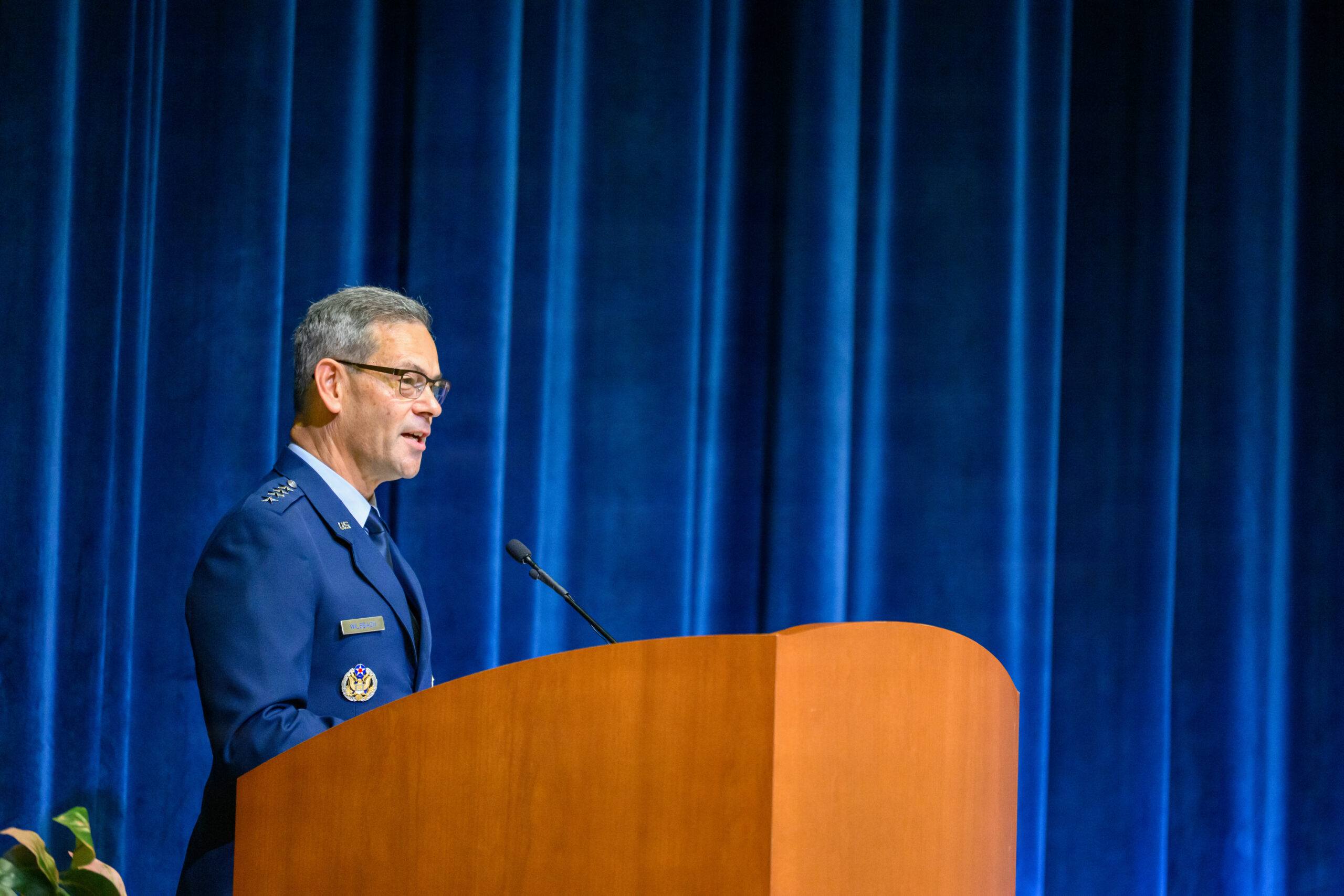
General Kenneth S. Wilsbach, Chief of Staff of the Air Force, convened the semiannual “Corona” meeting at Wright-Patterson Air Force Base in Ohio earlier this month. This gathering brought together the Air Staff, heads of each major command, their command chief master sergeants, and other high-ranking officials to deliberate on critical issues impacting strategy, policy, readiness, and long-term plans. The latest summit, held from June 10-12, involved more than 60 participants, according to an Air Force announcement released on June 26.
“The three-day summit provided a decision forum to build on recent policy changes and discuss key areas to ensure a ready and capable force for the future,” an Air Force news release stated, underscoring the proactive nature of the discussions in adapting to evolving global security challenges.
New AI Guidance Set for Release
A pivotal outcome of the summit was General Wilsbach’s announcement regarding upcoming guidance from Air Force headquarters to “institutionalize proven AI best practices currently utilized across the enterprise.” A primary objective of this forthcoming guidance is the automation of “repetitive administrative tasks,” aiming to enhance efficiency and free up personnel for more critical missions.
The Air Force and wider Department of Defense (DoD) have been exploring such applications of artificial intelligence for several years. In 2024, then-Air Force Major Michael Kanaan, serving as the military deputy Chief Information Officer for the Pentagon’s Chief Digital and Artificial Intelligence Office, highlighted to the Defense Innovation Board that AI’s most profound impact would likely be on “back office functions.” This perspective aligns with the current initiative to streamline bureaucratic processes.
Evidence of this growing trend is visible in various initiatives. By April 2026, the Pentagon’s GenAI.mil platform recorded the creation of over 100,000 AI “agents” designed to handle automated tasks. Furthermore, an Air Force-backed tech startup has developed an AI agent marketplace facilitating a range of administrative functions, including translating military performance documents for civilian job applications, generating reports, constructing lesson plans and training schedules, and managing administrative tasks related to driver certification. While the proliferation of AI tools offers substantial benefits, officials like Chief Master Sergeant of the Air Force David R. Wolfe have stressed the necessity of clear policy and comprehensive training. Wolfe indicated in May that the Air Force is developing a new training program to ensure all Airmen are equipped to effectively integrate AI into their daily professional duties. This administrative application of AI is distinct from its potential uses in battlefield target selection or the control of advanced systems like Collaborative Combat Aircraft (CCA) fighter drones.
Basic Military Training Undergoes Sweeping Modernization
Basic Military Training (BMT), the foundational “boot camp” for both Air Force and Space Force recruits, is in the midst of a significant transformation, with a comprehensive curriculum update slated for full implementation by 2027. This modernization effort, branded as BMT 2.0, was initially unveiled last fall, introducing heightened physical fitness requirements and a renewed emphasis on small-team combat operations.
Subsequent months have seen further changes, including the addition of an orienteering exercise, a reduction in time dedicated to traditional drills and inspections, and the incorporation of a hands-on training event conducted beneath the wings of a C-130 transport aircraft. These adjustments are designed to foster a stronger sense of “airmindedness” among trainees, cultivating a shared identity and understanding of what it means to be an Airman.
Future plans include the construction of an “air base training range” that will feature two C-130s and two F-16s. This realistic environment will enable trainees to practice essential airfield support skills, such as arming and refueling aircraft, repairing runways damaged by ordnance, and loading casualties onto cargo aircraft for medical evacuation. The upcoming curriculum update by 2027 will deepen the focus on airmindedness, reinforce the Air Force’s core values, and instill a robust sense of military professionalism.
Special Warfare Units to Maintain Distinct Identities
The future structure of Air Force Special Warfare, comprising the service’s “ground combat forces that specialize in airpower application in hostile, denied and politically sensitive environments,” was another key topic at the Corona summit. This umbrella term encompasses various specialized roles, including combat rescue, Tactical Air Control Parties (TACP), and special tactics.
In 2019 and 2020, the Air Force undertook a consolidation of some of these specialties into new codes, which led to speculation about a potential merger of units with differing specializations. However, leaders at the recent Corona meeting definitively decided against such a merger. Specifically, they affirmed that TACP and combat rescue “Guardian Angel” units will remain separate.
The announcement clarified the distinct roles: “[Guardian Angel] remains focused on personnel recovery, while TACP continues its role in precision strike, distributed command and control and integrating airpower with ground combat.” This decision underscores the value placed on maintaining specialized expertise within these critical operational areas.
Enhanced Scrutiny on Financial Audit Progress
Amid increasing pressure on the entire Pentagon to achieve a clean audit, General Wilsbach issued a directive requiring Air Force major command leaders to submit bimonthly updates on their financial reporting progress. The Air Force, along with every other military service except the Marine Corps, has consistently failed to pass its annual audit. Auditors have cited the inherent complexity and convoluted nature of the Pentagon’s financial systems as primary reasons for their inability to “express a reliable opinion” on the accuracy of money tracking.
Why This Matters
The decisions made at the Air Force’s Corona summit have far-reaching implications for the service’s operational effectiveness, administrative efficiency, and long-term readiness in an increasingly complex global security environment. Each initiative addresses a critical aspect of modern military capability and accountability.
**AI Guidance:** The institutionalization of AI best practices for administrative tasks is a significant step towards modernizing the Air Force’s internal operations. By automating repetitive duties, the service aims to reallocate valuable human resources to more strategic and mission-critical functions. This move not only promises enhanced efficiency and cost savings but also improves Airmen’s quality of life by reducing mundane workloads. For the broader defense landscape, the Air Force’s experience could serve as a blueprint for other services looking to leverage AI responsibly and effectively, while also setting precedents for ethical guidelines in AI deployment within military contexts.
**Basic Military Training Modernization:** The comprehensive overhaul of Basic Military Training by 2027 reflects a proactive response to evolving threats and operational demands. By focusing on “airmindedness,” physical fitness, small-team combat operations, and practical airfield support skills, the Air Force is investing in a new generation of Airmen who are not just technically proficient but also tactically versatile and imbued with a strong, unified identity. This modernization is crucial for preparing personnel to operate in distributed, contested environments and ensures the service maintains a combat-ready force capable of meeting future challenges.
**Air Force Special Warfare:** The decision to keep Tactical Air Control Parties (TACP) and Combat Rescue “Guardian Angel” units separate underscores the Air Force’s commitment to maintaining specialized, highly effective forces for distinct mission sets. While previous consolidations aimed at streamlining, this latest decision acknowledges the unique and critical expertise required for precision strike and airpower integration (TACP) versus personnel recovery (Guardian Angel). This ensures that each unit can continue to hone its specific capabilities without dilution, directly impacting their effectiveness in joint operations and their ability to provide unique support in hostile environments globally.
**Financial Audit Scrutiny:** The directive for bimonthly financial reporting updates highlights the intensifying pressure on the Pentagon to achieve a clean audit. The inability to accurately track billions of dollars erodes public trust, hampers efficient resource allocation, and complicates congressional oversight. By demanding more frequent updates from major commands, the Air Force is signaling a serious commitment to improving its financial accountability. Success in this area is vital not only for transparency but also for ensuring that taxpayer money is managed effectively, directly impacting the availability of funds for critical readiness and modernization initiatives.
Collectively, these decisions illustrate the U.S. Air Force’s dedication to adapting to a rapidly changing world, leveraging technological advancements, refining its training methodologies, preserving critical specialized capabilities, and enhancing financial transparency to maintain its position as a leading global airpower.