
Ukraine initiated multiple actions targeting Russia on Tuesday, including another drone assault on the Russian capital, Moscow, continued disruption of Russian fuel supplies, and sustained efforts aimed at severing Russia’s connection to Crimea, the peninsula annexed by Moscow in 2014.
Moscow’s Mayor, Sergei Sobyanin, reported that several waves of drones had approached the capital, commencing Monday night. This latest incident occurred less than two weeks after what Ukraine had described as its most extensive drone operation against the Russian capital since the conflict began in February 2022. Mayor Sobyanin stated on Telegram that Russian air defense systems had successfully intercepted more than 60 drones as they approached Moscow. He also confirmed that emergency services were deployed to crash sites but did not report any injuries within the city itself.
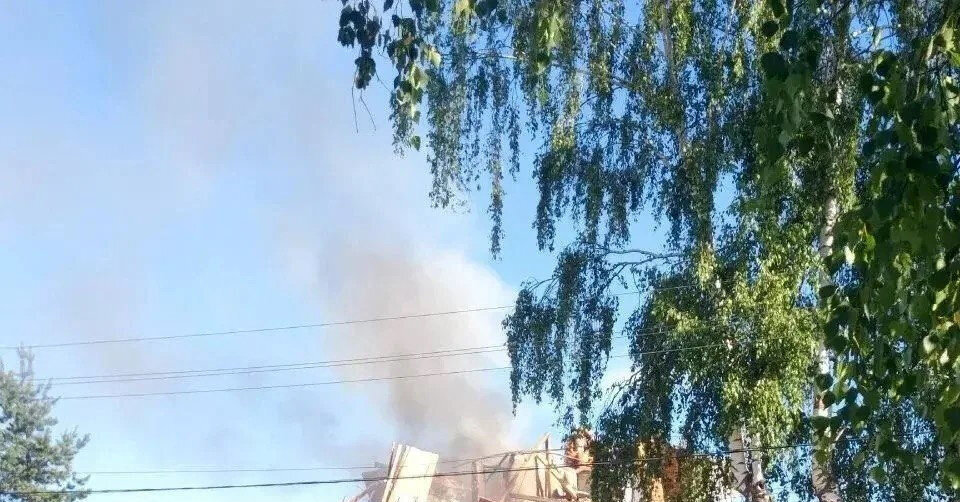
However, the governor of the Moscow region, Andrei Vorobyov, later reported that the attack had resulted in the death of a 6-month-old child in a town approximately 60 miles south of the capital. According to Vorobyov, the child was in a home in Yegoryevsk that caught fire after a drone fell on it. Rescuers managed to extricate residents, but the infant succumbed to injuries while en route to the hospital.
In a broader assessment, the Russian Defense Ministry stated that a total of 419 drones had been shot down, encompassing those targeting Moscow and the Crimean peninsula.
Ukrainian authorities did not issue an immediate public statement regarding the drone attacks.
The deployment of drones has become a pervasive feature across the front lines of the conflict. In eastern Ukraine, particularly in the Donetsk region, where the Kremlin seeks to gain full control, Russia has reportedly faced challenges in achieving significant battlefield advancements. After a period of limited progress in May, Russian forces have resumed incremental movements forward, accompanied by increased shelling of remaining Ukrainian strongholds in the region.
Conversely, Ukraine has escalated the frequency and scale of its drone attacks against Russian territory. These actions appear to be designed to challenge the Russian government’s ability to insulate its domestic population from the direct effects of the ongoing conflict.
While Russia has long conducted extensive barrages against Ukrainian cities and infrastructure, advancements in Ukraine’s indigenous drone production and technological capabilities have now enabled Kyiv to launch larger swarms of drones across the border.
Ukrainian President Volodymyr Zelensky has characterized this drone campaign as “long-range sanctions.” He has articulated the objective of these strikes as placing increased pressure on Russian President Vladimir Putin to cease the conflict.
However, President Putin has maintained a resolute stance. In comments made last Sunday, he affirmed that Ukraine’s actions would not deter Russia from its stated objective of acquiring territory in eastern Ukraine.
During an interview with a Russian state-run broadcaster, President Putin adopted a defiant tone, stating his intention to pursue the “final liberation of Donbas and Novorossiya.” The term Novorossiya, meaning “New Russia,” was notably revived by the Kremlin in 2014 to assert historical territorial claims over regions in eastern and southern Ukraine.
Addressing the impact of Ukrainian attacks on Russian infrastructure, which have reportedly caused fuel shortages, Putin acknowledged that they were “creating problems.”
“We are currently seeing certain shortages, although they are not critical,” Mr. Putin stated in the interview, downplaying the severity of the disruptions.
He further asserted that while Ukrainian attacks were “painful,” Russian strikes against Ukraine were inflicting more substantial damage.
“Our retaliatory strikes deep inside Ukrainian territory are far more powerful, more effective and, frankly, more destructive, resulting in genuinely serious consequences,” President Putin claimed, emphasizing the comparative impact of Russian military actions.
A previous significant drone attack by Ukraine on June 18 resulted in injuries to at least 17 people in the Moscow region. That assault targeted a major oil refinery and prompted the temporary closure of Moscow’s four international airports. The Russian Defense Ministry subsequently reported that nearly 1,000 drones had been downed across the country during that particular incident.
President Zelensky had indicated that the June 18 attack was a direct response to a Russian strike on a religious complex in Kyiv. Russia, in turn, contended that the complex had been hit inadvertently by an errant Ukrainian interceptor missile.
Tuesday’s attack on Moscow aligns with an ongoing Ukrainian campaign specifically targeting Russian refineries and fuel facilities. This campaign has reportedly contributed to shortages of gasoline and queues at gas stations across various parts of Russia.
Following the latest attacks, Russia’s federal aviation watchdog, Rosaviatsiya, briefly imposed emergency restrictions at major airports serving Moscow, citing concerns over flight safety. Such suspensions have become a recurring event in the Russian capital due to these security concerns.
Rosaviatsiya confirmed via Telegram that three out of the four international airports serving Moscow were compelled to temporarily suspend operations overnight.
The 6-month-old child who died in Tuesday’s attack was reportedly in a home in Yegoryevsk, a town located southeast of Moscow, which caught fire after a drone impacted it, as stated by the regional governor, Andrei Vorobyov. While rescuers managed to extricate other residents from the house, the child tragically died en route to the hospital.
“Civilians are suffering and children are dying — this is the result of the actions of the Kyiv regime,” Kremlin spokesman Dmitri S. Peskov stated to journalists following the attack, attributing blame to Ukraine.
In Ukraine, President Zelensky, in an overnight address delivered on Monday before the latest Moscow strike, asserted that Ukraine’s drone attacks were “bringing the reality of the war back to Russia.”
Mr. Zelensky specifically highlighted reports of long lines of cars at gas stations, linking these directly to the ongoing attacks on Russian refineries, pumping stations, and export ports, which he suggested were diminishing the country’s oil industry capacity.
“We are ensuring the results Ukraine needs so that the aggressor state cannot keep the war ‘somewhere over there,’” Mr. Zelensky declared, emphasizing the strategic intent behind these cross-border operations.
Meanwhile, the United Nations Human Rights Monitoring Mission in Ukraine reported on Monday that Russia’s military had been responsible for the deaths of 1,272 civilians and the wounding of another 6,871 in government-controlled areas of Ukraine over the six-month period ending on May 31.
Andrew E. Kramer contributed reporting from Kyiv, Ukraine.
**Why This Matters**
The escalating frequency and reach of Ukrainian drone attacks into Russian territory, particularly Moscow, signify a notable shift in the dynamics of the ongoing conflict. These operations carry significant strategic, psychological, and economic implications for both sides. Strategically, Ukraine aims to diversify its operational capabilities beyond the front lines, creating a multi-front pressure campaign that compels Russia to divert resources to domestic air defense and security. This approach seeks to disrupt Russia’s war-making capacity by targeting critical infrastructure, such as fuel refineries, which are vital for military logistics and the broader economy.
Psychologically, these attacks challenge the Kremlin’s narrative of the conflict being a distant, controlled “special military operation.” By bringing the physical manifestations of war directly to the Russian capital and other civilian areas, Ukraine aims to erode public complacency, generate domestic discontent, and undermine President Putin’s ability to maintain a sense of normalcy. The tragic death of a child in the Moscow region underscores the human cost of these strikes, echoing the civilian casualties consistently reported in Ukraine. Such events can intensify public debate within Russia and potentially strain the government’s efforts to control information and public sentiment.
Economically, sustained attacks on Russian fuel infrastructure, including refineries and export ports, pose a threat to Russia’s energy sector, a cornerstone of its economy. Reports of gasoline shortages and queues at pumps, while currently described as non-critical by Russian officials, could worsen over time, impacting domestic transportation, industry, and the government’s revenue streams, which are crucial for funding the war effort. Furthermore, repeated disruptions at Moscow’s airports indicate a broader impact on air travel and commercial activity, imposing economic costs and inconvenience.
Internationally, these developments are observed closely. They highlight Ukraine’s increasing ingenuity and self-reliance in developing long-range strike capabilities, potentially influencing the debate among Ukraine’s Western allies regarding the provision of more advanced weaponry. The targeting of civilian areas, even if unintended, raises ethical questions and risks further escalation, as both sides continue to claim their actions are responses to prior aggressions. The stated goals of “long-range sanctions” from Kyiv and “final liberation of Donbas and Novorossiya” from Moscow underscore the entrenched positions of the belligerents, suggesting a prolonged conflict with ongoing risks of escalation and broader regional instability.