
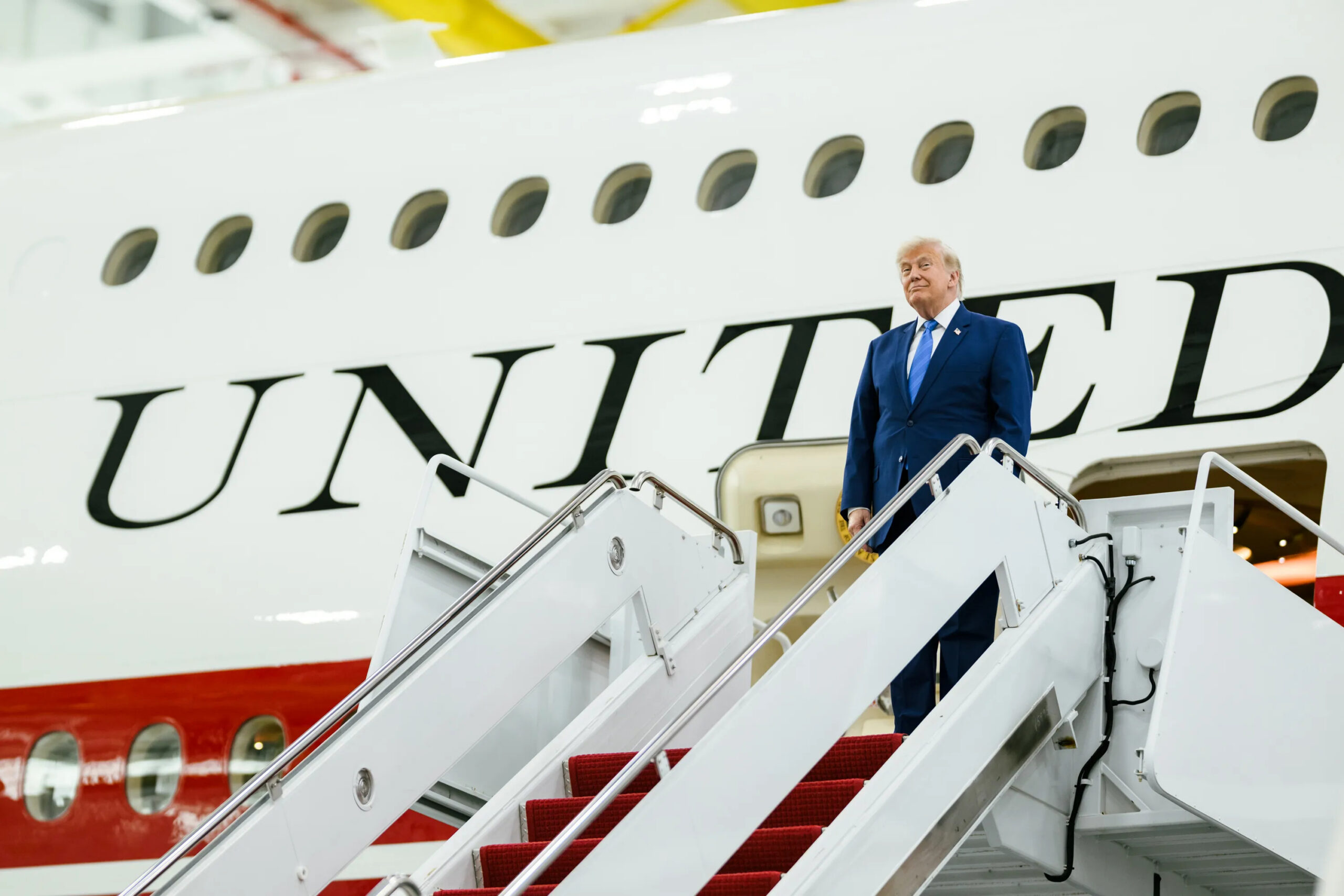
A new presidential aircraft, designated the VC-25B “Bridge,” has officially commenced operational service for the U.S. President. This Boeing 747-8 aircraft, acquired from Qatar, made its maiden flight with President Donald Trump aboard on July 1, 2026, traveling from Joint Base Andrews, Maryland, to North Dakota. During this mission, the aircraft utilized the distinctive call sign “Air Force One,” a designation exclusively applied to any U.S. Air Force aircraft carrying the President of the United States.
The aircraft itself originated as a gift to the United States from the Qatari royal family. While the airframe was donated, the subsequent extensive modifications required to meet stringent presidential airlift requirements were undertaken at the expense of the U.S. government. These modifications transform a commercial airliner into a highly secure and capable mobile command center. Trailing the primary aircraft on its debut flight was an earlier model VC-25A, serving as a backup. This second aircraft operated under the call sign “SAM” (Special Air Mission), which is standard procedure for VC-25 flights not transporting the President.
MAIDEN VOYAGE 🇺🇸🇺🇸🇺🇸 https://t.co/b1RBlnbrFtpic.twitter.com/Xbqm2NHwV— Rapid Response 47 (@RapidResponse47) July 1, 2026
The Pentagon officially assumed ownership of the “Bridge” jet in May 2025. Following this acquisition, contractor L3Harris commenced the necessary modifications in September 2025. Remarkably, these complex enhancements were completed in a swift 10-month timeframe, allowing the aircraft to enter service rapidly. This expedited schedule stands in stark contrast to the primary VC-25B program, which involves two other Boeing 747-8 aircraft intended to become the long-term replacements for the current presidential fleet. That official program has experienced significant delays, stretching several years beyond its initial projections, primarily due to cost overruns, contractual disputes, and intricate modification requirements.
While both the new “Bridge” aircraft and the future VC-25Bs are based on the Boeing 747-8 platform, the specific requirements and modification philosophies for each differ significantly. The “Bridge” plane was adapted with a distinct set of priorities. According to a June 19 press release from the Air Force, the aircraft is “safe, secure, and equipped with the most advanced technologies necessary to meet the requirements of the presidential mission.” The statement further clarified that “those requirements were carefully crafted to prioritize mission over aesthetics, leaving much of the previous [Qatari] head of state interior layout minimally changed.” This strategic decision aimed to expedite the modification process and control costs by leveraging existing internal configurations while ensuring no compromise on critical aspects such as security, safety, or mission communications. The collective team made specific trade-offs on “less commonly used mission sets” that are intended for the longer-term VC-25B program, designed to support presidential travel for the next 40 years.
Visual evidence of the interior of the first VC-25B “Bridge” flight has been shared on social media platforms by officials within the Trump administration, offering a glimpse into the modified cabin. These images reportedly reflect the balance struck between functional necessity and retaining some elements of the aircraft’s prior configuration as a head-of-state transport.
The final cost associated with modifying the “Bridge” aircraft remains undisclosed to the public. Approximately a year ago, Air Force Secretary Troy Meink estimated the project would cost less than $400 million. However, comprehensive final expenditure figures have not been released, sparking discussions regarding transparency in government procurement for high-profile assets.
The introduction of the VC-25B “Bridge” aircraft marks a notable development in the logistical capabilities supporting the U.S. presidency. The existing fleet of presidential aircraft, two VC-25As (modified Boeing 747-200Bs), have served the nation since the early 1990s. These venerable aircraft, while meticulously maintained, are approaching the end of their operational lifespan, facing increasing maintenance costs and challenges in sourcing parts for their aging systems. The “Bridge” aircraft, a more modern 747-8 variant, offers improved fuel efficiency, greater range, and enhanced technological infrastructure, providing a much-needed interim capability while the primary VC-25B replacement program continues its development.
Why This Matters
The operational debut of the VC-25B “Bridge” holds significant importance on multiple fronts, extending beyond simply updating presidential transportation:
Symbol of National Authority and Continuity:“Air Force One” is more than just an aircraft; it is a globally recognized symbol of American power, resilience, and the continuity of government. Its modernization ensures that the President can effectively lead and operate from anywhere in the world, maintaining essential command and control capabilities during national emergencies or international crises. This capability is paramount for national security and global leadership.
Enhanced Security and Technological Advancement:Presidential aircraft are highly complex flying fortresses, equipped with advanced secure communication systems, state-of-the-art defensive measures, and sophisticated medical facilities. The “Bridge” aircraft, leveraging a more modern airframe, incorporates the latest available technologies to ensure the utmost safety and security for the President and their staff, reflecting ongoing advancements in aviation and defense technology.
Addressing Fleet Aging and Operational Readiness:The existing VC-25A fleet is decades old. Introducing a newer 747-8 variant, even as an interim solution, helps alleviate the growing strain on maintenance resources and ensures higher operational readiness for presidential travel. This ensures that a reliable and capable aircraft is always available for the President’s demanding schedule and critical missions, preventing potential disruptions due to mechanical issues with older planes.
Fiscal Responsibility and Transparency in Government Procurement:The contrasting timelines and cost approaches between the rapid “Bridge” acquisition and the delayed primary VC-25B program highlight ongoing challenges in large-scale government procurement. While the “Bridge” project demonstrates an expedited, potentially cost-saving approach by prioritizing mission over luxury and leveraging a gifted airframe, the lack of final cost transparency for a public asset raises questions regarding accountability and efficient use of taxpayer funds. It also provides a benchmark against which the much larger, more expensive main VC-25B program will be evaluated.
Diplomatic and Geopolitical Implications:The initial acquisition of the aircraft as a gift from the Qatari royal family carries diplomatic weight. Such a gesture underscores the strategic partnership between the United States and Qatar, illustrating the intricate web of international relations and the various forms of cooperation that exist between nations. It signifies a tangible demonstration of goodwill and alliance, which can have broader geopolitical ramifications.