
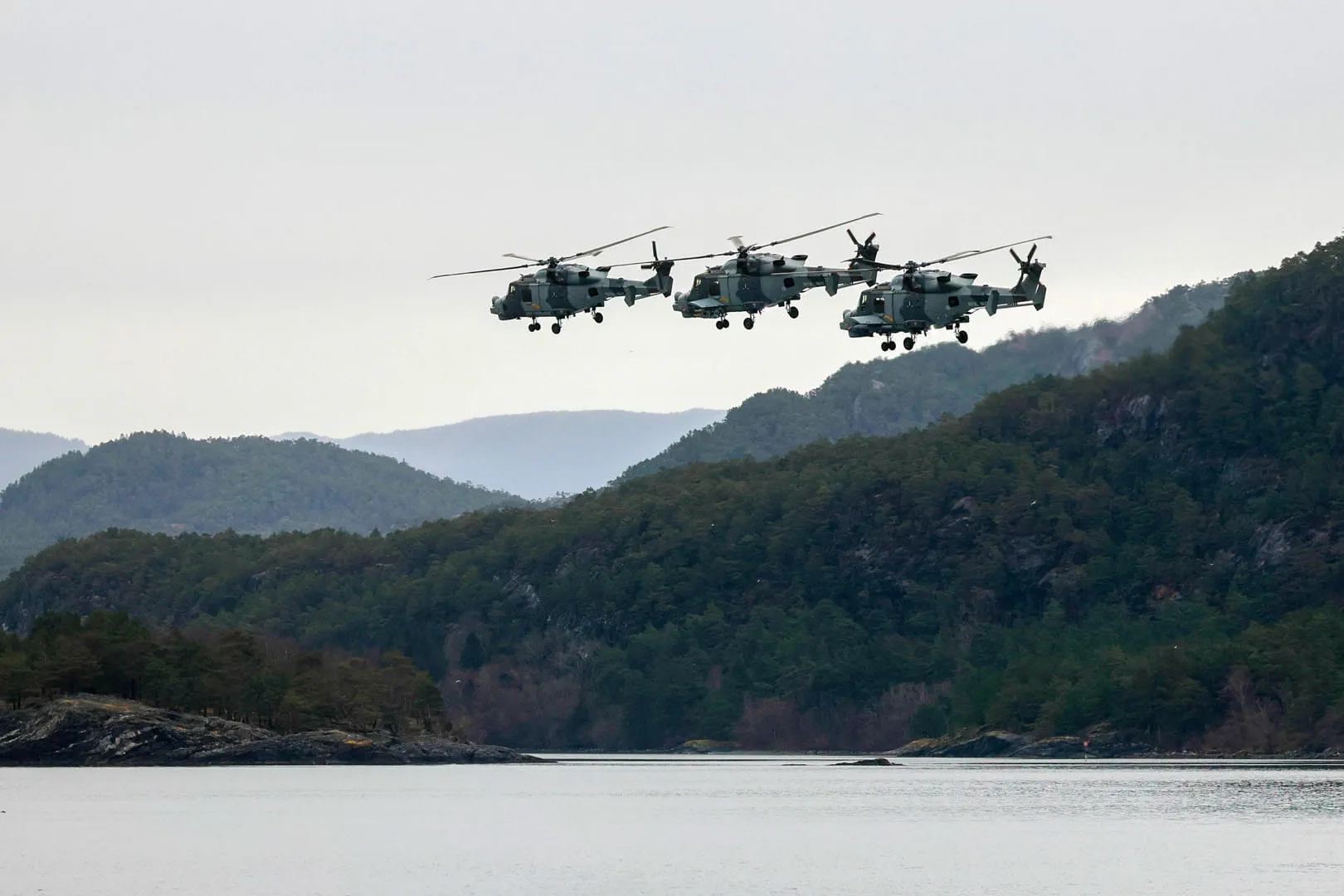
Royal Navy to Replace Wildcat Helicopters with Autonomous Aircraft, Signalling Shift to Uncrewed Naval Aviation
The Royal Navy is set to replace its current fleet of Wildcat maritime helicopters with autonomous aircraft, marking a significant strategic shift towards uncrewed flight within its Fleet Air Arm. This development, outlined in the recently published Defence Investment Plan, underscores a future where increasingly autonomous rotorcraft will operate from the decks of frigates and destroyers, fundamentally altering the operational landscape of naval aviation.
The Defence Investment Plan explicitly lists among its future commitments the procurement of“an autonomous replacement for Wildcat maritime helicopters.”This initiative is described as contributing to a broader vision for a Hybrid Carrier Air Wing, which will be augmented by a new generation of autonomous rotorcraft deployed from escort vessels. This strategic pivot signals a clear intent to transition from smaller, crewed helicopters, which currently perform vital roles from the aft of warships, to advanced uncrewed machines capable of executing similar missions with potentially enhanced capabilities.
It is important to distinguish between the various versions of the Wildcat helicopter. The maritime variant, known as the HMA2, is operated by the Fleet Air Arm and is distinct from the Army’s battlefield reconnaissance Wildcat, which the same Defence Investment Plan indicates will be retired from service starting in 2027. The HMA2 Wildcat plays a critical role in naval operations, deploying from the flight decks of the Royal Navy’s frigates and destroyers. Its mission profile includes anti-surface warfare, reconnaissance, and crucial support for anti-submarine operations. Armed with sophisticated weaponry such as Martlet and Sea Venom missiles, the Wildcat acts as an indispensable extension of a warship’s sensors and offensive reach, enabling it to detect and engage threats far beyond its own radar horizon.
The decision to replace this versatile crewed platform with autonomous systems represents an acceleration of a broader pattern within the Royal Navy’s aviation strategy. Across various domains, the Navy is increasingly integrating uncrewed platforms to undertake roles traditionally assigned to crewed aircraft, aiming for greater efficiency, endurance, and reduced risk to personnel. This move aligns with a global trend among advanced navies exploring and adopting uncrewed aerial systems (UAS) for a multitude of tasks.
Preparatory work for this ambitious transition is already well underway. The Royal Navy has conducted extensive trials with uncrewed rotorcraft technology demonstrators, collaborating closely with industry partners to mature these nascent capabilities. Notable among these efforts is the development of a crewless helicopter designed specifically to carry advanced sensors and weapons for the demanding anti-submarine warfare task. The operational advantages of deploying an uncrewed aircraft from an escort vessel are manifold: such platforms can sustain flight for significantly longer durations than their crewed counterparts, incur lower operating costs due to reduced requirements for fuel, maintenance, and personnel support, and critically, eliminate any risk to aircrew when deployed into hazardous or contested environments.
Army Wildcat helicopter to be retired
Despite the compelling benefits, the shift towards full autonomy in maritime aviation is not without its considerable challenges. A crewed maritime helicopter, such as the Wildcat, brings to bear a highly skilled and adaptable crew, capable of exercising nuanced judgment in complex and rapidly evolving operational scenarios. Furthermore, these aircraft typically carry a heavy and varied weapons payload, alongside advanced sensor suites. Replicating this comprehensive capability in an uncrewed rotorcraft requires significant technological maturation. Autonomous systems must demonstrate the ability to perform intricate operations, such as taking off from and landing on a small, moving ship deck in adverse weather conditions, and possess sufficient payload capacity and sensor sophistication to justify their operational space and resource allocation. Ensuring robust data links, cyber security, and autonomous decision-making processes under stress are also critical hurdles to overcome.
While the Defence Investment Plan outlines the strategic intent, a specific date for the Wildcat HMA2’s eventual departure from active service in the maritime role has not yet been stipulated, unlike the clearer timeline provided for the Army’s version. This suggests a phased approach, allowing for the progressive development and integration of autonomous alternatives as technology advances and operational confidence grows.
Why This Matters
The Royal Navy’s decision to replace its Wildcat maritime helicopters with autonomous aircraft represents a watershed moment in naval warfare and defence technology. This strategic shift carries significant implications across several dimensions:
- Revolutionising Naval Warfare:By embracing uncrewed rotorcraft, the Royal Navy is fundamentally altering how it projects power, conducts surveillance, and engages threats at sea. Autonomous systems can provide persistent intelligence, surveillance, and reconnaissance (ISR) capabilities, extend strike ranges, and offer unparalleled endurance, potentially transforming the effectiveness of surface fleets.
- Advancing Autonomous Technology:This commitment drives significant investment and innovation in autonomous systems. The challenges of operating uncrewed aircraft from moving platforms in harsh marine environments will push the boundaries of AI, robotics, sensor technology, and human-machine interface development, with potential spillover benefits for civilian applications.
- Enhancing Operational Safety and Efficiency:Removing human pilots from hazardous missions significantly reduces the risk of casualties, a primary driver for military automation. Furthermore, uncrewed systems generally incur lower operating costs over their lifecycle due relating to personnel, training, and maintenance, offering a more economically sustainable path for future naval aviation.
- Shifting Global Naval Power Dynamics:As one of the world’s leading navies, the Royal Navy’s embrace of this technology sets a precedent. Other nations will closely observe its success and challenges, potentially accelerating a global arms race in autonomous naval capabilities. This move could redefine what constitutes a modern and effective naval force, influencing future defence procurements and alliances.
- Impact on Personnel and Training:While reducing the need for helicopter pilots, this shift will necessitate new roles and specialized training for naval personnel, focusing on remote operation, data analysis, maintenance of complex autonomous systems, and cyber security. It signals an evolution in military career paths and skill sets.
- Economic and Industrial Implications:The development and procurement of these autonomous systems will stimulate the defence industry, fostering innovation and creating high-tech jobs. It signifies a long-term investment in cutting-edge British defence capabilities, ensuring the UK remains at the forefront of military technology.
In essence, this move is not merely an equipment upgrade but a profound reorientation towards a future where intelligent machines play an increasingly central role in safeguarding national interests at sea, setting a new benchmark for naval forces worldwide.