
FOX Business’ Jeff Flock reports on how America’s oldest ice cream brand has stayed family-owned for 165 years, serving up tradition from the same historic Philadelphia shop since the 1800s.
**Key Takeaways:**
1. **Enduring Brand Equity & Market Resilience:** Bassett’s Ice Cream exemplifies how deep-rooted brand heritage, coupled with consistent quality, can foster unparalleled customer loyalty and market resilience, enabling a business to navigate severe economic downturns and intense competition across generations.
2. **Strategic Innovation & Diversification for Growth:** While upholding tradition, Bassett’s demonstrates the critical need for strategic innovation—from embracing global flavors and dietary trends (vegan options) to expanding into international markets—as a vital strategy for sustained growth, market relevance, and revenue diversification in a dynamic consumer landscape.
3. **The Premium on Authenticity & Succession Planning:** The longevity of a sixth-generation family business underscores the immense value placed on authenticity and a clear succession strategy. This model provides a blueprint for small and medium-sized enterprises (SMEs) seeking to build a lasting legacy and differentiate themselves in a competitive market increasingly valuing transparency and provenance.
Philadelphia’s Bassett’s Ice Cream, a venerable institution founded in 1861, stands as a testament to enduring brand equity and strategic adaptability in the volatile consumer goods sector. As the nation prepares to mark its 250th anniversary, this sixth-generation family-owned business celebrates its own remarkable milestone, having survived and thrived through civil wars, world wars, economic depressions, recessions, and ever-shifting consumer preferences. Its ability to maintain family ownership for over 165 years in a market prone to consolidation and disruptors offers critical insights into the power of brand heritage, operational resilience, and careful succession planning.
In an exclusive segment on “Mornings with Maria,” FOX Business correspondent Jeff Flock highlighted Bassett’s journey, exploring the unique factors that have allowed this enterprise to defy the odds. Many small businesses succumb to pressures ranging from insufficient capital and intense competition to the complexities of transferring ownership across generations. Bassett’s story is a masterclass in how a deeply embedded brand narrative and a commitment to core values can create an invaluable competitive moat.
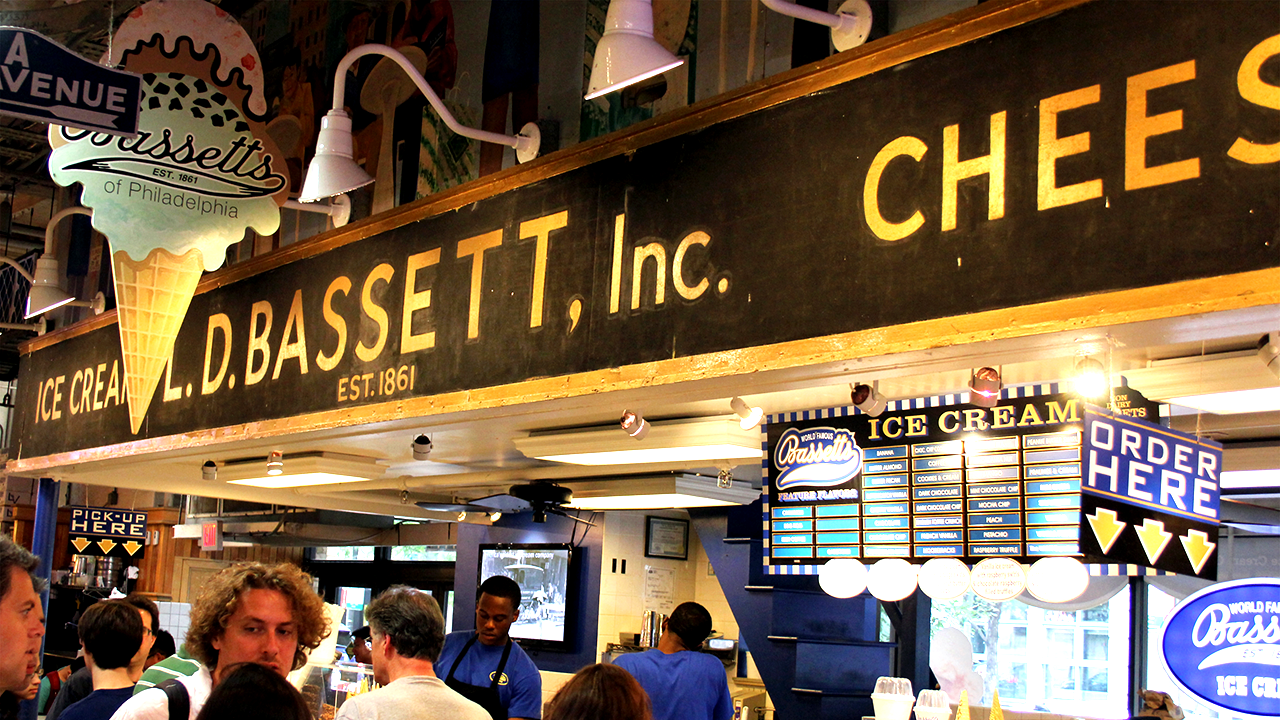
Bassetts Ice Cream in Philadelphia(photohoo / Getty Images)
The company’s origins themselves speak to its foundational resilience. Established when Abraham Lincoln occupied the White House, Bassett’s initially relied on mule power for churning and horse-drawn buggies for distribution across Philadelphia. This early operational model, though archaic by today’s standards, forged a direct connection with its market and laid the groundwork for a brand synonymous with quality and tradition. This historical narrative is not merely a nostalgic anecdote; it is a significant contributor to its brand equity, resonating with consumers seeking authenticity and heritage in their purchases, especially in a market saturated with mass-produced alternatives.
“We love a family business. We feel that our ice cream is a tradition, this is a family company and we are so proud to be serving America and Philadelphia with a family business,” affirmed sixth-generation owner Alex Bassett Strange. This sentiment underscores the inherent value proposition of a family-run enterprise: a perceived commitment to quality, community, and long-term vision over short-term profit maximization. In an era of increasing corporate transparency and consumer demand for ethical sourcing, Bassett’s model naturally aligns with evolving market expectations, fostering unparalleled customer loyalty and a powerful word-of-mouth marketing engine.
FOX Business’ Gerri Willis visits America’s oldest bell maker in Connecticut to see how the nearly 200-year-old company is helping ring in the nation’s 250th birthday while preserving U.S. history.
While deeply rooted in tradition, Bassett’s shrewdly understands that market longevity demands continuous evolution. This delicate balance between preserving heritage and embracing innovation is critical. The company has strategically expanded its market reach, now exporting ice cream to burgeoning markets such as China and Taiwan. This international diversification not only opens new revenue streams but also provides invaluable market intelligence. Operating in diverse cultural contexts necessitates adaptability, pushing the company to innovate its product line. “It’s helped us develop into new markets,” Strange explained, highlighting how international exposure directly influenced product development. “I have my matcha ice cream, which is a flavor we never would have done had we not been in Southeast Asia.” This cross-cultural pollination of flavors is a testament to proactive market sensing and a willingness to transcend conventional offerings, enhancing its appeal to a broader, global consumer base.
FOURTH OF JULY COOKOUT PRICES HIT RECORD HIGH AS AMERICA CELEBRATES 250TH BIRTHDAY
Domestically, Bassett’s continues to innovate its product portfolio in response to evolving consumer dietary trends and market demands. The introduction of its first vegan ice cream this year demonstrates an astute awareness of the growing plant-based food market, capturing a segment of consumers seeking dairy-free alternatives without alienating its traditional customer base. Furthermore, seasonal and patriotic offerings, such as a limited-edition red, white and blueberry variety for America’s semiquincentennial celebration, capitalize on cultural moments to drive sales and reinforce brand affinity. Crucially, while innovating, the company maintains its commitment to quality, continuing to source Pennsylvania dairy for its traditional products, reinforcing its local economic ties and premium positioning amidst rising commodity prices and supply chain volatility that impact the broader food sector.
HOW A STOLEN SURFBOARD LAUNCHED A GLOBAL SURF EMPIRE
FOX Business’ Madison Alworth visits the Pennsylvania family bakery that accidentally invented the hard pretzel more than 165 years ago and is still making the iconic American snack five generations later.
The story of Bassett’s is a microcosm of the challenges and opportunities facing small and medium-sized enterprises (SMEs) in the modern economy. Its survival through numerous economic cycles—including inflationary pressures, recessions, and shifts in consumer spending habits—underscores the importance of a robust business model, sound financial management, and a deep understanding of its market niche. In an industry increasingly dominated by large conglomerates, Bassett’s ability to maintain its independent, family-owned status speaks volumes about its sustained profitability and strategic differentiation. This legacy is not merely about selling ice cream; it’s about preserving a piece of American economic history while demonstrating the enduring power of a meticulously managed, purpose-driven brand.
CLICK HERE TO DOWNLOAD THE FOX NEWS APP
Market Impact:
Bassett’s Ice Cream provides a compelling case study for investors and market analysts evaluating the consumer staples sector, particularly within the fragmented food and beverage industry. Its sustained success highlights that heritage brands, when coupled with strategic adaptation and efficient multi-generational succession planning, can generate significant long-term value and exhibit remarkable resilience against broader economic headwinds and competitive pressures. The company’s expansion into global markets and adoption of plant-based offerings signals a pragmatic approach to market diversification and consumer trend responsiveness, proving that even deeply traditional businesses can innovate to unlock new growth vectors. This model suggests that investments in niche, premium brands with strong brand equity and a proven track record of adaptability can yield stable returns, offering a counter-narrative to the prevailing M&A driven consolidation in the food sector and reinforcing the enduring appeal of authenticity in a globalized marketplace.