
Royal Navy Seeks Industry Input for Next-Generation Extra-Large Uncrewed Underwater Vehicles and AUKUS Payloads
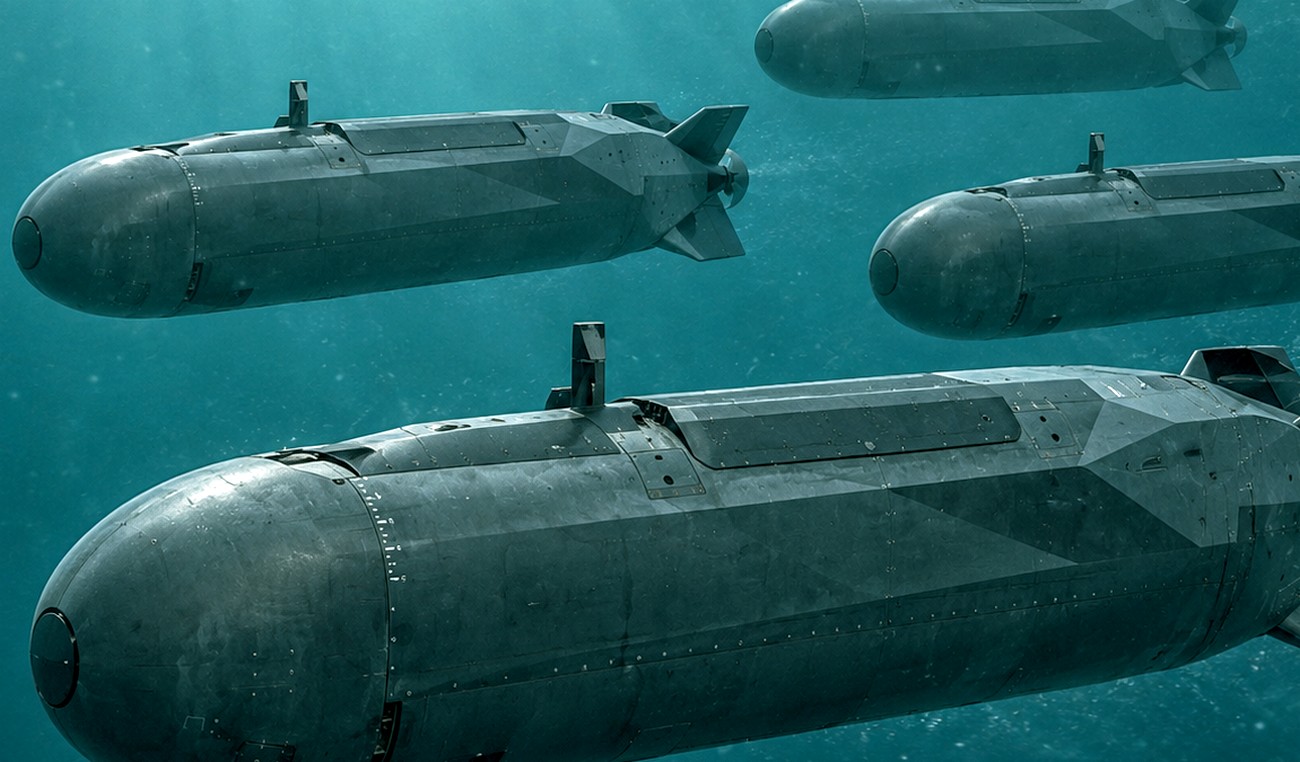
The Royal Navy has initiated a preliminary market engagement process for its forthcoming Type 93 Extra-Large Uncrewed Underwater Vehicles (XLUUVs) and capabilities related to the AUKUS Signature Payload Programme. This move, announced via a notice published on the Find a Tender portal on Monday, invites companies to register their interest before any formal requirements or procurement plans are established.
According to the official notice, the Royal Navy aims to significantly enhance its understanding of the evolving market and broader ecosystem surrounding XLUUV platforms. This includes not only the vehicles themselves but also associated payloads and critical enabling functions such as advanced autonomy, artificial intelligence (AI), and sophisticated mission management systems. This engagement is explicitly designed to support the development of the Type 93 capability and fulfill the Royal Navy’s commitments under Pillar II of the AUKUS security pact, which focuses on advanced capabilities.
Interest is being sought from a wide array of potential partners, including XLUUV platform providers, developers of specialized payloads, and suppliers of relevant technologies and software. This encompasses expertise in autonomy, artificial intelligence, and mission management systems. The Royal Navy is also looking for integrators, providers of through-life support, and other pertinent suppliers. The notice particularly highlights that small and medium-sized enterprises (SMEs) are considered especially suitable participants for this engagement process.
Companies that register their interest may be invited to participate in various collaborative activities. These could include collaborative workshops, one-to-one meetings, dedicated industry days, and formal written requests for information (RFIs). While the Royal Navy is initially considering platforms approximately 2 meters in diameter and 12 meters in length as a baseline, organizations offering platforms of alternative dimensions are also encouraged to register, demonstrating flexibility in its approach. The notice explicitly states that this market engagement should not be interpreted as a commitment by the Royal Navy to proceed with any future procurement activities, underlining its exploratory nature.
This initiative builds upon the UK’s existing work in autonomous underwater systems. The Royal Navy currently operates the XV Excalibur, an uncrewed submarine that serves as a demonstrator platform. Unveiled at Devonport in May 2023, Excalibur measures twelve meters long, two meters across, and displaces nineteen tonnes. It was constructed by MSubs of Plymouth under the three-year Project Cetus, a program for which the Ministry of Defence awarded a £15.4 million contract in December 2022. Upon its unveiling, Excalibur joined the Fleet Experimentation Squadron, initially without an operational role, focusing purely on testing and capability demonstration.
Excalibur has since achieved several significant milestones. In July 2023, the Royal Navy successfully controlled Excalibur in home waters from an operating center in Australia during Exercise Talisman Sabre. This event marked the first demonstration of XLUUV interoperability between British and Australian forces under AUKUS Pillar II. Later that year, in November, the vessel carried out the first underwater operation of a quantum optical atomic clock, showcasing advanced technological integration. Excalibur officially transferred to Royal Navy ownership in December 2023. Further investment in the program was made in June 2024, when the Submarine Delivery Agency awarded MSubs an additional £6.7 million for trials and evaluation extending to May 2028. This ongoing work is specifically aimed at advancing the program towards the integration and testing of functional payloads.
A notable demonstration of Excalibur’s emerging capabilities occurred on September 13, 2024, when it successfully fired an American Mark 48 exercise torpedo at the British Underwater Test and Evaluation Centre in Scotland. Both Britain and the United States hailed this as a historic first, marking the inaugural launch of a heavyweight torpedo from an uncrewed vessel by either nation. This trial was conducted under the auspices of Project Broadsword and Trial Iron, both integral components of the broader AUKUS Pillar II framework.
The Type 93 designation itself first appeared in February 2023 within Project CABOT documents. These documents outlined a persistent wide-area anti-submarine search capability designed around the Type 92 Sloop, an uncrewed surface vessel, and the Type 93 Chariot, which was then described as a drone submarine. In July 2023, Luke Pollard, the Minister for Defence Readiness and Industry, publicly confirmed that the Defence Investment Plan had announced Type 92 uncrewed underwater sensing platforms and Type 93 extra-large uncrewed underwater vessels as key elements of the Atlantic Bastion program. At that time, Minister Pollard noted that the precise number of platforms to be procured and their construction schedules had not yet been finalized.
Minister Pollard has also informed Parliament about the substantial investment earmarked for the Royal Navy’s transformation, stating that the “Hybrid Navy” concept will receive at least £1.5 billion over four years. By 2030, the strategic aim is to have the first large autonomous vessels in service. This ambitious vision includes a prototype uncrewed missile platform and extra-large uncrewed underwater vessels specifically designed to carry payloads developed through the AUKUS partnership. The current market engagement notice directly reinforces this strategy, stating that the program “directly aligns with the Strategic Defence Review (SDR), Defence Investment Plan (DIP) and AUKUS Pillar II priorities, supporting the transition to a Hybrid Navy through the integration of autonomous and uncrewed maritime capabilities.”
Why This Matters
This market engagement by the Royal Navy signifies a pivotal moment in the modernization of naval warfare and the broader strategic landscape. It underscores a clear commitment to integrating advanced autonomous systems into the core of its capabilities, moving beyond traditional crewed platforms to embrace a “Hybrid Navy” model. This shift has profound implications across several dimensions:
- Future of Naval Warfare:The development and deployment of XLUUVs like the Type 93 represent a fundamental change in how navies operate. These vessels can conduct missions that are too dangerous, dull, or dirty for human crews, such as extended reconnaissance, intelligence gathering, anti-submarine warfare (ASW), mine countermeasures, and potentially even offensive operations in contested areas. Their ability to operate for long durations without direct human intervention reduces risk to personnel, lowers operational costs in the long term, and enables persistent presence in strategically vital regions.
- Technological Leadership and Industrial Opportunity:By seeking broad industry input, the Royal Navy is fostering innovation within the UK defense sector and its allies. The demand for advanced autonomy, AI, sensor technology, and mission management systems will drive significant research and development. This creates substantial opportunities for British companies, including SMEs, to become leaders in a rapidly growing global market for uncrewed maritime systems, potentially generating economic growth and high-skilled jobs.
- Deepening AUKUS Collaboration:The explicit link to the AUKUS Pillar II Signature Payload Programme highlights the strategic importance of this initiative. AUKUS Pillar II is focused on developing and sharing advanced capabilities, fostering deeper integration and interoperability between the UK, US, and Australia. The Type 93 XLUUVs are envisioned to carry payloads developed collaboratively under this pact, enhancing collective security and projecting allied power, particularly in the Indo-Pacific region. This shared development ensures that future capabilities are mutually compatible and strategically aligned.
- Enhanced Strategic Capabilities and Deterrence:XLUUVs offer a discreet and potent capability for intelligence, surveillance, and reconnaissance (ISR), as well as potential offensive roles. Their low acoustic signature and ability to operate in challenging environments make them invaluable assets for monitoring adversaries, protecting critical infrastructure, and maintaining a strategic advantage. The successful firing of a heavyweight torpedo from XV Excalibur demonstrates the potential for these uncrewed platforms to deliver significant combat power, enhancing deterrence and naval flexibility.
- Cost Efficiency and Resource Allocation:While initial investment in autonomous systems can be substantial, the long-term operational costs of uncrewed vessels are often significantly lower than those of crewed warships, which require extensive human support, training, and life support systems. This allows defense budgets to be allocated more efficiently, potentially freeing up resources for other critical defense needs or enabling a larger fleet of autonomous systems for broader coverage and mission diversity.
In essence, the Royal Navy’s pursuit of the Type 93 XLUUV and AUKUS payloads is not merely an acquisition program; it is a strategic investment in the future of maritime power, technological superiority, and international defense cooperation.