
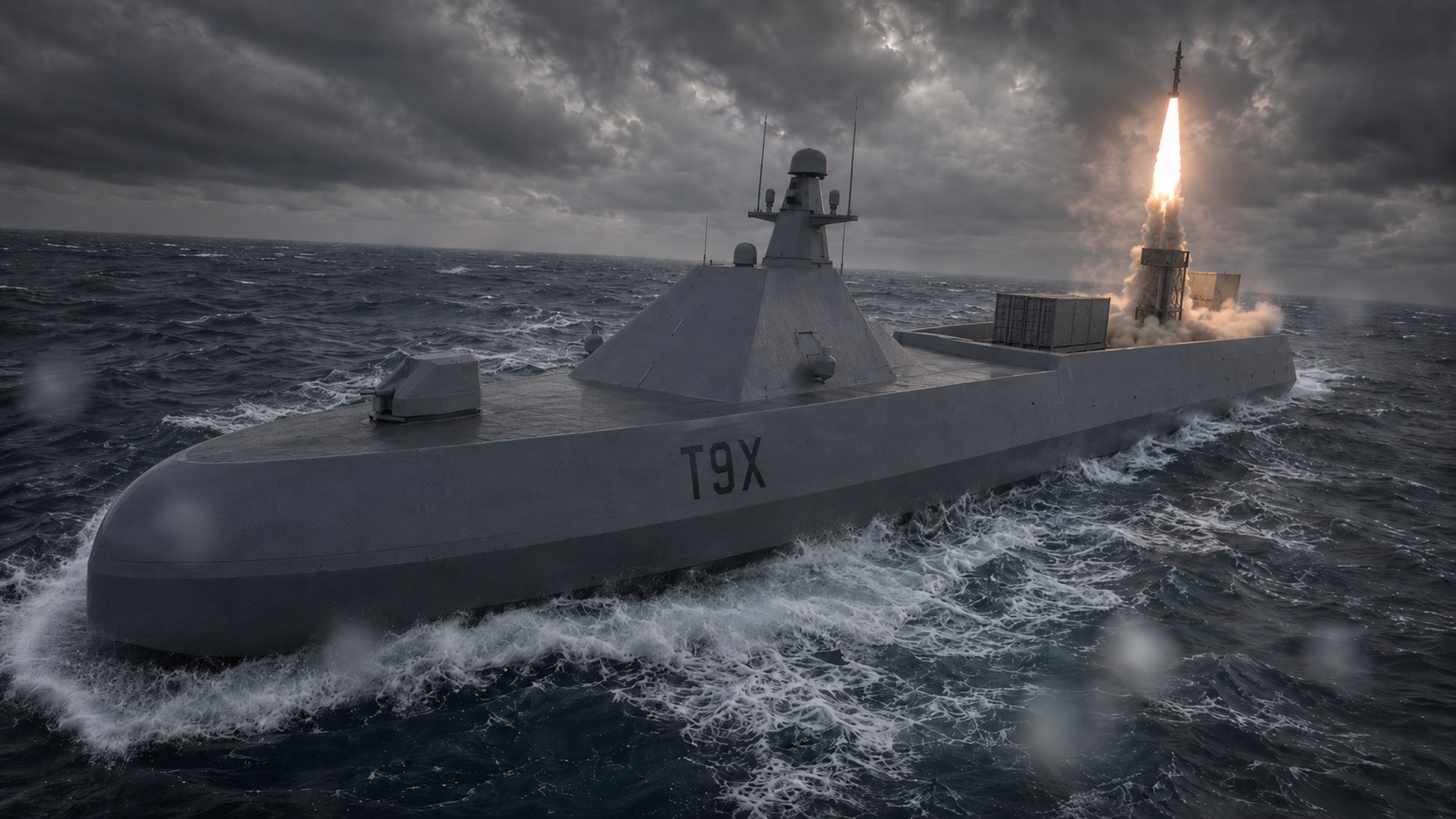
UK Ministry of Defence Seeks Advanced Uncrewed Missile Silos for Future Naval Warfare
The United Kingdom’s Ministry of Defence (MOD) has initiated a significant market engagement process, soliciting information from industry suppliers regarding the development of advanced missile silos. These systems are specifically envisioned for deployment aboard uncrewed vessels, with a critical requirement for sustained operational readiness for at least 30 days without any physical human intervention.
The Request for Information (RFI), titled “Future Integrated Air and Missile Defence Silos,” was officially published on the Defence Sourcing Portal on May 27. Responses from interested suppliers are due by July 13. The document critically highlights perceived limitations in current and planned maritime missile launcher and silo systems, noting that they “carry substantial platform design and integration work, require high levels of maintenance and operator interaction, and are not optimised for remote operations in the Hybrid Navy onboard Uncrewed Surface Vessels.” This statement underscores the MOD’s ambition to move beyond traditional naval architecture towards more autonomous and flexible platforms.
The MOD’s vision for these future launchers encompasses several key attributes: high performance, significantly reduced maintenance demands, and versatility to operate seamlessly on both conventional crewed platforms and Uncrewed Surface Vessels (USVs). Furthermore, the department specifies that these new systems must be capable of firing existing effectors, such as the Common Anti-air Modular Missile (CAMM) and Aster missile families, or similar weaponry. Crucially, they must also maintain compatibility with future weapon systems, ensuring long-term adaptability and utility.
Britain to build fleet of drone warships
A notable update to the RFI, issued on June 30, expanded the scope of the envisioned capability beyond purely air defence. This clarification explicitly informed suppliers that “a pillar of IAMD [Integrated Air and Missile Defence] is a Strike capability” and that the MOD “would value responses which include Strike in the capability of future silo.” This indicates a strategic shift, suggesting that the launchers under consideration are intended not only for defensive air interceptors but also for offensive strike weapons. This expansion implies a future where uncrewed vessels could potentially carry and launch long-range offensive munitions, significantly enhancing the operational reach and deterrence capabilities of the Royal Navy.
Beyond primary weapon capabilities, the RFI also seeks information on secondary yet critical aspects. These include containerisation options, aimed at minimising platform integration complexity, thereby offering greater modularity and ease of deployment. Another key objective is achieving a high degree of component commonality—specifically, 90 percent—between maritime and land-based variants of the launchers. This pursuit of commonality points towards the development of a unified launcher family capable of serving a diverse range of platforms, including crewed ships, uncrewed surface vessels, and ground-based air defence systems, promising potential benefits in terms of logistics, training, and cost-efficiency.
The requirements outlined in the RFI stand in stark contrast to the Royal Navy’s existing missile launch systems. Current solutions, such as the Sylver launchers, which fire Aster missiles from Type 45 destroyers, and the vertical launch cells carrying Sea Ceptor missiles on the frigate fleet, are deeply integrated into the host ships. These systems are reliant on embarked crews for ongoing maintenance, regular checks, and the firing process. Such an operational model is inherently incompatible with the concept of uncrewed vessels, which operate without human presence on board, thus necessitating a fundamental re-evaluation of launcher design and autonomy.
The development of a missile silo capable of maintaining weapons at readiness for a month without human intervention represents a foundational enabling technology for the uncrewed platforms outlined in the UK’s broader Defence Investment Plan. This plan envisages a future naval force incorporating various autonomous assets, including “missile barges” and “sensor platforms” that would operate alongside traditional crewed warships. The RFI documentation itself is issued under the “FADS Hybrid Navy” title, which is understood to refer to the Future Air Defence System. This initiative is a concerted effort to define the next-generation air defence architecture for the Royal Navy, particularly in light of the confirmed retirement of the Type 45 destroyers from 2035, without any life extension programmes.
It is important to note that the Ministry of Defence has explicitly stated that this current exercise constitutes market analysis and is not the commencement of a specific procurement process. The RFI document clarifies that the activity “is not intended to prepare industry for any specific future procurement.” Instead, the information gathered from industry responses will be crucial in informing the ongoing development of the “Hybrid Navy” concept and the joint force Integrated Air and Missile Defence (IAMD) strategy within the MOD, shaping future defence capabilities rather than initiating immediate acquisitions.
Why This Matters
This request for information from the UK Ministry of Defence signals a pivotal shift in naval warfare strategy and heralds a new era of autonomous military capabilities. The drive for missile silos capable of operating for extended periods without human interaction on uncrewed vessels has profound implications across strategic, operational, technological, and economic domains.
Firstly, it underscores the **UK’s strong commitment to autonomous warfare** and the evolution of its naval doctrine. By seeking to integrate offensive and defensive missile capabilities onto uncrewed platforms, the Royal Navy is moving towards a “Hybrid Navy” concept that combines traditional crewed warships with a growing fleet of autonomous vessels. This approach aims to enhance operational flexibility, extend endurance in contested environments, and potentially reduce the risk to human life in high-threat zones. The ability to deploy “missile barges” or “sensor platforms” allows for a distributed, resilient force posture, making it harder for adversaries to target and neutralise naval assets.
Secondly, the focus on low maintenance, modularity, and component commonality points towards significant **cost-efficiency and logistical advantages**. Current deeply integrated systems are expensive to design, install, and maintain. By seeking containerised, common launchers, the MOD aims to reduce integration complexity, streamline logistics across different domains (sea and land), and potentially lower the overall lifetime cost of these systems. Uncrewed vessels themselves are generally cheaper to build and operate than crewed warships, as they do not require extensive life support systems, accommodation, or the associated personnel costs.
Thirdly, the expansion of the RFI to include **”Strike capability” is a game-changer**. This means uncrewed vessels are not just envisioned for air defence or surveillance but also for offensive operations. This development could dramatically increase the Royal Navy’s power projection and deterrence capabilities, allowing for the deployment of long-range precision strike assets into areas that might be too dangerous or logistically challenging for crewed vessels. It raises important questions about the command and control structures for such autonomous strike capabilities, which will be a critical aspect of future doctrine development.
Technologically, this initiative is a **catalyst for innovation**. It pushes the boundaries of robotics, remote control systems, sensor integration, and advanced materials for prolonged unattended operation. Developing systems that can remain at peak readiness for 30 days without human intervention requires breakthroughs in reliability, self-monitoring, and potentially self-repairing mechanisms. This RFI is an early step in fostering the industrial base capable of delivering these cutting-edge technologies.
Finally, in a broader **geopolitical context**, this move reflects the increasing global competition and the need for modern navies to adapt to evolving threats. By investing in autonomous, flexible, and potent platforms, the UK aims to maintain its edge, contribute effectively to NATO’s collective defence, and project influence on the world stage. The retirement of critical assets like the Type 45 destroyers by 2035 necessitates a robust and forward-looking strategy for air and missile defence, and these advanced silos are central to that future vision. While this is an early market analysis, it clearly outlines the strategic direction the UK’s defence capabilities are heading, setting a precedent for other nations and shaping the future of maritime warfare.