
The United States Space Force has concluded a significant overhaul of its acquisition framework, establishing nine mission area-focused Portfolio Acquisition Executives (PAEs). These executives are now vested with extensive authority over the service’s development and procurement initiatives, marking a pivotal step in accelerating the delivery of space capabilities.
The initial two PAEs were announced in January, followed by four additional appointments in March. The final three positions were formalized on June 22 via a memo signed by Thomas Ainsworth, the Acting Assistant Secretary for Space Acquisition and Integration. This restructuring aims to streamline decision-making and enhance agility in responding to evolving technological landscapes and threats.
The complete roster of the nine Portfolio Acquisition Executives and their respective mission areas is as follows:
- Space Access:This portfolio encompasses launch delivery systems, as well as range operations and sustainment. Colonel Eric Zarybinsky currently serves as the acting PAE for this crucial area, ensuring reliable access to space.
- Space-Based Sensing and Targeting:Focused on capabilities for battlespace awareness and environmental monitoring, this portfolio is led by acting PAE Colonel Ryan Frazier. These systems are vital for intelligence gathering and strategic decision-making.
- Missile Warning and Tracking:With responsibility for the architecture of missile warning, tracking, and defense, this portfolio is overseen by PAE Gurpartap Sandhoo. It plays a critical role in national and global security.
- Infrastructure:This area manages data and personnel systems, alongside test and training facilities. Colonel Corey Klopstein leads this portfolio, which provides the foundational support for all Space Force operations.
- Battle Management Command, Control, Communications, and Intelligence (BMC3I):This comprehensive portfolio includes Space C2 (Command and Control), data management, network operations, and intelligence capabilities. PAE Shannon Pallone is at its helm, focusing on integrated operational effectiveness.
- Satellite Communications and Positioning, Navigation, and Timing (SATCOM & PNT):This portfolio is responsible for critical SATCOM and PNT programs, essential for global communication, navigation, and timing services. Acting PAE Erin Carper leads this domain.
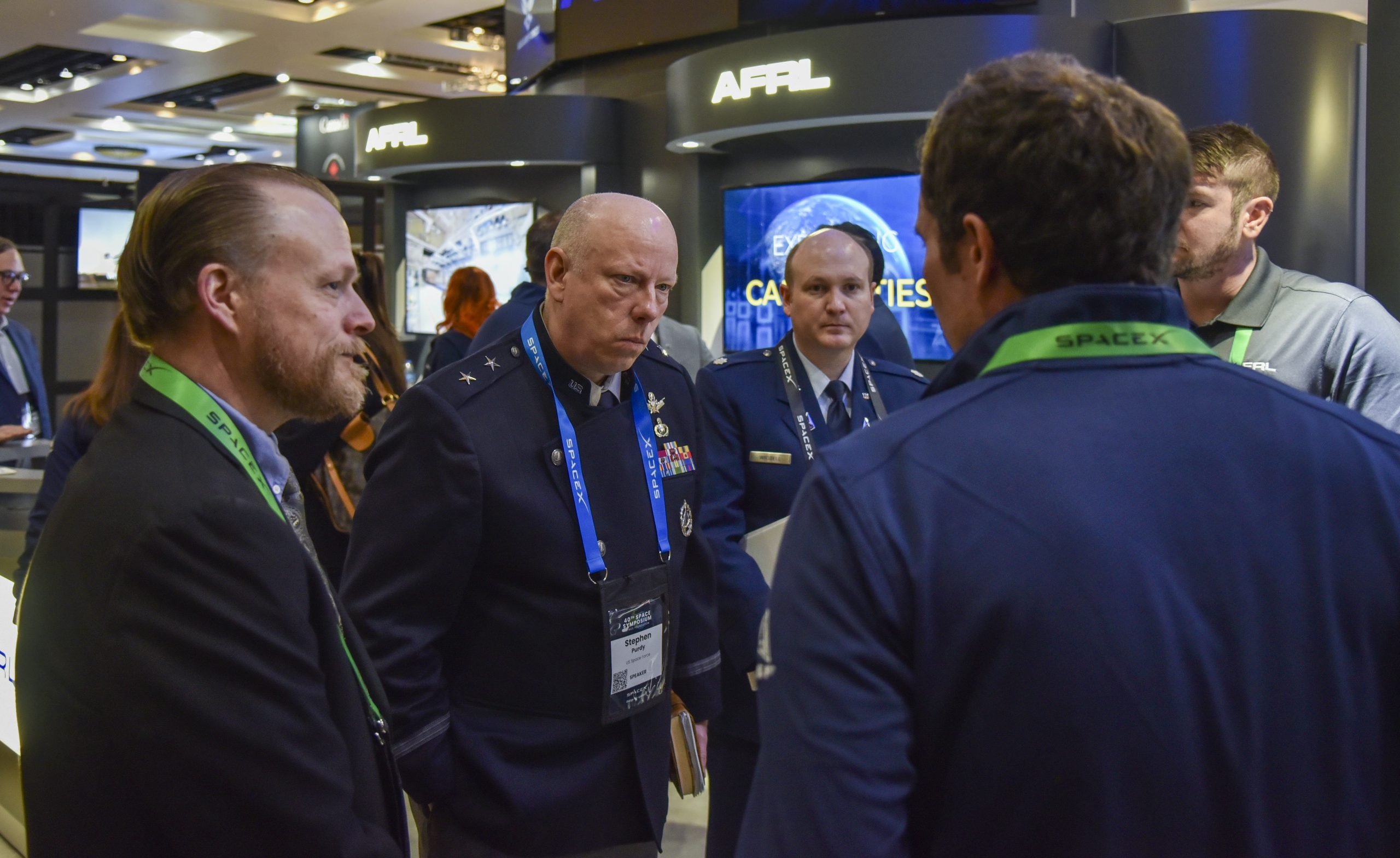
- Advanced Capabilities:Presumed to encompass a largely classified portfolio, this area focuses on systems designed to “enable joint warfighting operations.” Major General Stephen Purdy serves as the PAE, driving the development of future strategic advantages.
- Electromagnetic Warfare and Cyber:This portfolio covers systems operating within the electromagnetic spectrum or the cyber domain. Acting PAE William Blauser leads efforts in these increasingly contested environments.
- Space Combat Power:Also largely classified, this portfolio is dedicated to “space warfighting” systems. Acting PAE Colonel Bryon McClain is responsible for developing capabilities that provide a decisive edge in space.
In his memo, Thomas Ainsworth underscored the interdisciplinary nature of these new structures, stating, “These mission-focused PAE structures can and will cross all domains.” He further emphasized the importance of integrated support for all PAEs to consistently deliver space capabilities to the Joint Force for space warfighting. The SpaceNews publication was the first to report on the finalization of this PAE structure.
This organizational transformation is a core component of the Space Force’s strategy to implement the broader acquisition reform agenda championed by Defense Secretary Pete Hegseth. The overarching goal is to fundamentally change how the Pentagon conceptualizes, procures, and deploys military assets and platforms. A central tenet of this reform is the reduction of bureaucratic decision-making layers and the delegation of greater authority to expert acquisition personnel.
Under the new structure, Space Force PAEs will report directly to the service acquisition executive. The explicit intention behind this direct reporting line is to empower these executives to make critical requirements decisions and reallocate resources between programs with greater agility, adapting quickly as new technologies emerge and threats evolve. While Congress has yet to formally grant the full spectrum of authorities envisioned by the Pentagon’s strategy, Ainsworth noted that the executives leading each portfolio possess the current ability to “pursue their assigned missions, build their organization, and drive accountability for results with the requisite authorities to capitalize on innovative technology and deliver capabilities.”
Air Force Secretary Troy Meink, whose department oversees the Space Force, recently shared positive observations regarding the initial outcomes of these acquisition reform efforts in an interview with Air & Space Force’s Magazine. “We’ve delegated probably 90-92 percent of contracting authorities down into what we call these portfolio acquisition executives, so that they can make the decisions there, not only for contracting decisions, but for hiring decisions,” Meink stated. He added, “Even though this acquisition transformation and this focus has only been a year or so in, we’re already seeing the benefits and we’re seeing really good performance across the board.” This early feedback suggests a positive trajectory for the Space Force’s renewed acquisition approach.
Why This Matters
The Space Force’s comprehensive reorganization of its acquisition structure carries significant implications for national security, technological innovation, and global power dynamics. In an era where space has become an increasingly contested domain, the ability to rapidly develop, acquire, and deploy advanced capabilities is paramount.
Firstly, this reform directly addresses the pressing need for agility in military procurement. Traditional acquisition processes have often been criticized for their slowness and bureaucratic hurdles, struggling to keep pace with the rapid technological advancements made by both allies and adversaries. By empowering Portfolio Acquisition Executives with greater authority and direct reporting lines, the Space Force aims to drastically cut down decision cycles, enabling quicker adoption of cutting-edge technologies and faster responses to emerging threats in space. This directly enhances the United States’ competitive edge in a domain critical for modern warfare, intelligence, and communication.
Secondly, the focus on specific mission areas—such as Missile Warning and Tracking, Satellite Communications, and Space Combat Power—underscores the strategic importance of these capabilities for the Joint Force. Robust space infrastructure provides indispensable support for terrestrial, air, and maritime operations, from precise navigation and timing (PNT) that underpins global commerce and military movements, to secure communications and real-time intelligence gathering. Any disruption or delay in these areas can have cascading effects across multiple sectors, making efficient acquisition crucial for overall national resilience.
Furthermore, by delegating authority for contracting and even hiring decisions, the Space Force is attempting to foster a more innovative and responsive culture within its acquisition arm. This could attract top talent and encourage closer collaboration with private industry, which often drives rapid innovation in the commercial space sector. Such partnerships are vital for leveraging external expertise and accelerating the fielding of advanced systems, potentially leading to breakthroughs in areas like satellite resilience, cyber defense for space assets, and advanced sensing capabilities.
Finally, this reorganization is a clear signal of the U.S. commitment to maintaining its leadership in space. As global powers like China and Russia continue to invest heavily in their space capabilities, including anti-satellite weapons and advanced surveillance systems, the ability of the Space Force to adapt and innovate quickly is not merely an operational advantage but a geopolitical imperative. The success of this new acquisition model will directly influence the nation’s capacity to deter aggression, protect its space assets, and ensure the continued availability of space-based services that are vital for both military operations and civilian life.