
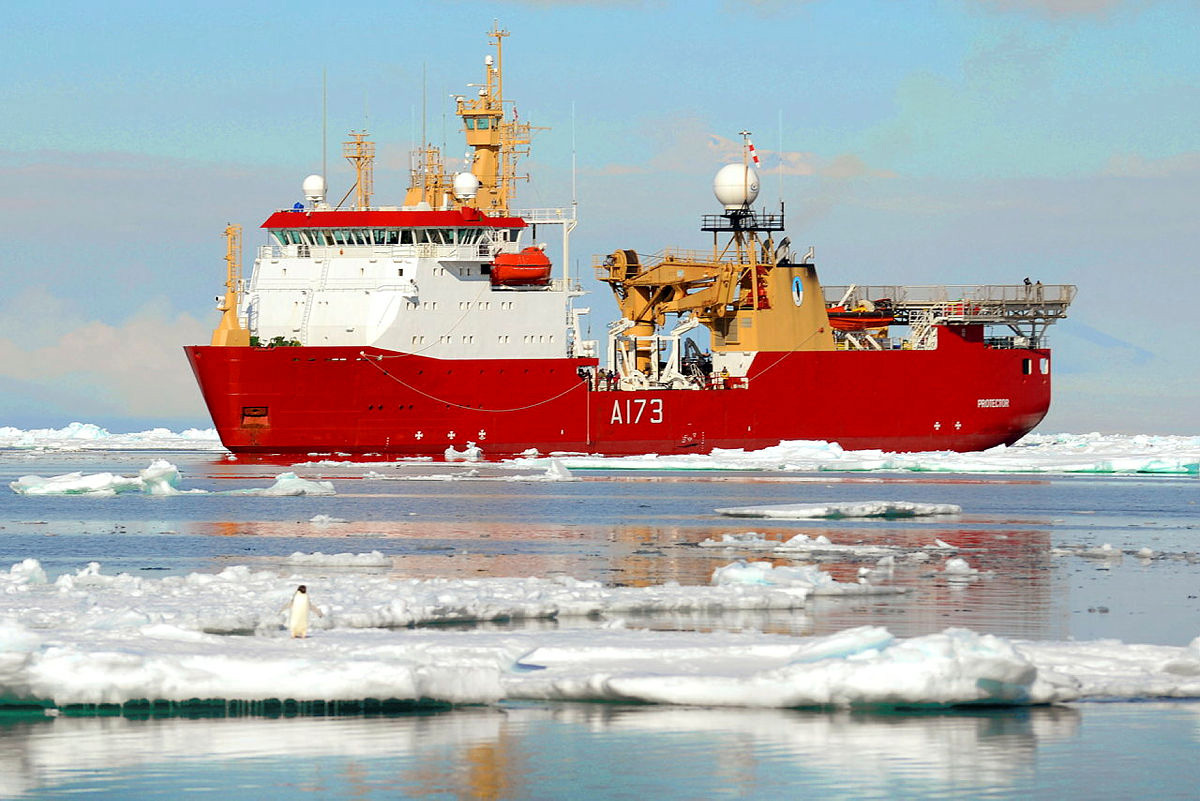
UK Defence Ministry Confirms Funding for New Antarctic Ice Patrol Ship, Timeline Remains Undecided
The United Kingdom’s Ministry of Defence (MoD) has confirmed that dedicated funding has been allocated for the replacement of HMS Protector, the Royal Navy’s crucial ice patrol ship. However, the exact timeline for delivering a successor vessel remains uncertain, as it is contingent upon a procurement method that has yet to be finalized. This announcement highlights the strategic importance the UK places on its presence and operations in the Antarctic region, while also revealing the complexities inherent in modern naval acquisitions.
The confirmation came in response to a parliamentary inquiry from Ben Obese-Jecty, the Conservative Member of Parliament for Huntingdon. Referencing paragraph 52 of the Defence Investment Plan, Mr. Obese-Jecty sought clarity on the department’s schedule for replacing the ageing vessel. Luke Pollard, the Minister for Defence Readiness and Industry, provided the official response on July 8th, stating, “The Defence Investment Plan has allocated funding to replace HMS Protector but the exact timeline for this replacement is subject to further work. This will depend on the method of procurement which is yet to be decided.”
HMS Protector holds a unique and vital role within the Royal Navy fleet. Operating primarily in the challenging waters of the Antarctic, the vessel serves multiple critical functions. It provides direct support to the British Antarctic Survey (BAS), a world-leading environmental research organization, facilitating their scientific expeditions and logistical needs in one of the planet’s most remote environments. The ship also plays a crucial role in upholding the United Kingdom’s obligations under the Antarctic Treaty System, an international agreement dedicated to peaceful cooperation and scientific research in the continent. This includes conducting essential hydrographic survey work, mapping the seabed and charting navigation routes, which is vital for safe passage in poorly surveyed polar regions and contributes to broader understanding of oceanography and climate change. Furthermore, HMS Protector maintains a continuous British naval presence in the region during the southern hemisphere summer, projecting UK influence and demonstrating commitment to international agreements and scientific exploration.
The current HMS Protector itself was acquired in 2011 as an interim solution following an unforeseen incident. It is a converted Norwegian-built icebreaker, originally named Polarbjørn, which means “polar bear” in Norwegian. Its predecessor, HMS Endurance, suffered severe damage due to flooding in 2008 while on deployment, leading to its eventual decommissioning and scrapping. The swift acquisition of Polarbjørn, which was then renamed HMS Protector, was a testament to the urgent need to maintain the UK’s operational capability in the Antarctic. However, as an interim vessel, originally designed for commercial rather than naval operations, its long-term suitability and cost-effectiveness for the Royal Navy’s specific requirements have always been under review.
The Minister’s statement underscores that while the financial commitment has been secured, the path forward for the new ship is still being charted. Naval procurement is a notoriously complex process, involving numerous factors such as design specifications, technological requirements, budget constraints, domestic industrial capacity, and international partnerships. Potential procurement methods could range from acquiring an existing ‘off-the-shelf’ design from another nation, commissioning a bespoke design and build from a UK shipyard, or even engaging in international collaboration. Each method carries different implications for cost, delivery schedule, and the extent to which the vessel can be tailored to specific Royal Navy needs. The decision will have significant consequences for UK shipbuilding, naval capabilities, and the nation’s long-term strategic presence in the polar regions.
Why This Matters
The decision regarding the replacement of HMS Protector is of significant strategic, scientific, and geopolitical importance for the United Kingdom. Firstly, the Antarctic region is increasingly recognized as a frontier of global significance. While the Antarctic Treaty System safeguards the continent for peaceful and scientific purposes, underlying geopolitical interests, particularly concerning potential natural resources and strategic sea lanes, are growing. Maintaining a robust and capable ice patrol ship allows the UK to uphold its status as a leading Antarctic Treaty Consultative Party and a claimant state, projecting its commitment to international law and scientific freedom in the region. A delay or reduction in capability could be perceived as a weakening of this commitment, potentially inviting challenges to the established order.
Secondly, the scientific and environmental implications are profound. HMS Protector provides essential logistical support to the British Antarctic Survey, whose research is critical for understanding global climate change, marine ecosystems, and glaciology. Without a reliable and capable ice-strengthened vessel, the UK’s ability to conduct cutting-edge polar science would be severely hampered. This research directly informs international policy on climate change, biodiversity, and sustainable resource management, making the ship an indispensable asset in the global scientific effort. Furthermore, the hydrographic survey work conducted by the ship is vital for safe navigation in a region where melting ice is constantly reshaping coastlines and sea depths, and contributes to essential environmental monitoring.
Thirdly, the procurement decision itself carries substantial economic and industrial weight. A new build project, particularly if undertaken in the UK, could provide a significant boost to the domestic shipbuilding industry, creating jobs, fostering technological innovation, and reinforcing the nation’s naval industrial base. Conversely, delays in deciding the procurement method can lead to increased costs for maintaining the existing interim vessel beyond its optimal lifespan, potentially stretching resources and risking operational availability. The method chosen will set a precedent for future complex naval acquisitions.
Finally, the replacement of HMS Protector is a testament to the Royal Navy’s diverse and specialized capabilities. It underscores the UK’s commitment to operating in extreme environments and maintaining a global naval presence that extends beyond traditional combat roles. In an era of evolving global challenges, ensuring that the Royal Navy possesses the full spectrum of capabilities, including vital support and scientific roles, is crucial for maintaining national influence, supporting international cooperation, and responding to future environmental and security challenges in critical regions like the Antarctic.