
Key Takeaways
- **Critical Supply Chokepoint Shut:** Renewed geopolitical tensions have again largely shut the Strait of Hormuz, threatening approximately 20% of the world’s crude oil supply and immediately reintroducing a significant supply risk premium into global energy markets.
- **Exhausted Strategic Buffers:** Emergency oil stockpiles, including strategic petroleum reserves (SPR) and commercial inventories, which previously cushioned supply shocks, are now largely depleted, leaving global markets acutely vulnerable to further disruptions.
- **Escalating Price Volatility & Refined Product Squeeze:** Brent crude prices have surged significantly, reflecting heightened anxiety. Simultaneously, refined product markets, particularly diesel and gasoline, are facing unprecedented tightness exacerbated by external factors such as Ukrainian drone strikes on Russian refineries, pushing wholesale futures higher.
Oil traders are sounding a stark warning: the latest resurgence of tensions in the Strait of Hormuz poses an immediate threat of a fresh crude supply crunch, a situation made more perilous by the near-total depletion of strategic stockpiles that previously helped avert a wider economic crisis during earlier skirmishes in the US-Iran conflict. This week’s breakdown of the fragile ceasefire between Washington and Tehran has once again largely incapacitated the critical waterway, bringing an abrupt halt to a brief surge of shipments through the strait, which typically facilitates the transit of about a fifth of the world’s total oil supplies.
The market’s anxieties are compounded by recent data. The International Energy Agency (IEA) confirmed on Friday that its member countries have already drawn down almost three-quarters of the planned 400-million-barrel emergency stock release, initially announced in March. This revelation underscores a critical fact: the remaining buffer supplies are dwindling rapidly, expected to be exhausted within a matter of weeks, leaving global energy markets acutely exposed.
“We’ve burned through all of the buffers we had. Everything,” lamented one seasoned oil trader, reflecting the prevailing sentiment of vulnerability across the trading floors. “All of that’s now gone. The market’s resilience to supply shocks has been severely eroded.” This lack of readily available emergency supply means that any further disruption will likely translate directly into immediate price hikes and intensified competition for available crude.
The market’s initial reaction to the previous ceasefire announcement saw oil prices fall sharply, with Brent crude retreating from approximately $100 a barrel to just above $70. This decline was largely driven by a temporary de-risking of geopolitical premiums and an expectation of normalized supply flows. However, in a clear signal of renewed investor anxiety and the re-pricing of geopolitical risk, Brent crude surged above $87 on Tuesday, marking its highest level in over a month. By Wednesday, it traded around $84.50, still up a robust 11 percent for the week, illustrating the market’s rapid shift from complacency to concern.
During the four-month closure preceding last month’s short-lived US-Iran agreement to reopen the strait, global governments in the West and Asia deployed almost every available lever to prevent the supply crunch from derailing the world economy. Western powers executed record volumes of strategic oil reserve releases. China, a perennial energy importer, dramatically cut its oil imports in half, compelling state-backed companies to draw heavily from their domestic inventories. Even the White House implicitly signaled potential intervention in futures markets if price volatility spiraled out of control. The cumulative effect of these coordinated interventions mitigated the worst outcomes, with Brent crude peaking at $126 a barrel in April—significantly below its all-time high—despite the IEA characterizing the period as the worst supply disruption in history. This collective response highlighted the efficacy of strategic reserves and coordinated policy when inventories are robust.
However, traders now express profound uncertainty regarding the source of replacement oil if the renewed closure of the Strait of Hormuz persists for months. Some analysts speculate Iran may aim to maintain pressure on US President Donald Trump ahead of the November midterm elections, thereby extending the disruption. The critical difference today is the depleted state of global inventories. Amrita Sen, director of market intelligence at Energy Aspects, highlighted this stark reality: “Going into the war, the oil market had roughly 400 million barrels of excess inventories, not including strategic reserves controlled by governments. Now we have close to nothing. Market complacency around Hormuz flows is being severely tested.” This shift from a cushioned market to one operating on razor-thin margins fundamentally alters the risk landscape.
The impact is already translating to the consumer level, with motorists experiencing sustained pain at the pump. Prices for petrol and diesel have risen faster—and fallen more slowly—than crude oil since the conflict began, indicating a deeper structural tightness in the refined products market. These markets are now exceedingly tight, further exacerbated by additional disruptions affecting supplies from Russia, the world’s second-largest exporter of diesel. A series of successful long-range Ukrainian drone strikes on Russia’s refining system has significantly curtailed its export capacity, adding another layer of complexity to an already strained global supply chain.
The IEA’s warning on Friday of a potential petrol and diesel supply crunch is not hyperbole; it’s reflected directly in market movements. Wholesale diesel futures in Europe have surged by 14 percent this week alone, signaling acute supply stress and fears of an impending shortage. While Western powers had begun to pivot away from Russian fuel in the years following Moscow’s full-scale invasion of Ukraine, they are now forced to compete fiercely for alternative supplies with nations such as Turkey and Brazil, which had previously maintained their Russian diesel imports and now face the same scramble for non-Russian alternatives. This intensified competition drives up acquisition costs and further tightens global availability.
Widespread warnings about airlines potentially running out of jet fuel, especially given that countries like Kuwait are significant suppliers, have fortunately not materialized to their direst extent. Refiners have optimized production to prioritize jet fuel where possible, and airlines have prudently curbed unprofitable flights. Nevertheless, inventories are expected to draw down significantly over the peak demand summer travel period, and rebuilding these stocks ahead of the crucial winter holidays will prove exceptionally challenging, posing a latent risk for the aviation sector.
Global oil inventories did inch higher in June, according to the IEA, but these modest gains pale in comparison with the substantial drawdowns observed over the preceding three months. The post-ceasefire decline in oil prices was largely a temporary market phenomenon, driven by a glut created as Gulf countries rushed to empty their brimming storage tanks. This involved funnelling millions of barrels through Hormuz to free up space, allowing them to restore production capacity. Adnoc, the United Arab Emirates’ state oil company, for instance, sold a staggering 84 million barrels alone via tender, according to industry publication Argus, employing a “shuttle” system through Hormuz to meet waiting supertankers that remained cautious about entering the Gulf itself. This was an inventory clear-out, not a sustained increase in supply capacity.
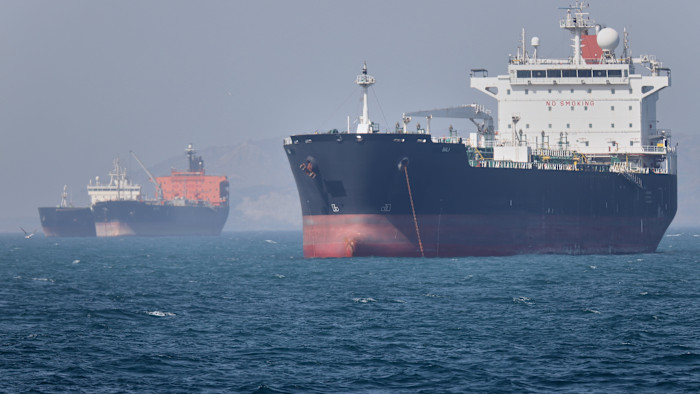
However, the fragile shipping situation was brutally underscored on Tuesday morning when Adnoc’s shipping arm reported that two of these supertankers, each capable of carrying approximately 2 million barrels, were targeted by Iran while sailing through the strait, resulting in at least one seafarer fatality. This direct act of aggression immediately escalates the geopolitical risk premium and injects profound uncertainty into maritime insurance markets, potentially driving up shipping costs significantly.
While some Gulf suppliers possess limited capabilities to reroute a portion of their exports—Saudi Arabia’s crude oil exports have risen to about 5 million barrels a day from its Red Sea ports, compared with the roughly 7 million b/d they historically sent through Hormuz—others, such as Iraq and Kuwait, remain almost completely reliant on the strait, rendering them effectively cut off. This highlights the uneven distribution of vulnerability among OPEC+ producers.
“Ultimately, the market was pricing an optimistic flow trajectory that now is clearly not on the table, at least . . . not until we get another round of diplomacy,” observed Joel Hancock, a senior commodities analyst at Natixis Bank. His comment encapsulates the shift in market sentiment from hopeful de-escalation to the grim reality of renewed supply disruption and the imperative for diplomatic resolution.
Adding another layer of systemic risk, traders are also meticulously monitoring the escalating situation in the Red Sea following recent attacks by Yemen’s Houthis on Saudi Arabia, specifically after a strike on Sana’a international airport. A resumption of the Houthi campaign, which previously brought shipping through the Red Sea largely to a halt for over a year starting in late 2023, would effectively close off southern access to Yanbu, Saudi Arabia’s only major oil shipping route outside the Strait of Hormuz. Such a development would not only rattle oil markets further but could create an unprecedented dual chokepoint crisis, leading to catastrophic supply disruptions.
Market Impact
The renewed closure of the Strait of Hormuz, coupled with depleted global oil inventories and additional refined product supply shocks, portends significant and immediate market ramifications. Crude oil prices are likely to remain elevated, with substantial upward pressure potentially pushing Brent crude well into triple-digit territory, fueling broader inflationary pressures across global economies. This will force central banks, already grappling with persistent inflation, to maintain a hawkish stance, potentially leading to higher interest rates and a slowdown in global economic growth. Energy companies, particularly upstream producers, may see improved profitability, while refiners could face squeezed margins if crude prices outpace product price increases. Shipping and aviation sectors will contend with escalating fuel costs and increased insurance premiums, impacting operational efficiency and profitability. Furthermore, the elevated geopolitical risk premium is expected to extend beyond energy, prompting a flight to safe-haven assets and increasing volatility across equity and bond markets. Governments worldwide will face renewed pressure to address energy security, potentially exploring alternative supply routes, accelerating renewable energy transitions, and even considering further, albeit limited, strategic reserve releases.