
Unlock the Editor’s Digest for free
Roula Khalaf, Editor of the FT, selects her favourite stories in this weekly newsletter.
Key Takeaways:
- Escalating US-Iran hostilities threaten to ignite a broader regional conflict, directly imperiling global energy supply routes like the Strait of Hormuz and the Red Sea, and significantly increasing shipping insurance premiums.
- The renewed tit-for-tat strikes are driving a sharp flight to safety, bolstering demand for traditional safe-haven assets such as gold and US Treasury bonds, while injecting extreme volatility into crude oil markets.
- Persistent geopolitical instability in the Middle East risks embedding a significant risk premium across commodity prices, potentially exacerbating global inflationary pressures and complicating the trajectory for central bank interest rate policies.
The Middle East once again finds itself at the precipice of a wider conflagration, as the United States initiated a fresh wave of retaliatory strikes against Iran, following the tragic deaths of two American soldiers in Jordan. This aggressive escalation, unfolding concurrently with Tehran’s own multi-front attacks on American allies across the Gulf, has sent a palpable chill through global financial markets, with investors bracing for potentially severe disruptions to critical energy supplies and trade routes.
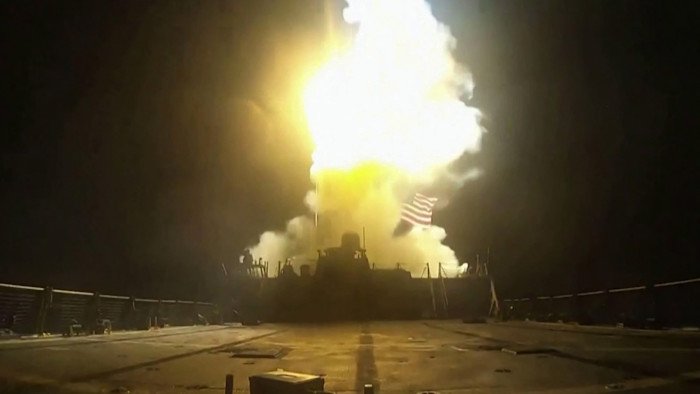
US Central Command (Centcom), the body overseeing American military operations in the region, confirmed on Saturday that the US service members were killed while defending against what it described as Iranian ballistic missile and drone strikes. The subsequent decision by Centcom to resume strikes on Saturday night was explicitly aimed at “swiftly punish[ing] Islamic Revolutionary Guard Corps forces” for the fatal attack, while also degrading “Iran’s ability to threaten commercial shipping in the Strait of Hormuz.” This dual objective immediately flags two paramount market concerns: the direct human cost of the conflict, and its profound implications for the uninterrupted flow of global trade, particularly oil and gas through the world’s most vital maritime chokepoint. The Strait of Hormuz, through which roughly a fifth of the world’s crude oil passes, is a lynchpin of global energy security, and any perceived threat there sends immediate shockwaves through crude futures markets, triggering price spikes and heightened volatility.
Further exacerbating anxieties, one US service member remains unaccounted for, and four others received treatment in Jordanian hospitals before being discharged. Such casualties invariably heighten political pressure on the incumbent US administration, potentially leading to more robust, and thus riskier, foreign policy decisions that could further destabilize an already volatile region. This comes at a uniquely tense juncture, with a recently collapsed ceasefire having failed to quell the burgeoning regional conflict, prompting investors to re-evaluate their exposure to emerging markets and risk assets globally.
Iran, for its part, has demonstrably ratcheted up its offensive operations across the Gulf. Of particular concern to energy markets was the first strike against Saudi Arabia in nearly four months. While details remain sparse, any targeting of Saudi infrastructure – the world’s largest oil exporter – immediately registers as a significant supply risk premium in Brent and WTI crude benchmarks. Simultaneously, Tehran launched attacks against Kuwait and Bahrain on Saturday, key Gulf Cooperation Council (GCC) members and significant, albeit smaller, oil and gas producers. This broadens the geographic scope of the conflict, making it harder for markets to price in the localized risk, instead embedding a broader regional risk premium into asset valuations.
Adding another layer of economic pressure, US President Donald Trump, grappling with record-low approval ratings exacerbated by public sentiment regarding the conflict’s handling, reimposed a naval blockade on Iranian ports this week. This move, reversing a recent lifting of the blockade following a memorandum of understanding meant to reopen the Strait of Hormuz, effectively tightens the economic noose around Tehran. While Iranian oil exports are already heavily sanctioned, the re-imposition signals a hardened US stance that could provoke more aggressive counter-measures from Iran, including potential disruptions to international shipping. The prior agreement, intended to extend an April ceasefire by 60 days, now lies in tatters, underscoring the failure of diplomatic channels to de-escalate and leaving markets to contend with heightened uncertainty.
The tragic deaths of more US troops will undoubtedly intensify domestic political scrutiny on the President, potentially compelling a more forceful response. This tit-for-tat dynamic significantly elevates the specter of a full-scale regional war, torpedoing any remaining diplomatic efforts to restore stability and ensure the unimpeded passage through the Strait of Hormuz. For global shipping firms and commodity traders, this translates directly into soaring war risk insurance premiums and increased operational costs, or even decisions to reroute vessels, adding time and expense to supply chains already strained by previous disruptions, threatening to push up consumer prices globally.
The specific targets highlight the strategic economic dimensions of this conflict. The US military reported targeting “surveillance sites, military logistics infrastructure, underground weapons storage and maritime capabilities” in Iran overnight on Friday. While these are military objectives, their degradation aims to reduce Iran’s capacity to threaten maritime routes, an outcome that, if successful, could theoretically ease market anxieties in the long run, but in the short term, represents a dangerous escalation that could quickly spiral out of control.
Conversely, Iranian state media claimed on Saturday that the Islamic republic targeted Prince Sultan Air Base in the Saudi city of al-Kharj, which hosts American forces. Saudi Arabia’s civil defense issued warnings for threats over Al-Kharj, 85km south-east of Riyadh, and critically, Yanbu. Yanbu is a Red Sea port housing a significant refinery and a crude export terminal. The mention of Yanbu, a strategic hub for Saudi Arabia’s oil exports via the east-west pipeline – a route specifically developed to bypass the Strait of Hormuz – suggests Iran’s intent to target the kingdom’s alternative energy export capabilities. Any successful attack on Yanbu would have immediate and severe consequences for global oil supply, potentially sending crude prices skyrocketing and severely impacting energy-dependent economies.
Kuwait, having borne the brunt of recent Iranian attacks, reported a strike on a power generation and water desalination plant on Saturday, marking the second such attack on its critical infrastructure in as many days. Its military intercepted multiple drone and ballistic missile attacks, leading to the temporary closure of Kuwaiti airspace and the rescheduling of most Kuwait Airways flights – a direct economic cost and disruption to air travel and logistics. In Bahrain, sirens blared as the army intercepted aerial attacks, with the Revolutionary Guards claiming to have attacked an American base and the island kingdom’s main Artificial Intelligence centre. These attacks on civilian and economic infrastructure, combined with threats to military bases, underscore Iran’s willingness to inflict economic pain and project power across the Gulf, heightening the regional risk premium for foreign direct investment and business operations.
The Revolutionary Guards issued a stern warning to regional states hosting US military forces, cautioning them to prepare for a “corresponding response” and activate civilian defense units. This effectively signals that any nation perceived as complicit in US actions could become a target, creating a chilling effect on regional alliances and potentially impacting financial stability across the Gulf by deterring investment and tourism.
While Iran claimed to have limited its counterstrikes to military targets overnight, in an ostensible effort to offer the US an opportunity to “change its dishonourable approach,” the collateral damage inflicted by US forces paints a different picture. In the Iranian city of Jask, desalination facilities were attacked, disrupting water supply to 10,000 people across 20 villages. More significantly, the governor’s office in Hormozgan confirmed that the local transportation network, including a tunnel and three bridges, was hit overnight. The tunnel collapse blocked one of the routes to Bandar Abbas, Iran’s busiest port – a critical artery for Iran’s international trade. Three people were killed and eight injured in these strikes, indicating a direct economic and human toll that could further inflame tensions, potentially leading to a more aggressive and unpredictable response from Tehran.
Market Impact:
The escalating military confrontations between the US and Iran are injecting profound uncertainty into global financial markets. The immediate fallout is most acutely felt in energy markets, with crude oil prices (both Brent and WTI) likely to remain highly volatile, reflecting a significant geopolitical risk premium. Traders are now actively pricing in potential supply disruptions from the Strait of Hormuz, the Red Sea, and key Gulf producers like Saudi Arabia and Kuwait. Beyond oil, the broader risk-off sentiment is driving investors towards safe-haven assets; gold prices have surged, and demand for US Treasury bonds has increased, pushing yields lower as capital seeks refuge. Regional stock markets, particularly those in the GCC, are expected to face sustained selling pressure as foreign investors de-risk from the perceived heightened instability. Global shipping indices and maritime insurance costs will undoubtedly climb, impacting international trade flows and potentially contributing to broader inflationary pressures across various sectors. Should this conflict escalate further, it poses a severe threat to the fragile global economic recovery, complicating the mandate for central banks considering interest rate cuts, and potentially forcing a re-evaluation of monetary policy in the face of persistently high commodity prices and supply chain shocks. The geopolitical risk premium is now firmly embedded in global market forecasts, demanding vigilance from investors and policymakers alike.