
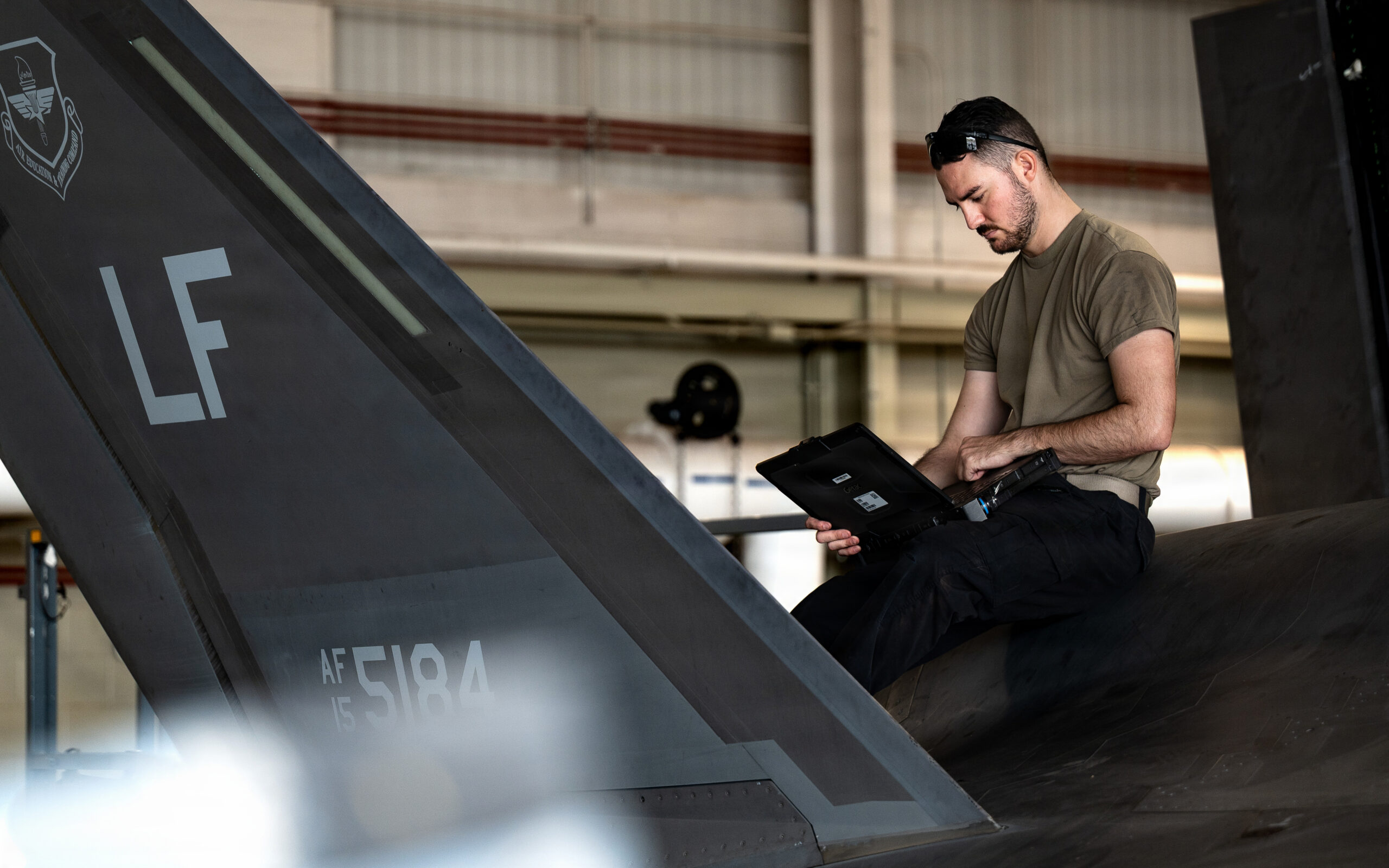
Lockheed Martin has been awarded a $1.6 billion contract by the F-35 Joint Program Office (JPO) for spare parts for the F-35 fighter jet, marking the largest such agreement in the program’s history. This significant contract, confirmed by Lockheed officials on July 23, aims to bolster the operational readiness of the global F-35 fleet.
The contract announcement on July 15 revealed that the U.S. Air Force is contributing the largest portion of funds, totaling $754 million. However, the precise quantity of parts each service or partner nation will receive is not directly correlated to their funding share, due to the F-35 program’s unique shared approach to spare parts management.
Unlike traditional defense procurement where individual operators purchase and manage their own spare parts inventories, F-35 operators—including the U.S. Air Force, Navy, Marine Corps, and international partners—do not directly acquire their spares. Instead, the F-35 Joint Program Office (JPO) procures spare parts for a centralized global spares pool. Participating nations and services then “purchase access” to this shared pool. Their access is determined by factors such as the number of F-35 aircraft they operate and their projected flight hours, as outlined in a 2023 report by the Government Accountability Office (GAO).
The allocation of parts from this global pool is governed by a complex set of “business rules” developed by the F-35 program. These rules dictate how parts are managed, shared among participants, and how their costs are distributed. The prime contractor, Lockheed Martin, is responsible for managing the F-35 supply chain. This includes allocating parts to various F-35 operating sites and participants based on their contracted requirements, such as aircraft numbers and planned flying hours, in adherence to the program’s established business rules.
The global spares pool encompasses several distinct categories of parts:
- Base Spares Packages: These are parts pre-positioned at each primary F-35 operating base. The specific quantities are tailored to the number of jets stationed there and the anticipated flying hours.
- Global Spares Packages: Representing wholesale-level supplies, these parts are stored in warehouses strategically located worldwide and are shipped to operators as required.
- Deployment Spares Packages: These collections of parts are specifically acquired to support a forward-deployed F-35 unit for a defined period. Generally, the parts within these packages are reserved exclusively for use by the participant who procured the package.
- Afloat Spares Packages: Similar in concept to deployment packages, these are designated for F-35s operating from naval vessels. Like deployment packages, these parts are typically reserved for the entity that purchased them.
The recently awarded $1.6 billion contract covers all four of these categories, according to information from the contract announcement.
This contract represents a substantial increase in investment compared to previous spare parts agreements for the F-35 program. For comparison, the Pentagon and Lockheed Martin agreed to a $578 million spare parts deal in July 2025, $348 million in September 2024, and $382 million in December 2022. The current $1.6 billion value underscores a growing emphasis on sustainment within the program.
The surge in contract value aligns with a broader trend of increased investment by the U.S. Department of Defense, particularly the Pentagon, in F-35 sustainment and spare parts across its entire aircraft fleet. The Air Force’s budget for initial spares and repair parts illustrates this trend: from $982 million in 2025, it more than doubled to $2.22 billion in 2026, partly bolstered by additional funds from the “One Big Beautiful Bill Act” reconciliation package. For 2027, the service is seeking an even larger sum of $2.57 billion.
This heightened focus on spare parts is a direct response to persistent readiness challenges. Parts shortages have been identified as a significant factor undermining the operational availability of aircraft. Air Force Secretary Troy Meink and Chief of Staff Gen. Kenneth S. Wilsbach have made addressing these shortages a central priority.
General Wilsbach emphasized this point during his confirmation hearing for Chief of Staff last October, stating, “We definitely have to invest in those accounts so that the parts are on the shelves when the aircraft flies.”
F-35 readiness, in particular, has been a source of concern. A June GAO report indicated that the full mission capable (FMC) rates for all three variants of the F-35 jet were approximately 25 percent. The Air Force’s F-35As, while performing slightly better at 28.5 percent, have generally seen a downward trend in readiness, largely attributed to the unavailability of necessary spare parts.
Further highlighting program challenges, a 2023 GAO report criticized the Pentagon for insufficient oversight of millions of parts within the global pool. The report noted that officials had been unable to review losses amounting to tens of millions of dollars because control and oversight responsibilities had been largely ceded to Lockheed Martin.
In response to these issues and the Pentagon’s renewed focus, Lockheed Martin has stated its intention to increase its own investment in spares. During a January earnings call, Lockheed CEO James Taiclet announced the firm’s commitment to “an additional $1 billion of strategic internal investment for the F-35, with an emphasis on the aircraft sustainment system to improve mission-capable rates across the fleet.”
Taiclet asserted during the same call that this upfront investment in spare parts and consumables has already translated into “immediate inventory that can be shipped to customers the moment their need arises,” suggesting an improved capability to fulfill new contracts like the record-setting $1.6 billion agreement.
Why This Matters
The $1.6 billion contract for F-35 spare parts carries significant implications for national security, defense spending, and international partnerships. Firstly, it directly addresses critical issues of operational readiness. The F-35, envisioned as the backbone of future air combat for the U.S. and its allies, has been plagued by low mission-capable rates, largely due to persistent parts shortages. This record investment signals a concerted effort by the Pentagon to rectify these deficiencies and ensure that these advanced aircraft are available when needed for training, deterrence, and combat operations.
Secondly, the unique global spares pool system, while designed for efficiency, has faced challenges in oversight and management, as highlighted by GAO reports. This contract represents not just a purchase of parts, but a crucial test of the effectiveness of this complex supply chain model. Successful implementation and improved oversight are vital to demonstrate that the shared pool approach can deliver on its promise of cost-effectiveness and timely support for a globally deployed fleet.
Thirdly, the F-35 program is a multi-national endeavor, involving numerous allied nations. The readiness and sustainment challenges faced by the U.S. Air Force are often mirrored by international partners. Improvements in the global spares system and the availability of parts will directly benefit these allies, reinforcing interoperability and collective security. Conversely, continued issues could strain these partnerships and raise questions about the reliability of the F-35 as a common platform.
Finally, this substantial expenditure underscores the immense financial commitment required to maintain modern defense assets. As defense budgets face scrutiny, ensuring that such significant investments translate into tangible improvements in readiness and combat capability is paramount. The success or failure of this contract in improving F-35 operational rates will be a key indicator of the efficiency and accountability within major defense acquisition and sustainment programs, impacting future spending decisions and strategic planning for years to come.