
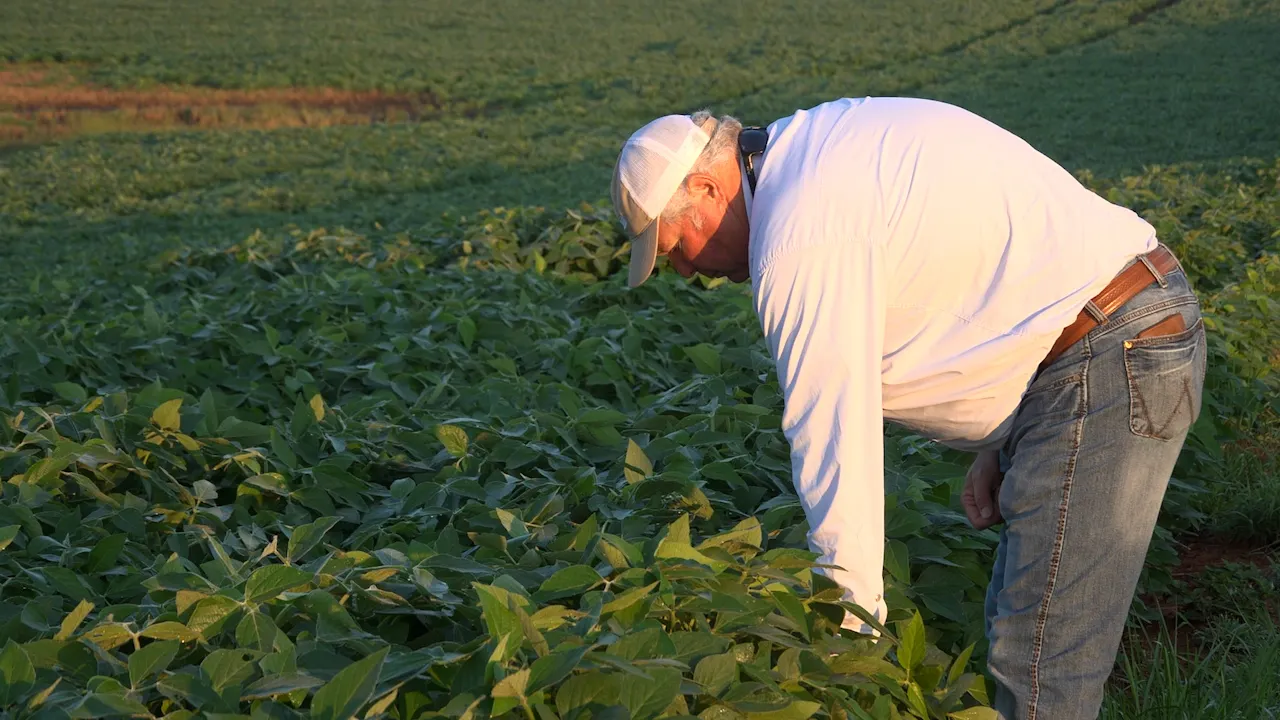
The U.S. soybean industry is working to meet the demands of other countries despite having less farmland and fewer farmers. The USDA says U.S. farmland has shrunk by 7% since 2000.
Key Takeaways for the Soybean Market:
- Resource Scarcity vs. Global Demand:The U.S. soybean industry faces a critical supply-side challenge with declining farmland and farmer numbers, juxtaposed against relentlessly surging global demand, necessitating aggressive yield optimization and technological adoption.
- Geopolitical & Trade Dynamics:U.S.-China trade relations, including lingering tariffs, significantly dictate market access and competitiveness, influencing global soybean pricing and market share distribution, particularly against South American exporters.
- Innovation as a Market Driver:Strategic investments through programs like the Soy Checkoff are crucial for diversifying market applications beyond food and feed (e.g., biofuels, industrial products), enhancing price stability, and bolstering farmer profitability in a volatile commodity landscape.
CADIZ, Ky. –The U.S. soybean industry finds itself at a critical juncture, navigating the complex interplay of dwindling domestic agricultural resources and burgeoning global demand. Despite a significant contraction in its foundational assets—farmland and the number of active farmers—the sector is tasked with supplying an increasingly hungry world, a dynamic that carries profound implications for commodity markets, trade policy, and agricultural innovation.
According to the Department of Agriculture (USDA), the U.S. agricultural landscape has undergone a notable transformation. Since 2000, the nation’s farmland base has shrunk by approximately 7%, from 943 million acres to 874 million acres. This reduction, equivalent to losing an area larger than the state of Maine, is exacerbated by a parallel decline in human capital, with the country losing an estimated 307,000 farms over the same period. This trend of agricultural consolidation and land conversion, often driven by urban sprawl and industrial development, creates a supply-side constraint that directly impacts the market’s ability to scale production.
Concurrently, global demand for American agricultural products, particularly soybeans, has not only remained robust but has actively surged. This escalating demand, fueled by global population growth, rising middle-class incomes in developing economies, and a corresponding increase in protein consumption, places immense pressure on U.S. farmers. The market imperative is clear: produce more from less, efficiently and sustainably.
Barry Alexander, a seventh-generation farmer in Cadiz, Kentucky, embodies this challenge. At Cundiff Farms, soybeans constitute roughly half of his summer crop rotation. While Alexander has not directly lost farmland to urban encroachment, he acknowledges the broader trend. “Land is going away every day, and that’s one commodity they’re not going to reproduce,” Alexander states, highlighting the inelastic supply of agricultural land. “Whenever that land is gone and gone out of production, it’s no longer going to be farmland. The population is increasing, and the demand for food is increasing.” This sentiment underscores a fundamental market reality: a finite resource base facing infinite growth in demand.
Barry Alexander is a seventh-generation farmer in Kentucky who ships a chunk of his soy crop overseas.(FOX / Fox News)
The logistical efficiency of the U.S. agricultural export infrastructure is a critical competitive advantage. Kentucky’s soybean harvest, typically running from September through October, sees a significant portion of Alexander’s crop channeled into global markets. “A lot of our product is actually for export. We put it on the rivers here nearby, and it ships down to the Gulf of Mexico to New Orleans and is actually shipped overseas,” Alexander explains. This sophisticated network of inland waterways and port facilities enables the U.S. to swiftly move vast quantities of commodities, directly impacting global supply chains and price discovery.
China remains the undisputed anchor customer for U.S. soybeans, consuming more soy than any other country combined. Its demand is primarily driven by its massive animal protein industry, where processed soy protein is a critical feed input for raising pigs and poultry. This makes China a pivotal force in global soybean futures and cash markets. While China had agreed to purchase 25 million metric tons of U.S. soybeans annually by 2025, trade tensions under the Trump administration, characterized by escalating tariffs, caused significant disruptions.
Caleb Ragland, chairman of the American Soybean Association, notes the volatility. “We’re on a positive trend, but we still got a long ways to go to completely hit the targets that they’ve agreed to.” He emphasizes the strategic importance of this relationship: “Obviously, we’ve had some bumps in the road in our relationship, but they’re too big of a customer to just write off.”
The lingering 10% tariff imposed by China on U.S. agricultural products has been a persistent headwind for American farmers. This tariff effectively raises the cost of U.S. soybeans for Chinese buyers, making them less competitive compared to supplies from South American powerhouses like Brazil and Argentina. “I mean, that’s been a 10% tax that has made us uncompetitive when it comes to the cash price that the Chinese customers would pay for soybeans,” Ragland asserts. The removal of such tariffs would immediately rebalance market dynamics, potentially leading to increased U.S. market share, improved farmer margins, and a shift in global soybean trade flows.
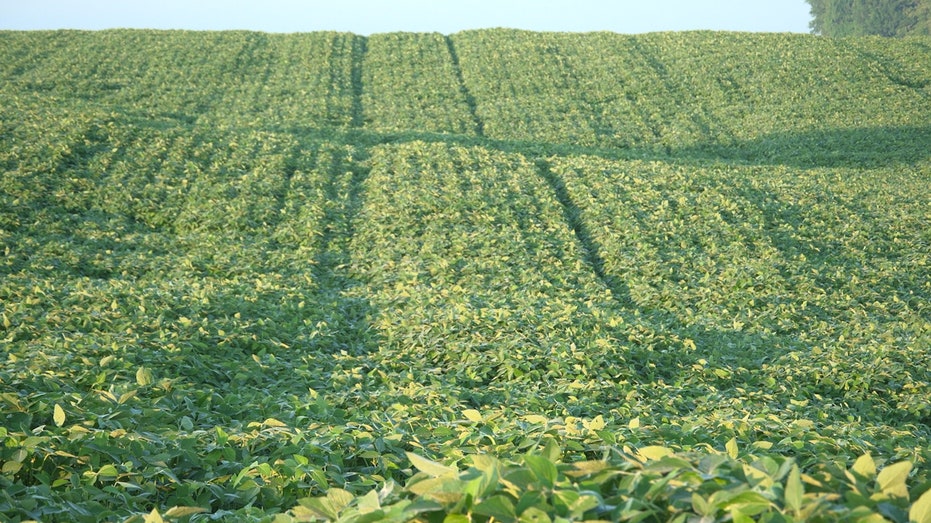
According to the USDA, the amount of farmland in the United States has shrunk about 7% since 2000.(FOX / Fox News)
In response to both market pressures and resource limitations, the U.S. soybean industry has heavily invested in research and development. A significant portion of soybean profits flows into the Soy Checkoff program, managed by the United Soybean Board. This program funds initiatives aimed at optimizing yields and, crucially, developing new markets for the crop. Since its establishment under the 1990 Farm Bill, annual American soybean production has impressively doubled, from 2 billion bushels to approximately 4 billion bushels, a testament to advancements in seed technology, precision agriculture, and improved farming practices.
Farmers like Alexander employ sophisticated techniques to maximize output. “We treat every acre individually, and we treat it to produce the most it possibly can,” he states, highlighting the adoption of data-driven farming and site-specific management.
Brent Gatton, chairman of the United Soybean Board, emphasizes the transformative impact of checkoff investments. These initiatives have not only enhanced traditional food and feed markets but have also successfully opened entirely new demand avenues, expanding U.S. soybean trade to over 90 countries. “Because of the checkoff, there are thousands of new uses we get. Soy oil is in Goodyear tires and artificial turf, and soy foam is a great success story,” Gatton explains. This diversification into industrial and biofuel markets provides crucial demand diversification, insulating the industry somewhat from the volatility of traditional commodity cycles and positioning soybeans as a key component of the bioeconomy.
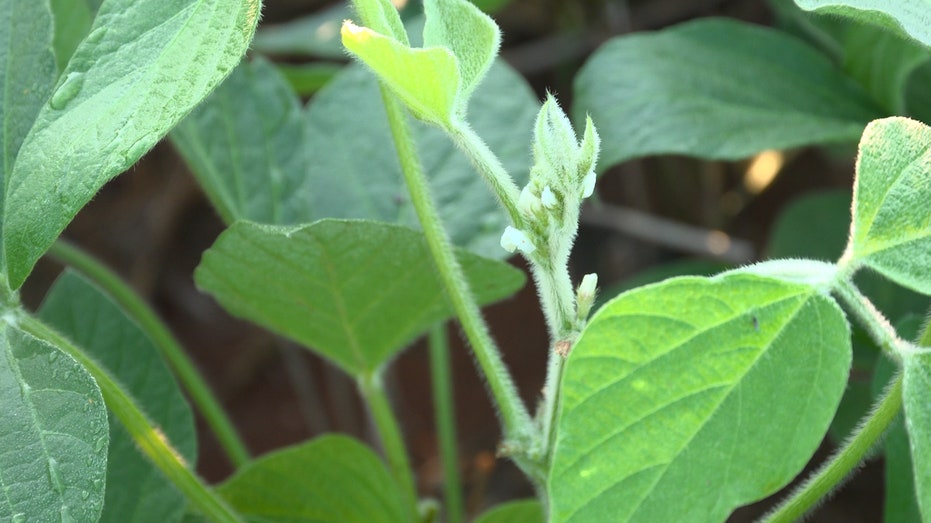
Farmers are working to pack in more soy production with less land as global demand for American soy increases.(FOX / Fox News)
The financial health of soybean farmers, like all agricultural producers, is profoundly influenced by the interplay of commodity prices and input costs. After several years marked by elevated input expenses—driven by global energy prices impacting fertilizer and fuel, as well as rising seed and chemical costs—farmers are keenly hoping for a profitable year. Higher soy prices, coupled with renewed or increased purchasing commitments from major importers, could finally allow them to break even or generate sustainable margins. This delicate balance between market prices and operational expenditures dictates investment decisions on farms and influences the broader agricultural real estate and equipment markets.
The U.S. soybean industry’s future hinges on its ability to innovate and adapt. With continuous pressure on land and labor, coupled with the unpredictable currents of global trade and geopolitics, strategic investments in technology, market diversification, and strong international relationships will be paramount to maintaining its competitive edge and ensuring food security.
Market Impact:
The dynamics within the U.S. soybean industry—namely the shrinking land base and farmer count against rising global demand—have significant ramifications for investors, policymakers, and consumers. For commodity traders, these trends imply continued price volatility, influenced by crop yields, weather patterns, and the ever-present specter of trade policy shifts. Investments in agritech, precision farming, and sustainable agriculture solutions are likely to see increased capital allocation as the industry seeks efficiency gains. Policymakers face the dual challenge of protecting agricultural land and supporting farmer viability while also navigating complex trade agreements that can either open or close critical export markets. The industry’s push into new uses like biofuels and industrial applications creates new demand streams, offering a hedge against fluctuations in traditional food and feed markets and linking the sector more closely to broader energy and industrial commodity prices. Ultimately, the resilience and adaptability of the U.S. soybean industry will be a bellwether for global food security and the broader agribusiness sector.