
Key Takeaways: The Enigmatic World of AI’s World Models
- **Unveiled Potential, Obscured Products:** World models, a cutting-edge AI field championed by giants like AMI Labs and World Labs, promise revolutionary applications in robotics, autonomous systems, and digital media, yet their commercial products remain largely undisclosed.
- **Strategic Silence:** Leaders in the space, even those supported by substantial funding, actively withhold product roadmaps and timelines, opting for a research-heavy phase over immediate market entry, much to the frustration of data suppliers.
- **The “Dark Forest” Maneuver:** This pervasive secrecy is a deliberate strategy, akin to Cixin Liu’s “dark forest” theory, aimed at delaying intense competition. By keeping their specific targets hidden, these well-funded labs buy critical time to innovate before rivals can pinpoint and pursue similar endeavors.
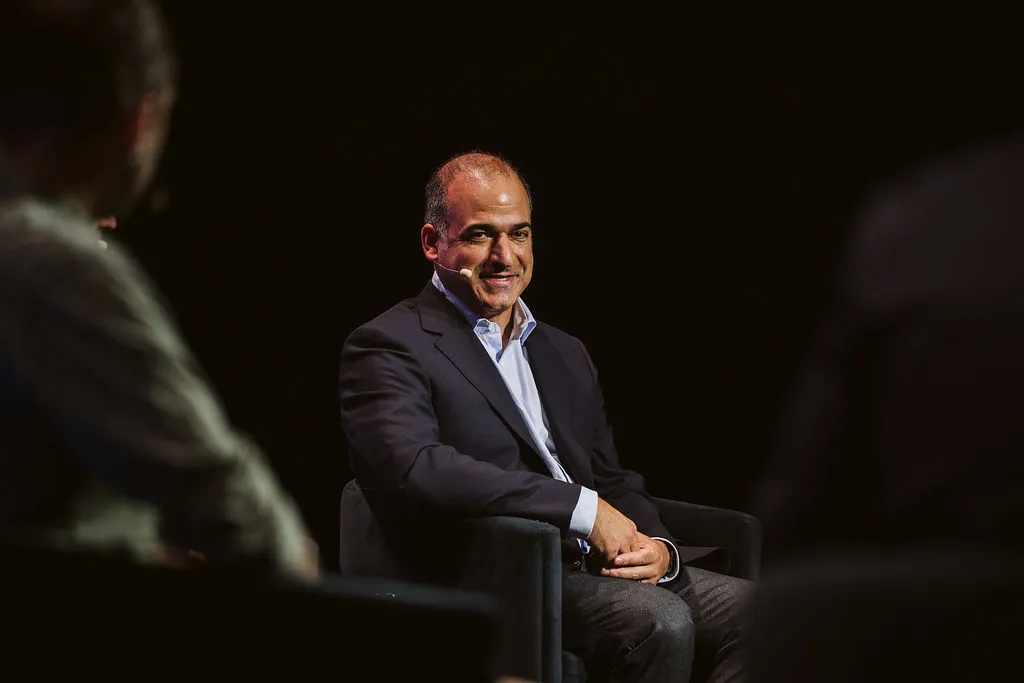
This week, I stepped into one of the most intriguing and, frankly, most opaque corners of the artificial intelligence universe. Moderating a panel on “world models” at the All In conference (a standalone event, not connected to the popular podcast), I expected insights into groundbreaking technology. What I found was a fascinating paradox: immense buzz and significant investment coupled with an almost impenetrable veil of secrecy around commercial application.
At the forefront of this burgeoning field are heavyweights like Yann LeCun’s AMI Labs and Fei-Fei Li’s World Labs. Both entities have successfully garnered substantial funding and generated considerable excitement within the tech community. However, despite their high profiles, they currently rank remarkably low on the “trying-to-make-money” scale, opting instead for a prolonged research and development phase.
Understanding the Promise: What Exactly are World Models?
To grasp the potential, one must first understand the core concept. At their essence, world models empower AI systems with a profound form of “spatial intelligence.” This isn’t merely about recognizing objects, but about creating an internal, dynamic representation of the environment, allowing the AI to predict how actions will affect that world. Think of it as an AI’s ability to build a mental map, understand physics, and anticipate consequences, much like a human child learns about gravity or object permanence. This capability unlocks a myriad of exciting — and potentially immensely lucrative — applications.
The implications are far-reaching: from advanced robotics that can navigate complex, unstructured environments with human-like dexterity, to creating highly interactive and immersive video game worlds, and even evolving the next generation of truly autonomous self-driving systems that can reason through unforeseen scenarios. The ability for an AI to model and simulate its environment is a fundamental leap towards more intelligent, adaptable, and robust artificial intelligence.
The Shroud of Secrecy: “We’ll Talk About It When We’re Ready”
Despite this tantalizing potential, probing for concrete commercialization plans proved to be an exercise in futility. My panel included Michael Rabbat, a co-founder of AMI Labs and the company’s VP of World Models. When pressed on the specifics of what AMI was building, his response was succinct and illustrative of the broader industry trend: “We’ll talk about it when we’re ready to talk about it.” He later clarified via email, stating, “We’re still in a research and building phase, so we’re not talking publicly about any product plans or timeline.”
To be fair, AMI Labs is less than a year old, so a degree of discretion is understandable. However, this caginess is not an isolated incident; it permeates the entire world-modeling landscape. World Labs’ Marble platform, for example, is arguably one of the most developed offerings in the space, with impressive demos showcasing capabilities in media creation, such as building explorable environments for video games or generating sophisticated CGI effects. There are hinted robotics use cases as well. Yet, even Marble feels less like a product ready for market and more like a powerful demonstration of whatcouldbe possible.
This strategic silence even extends to the ecosystem of suppliers fueling these ventures. On the sidelines of the same conference, I spoke with Alex de Vigan, CEO of Physicl, a company supplying crucial data to the burgeoning world model business. De Vigan expressed a palpable frustration: while he knows his company’s data is integral to whatever these labs are constructing, he remains completely in the dark about their ultimate goals. “I wish they would tell us more. We could build more useful data if we knew what they were working on,” de Vigan lamented, highlighting the depth of this closely guarded innovation.
Versatility: A Double-Edged Sword
Part of the mystery surrounding world models stems from their extraordinary versatility. The simplest iteration might be a hyper-detailed, navigable map of the world, akin to the advanced AI models that already power today’s self-driving cars. But the same underlying modeling approach that enables a Waymo vehicle to seamlessly weave through complex urban traffic could also empower a humanoid robot to learn new tasks, carry boxes efficiently, or even transform a few minutes of raw video footage into a fully explorable, interactive 3D environment.
AMI Labs itself offers a glimpse into this broad applicability, having already dipped its toes into a diverse array of sectors, including manufacturing, biomedicine, advanced robotics, and even AI software for medical professionals through its Nabia partnership. This wide-ranging exploration begs the question: will they pursue all these avenues? Or are one or two specific applications quietly emerging as primary targets, yet to be revealed to the world?
The “Dark Forest” Doctrine: A Strategic Delay of Competition
No one disputes the potential for numerous viable businesses to emerge from world model technology. And crucially, as long as fundraising remains relatively easy and abundant in the AI sector, there is little immediate pressure for these labs to commit to a single, focused path to profitability. In fact, there’s a powerful strategic reason *not* to declare their intentions too early.
Fans of Cixin Liu’s science fiction epic, “The Three-Body Problem,” will immediately recognize this as a “dark forest” scenario. In Liu’s universe, the universe is a dark forest where every civilization is a hunter, and revealing one’s presence invites immediate, existential threat from others. In the fiercely competitive realm of AI, this translates to a similar dynamic: if AMI Labs were to announce tomorrow that they had successfully developed a groundbreaking humanoid robot (an “OpenClaw,” perhaps) or a revolutionary next-generation Hollywood rendering system, the response would be immediate and dramatic. Many other labs, well-funded and highly capable, would suddenly pivot their focus, intensely scrutinizing and replicating AMI’s efforts.
The consequence? AMI would quickly face formidable competition not just from other specialized world model companies, but also from agile “neolabs,” and even from established giants like OpenAI and Anthropic, who possess vast resources and talent. In some ways, this is the flip side of the easy fundraising coin: the same money that allows a lab to innovate under the radar also fuels a multitude of potential rivals, ready to pounce once a clear market path is illuminated.
Therefore, even if competition is an inevitable outcome, it is strategically advantageous to delay it for as long as humanly possible. This means operating with extreme discretion, keeping product plans under wraps, and allowing the foundational research to mature without attracting the full glare of the market. The longer a lab can cultivate its unique intellectual property and develop a sustainable competitive advantage in secret, the stronger its position will be when it finally decides to emerge from the “dark forest.”
This post was first published on September 18, 2026.
Bottom Line
The world of AI’s “world models” represents a frontier of immense promise, poised to redefine how artificial intelligence interacts with and understands our physical and digital realities. Yet, for now, it remains shrouded in deliberate mystery. Fueled by abundant investment and guided by a strategic imperative to delay competition, leading labs are operating in a “dark forest” mode, building foundational technologies in secret. This approach allows for expansive research and development, but it also means that the revolutionary products and services poised to transform industries—from robotics to entertainment—will remain elusive until these AI pioneers are ready to unveil their carefully cultivated innovations, fundamentally altering the competitive landscape when they do.
When you purchase through links in our articles, we may earn a small commission. This doesn’t affect our editorial independence.
Source:{feed_title}