
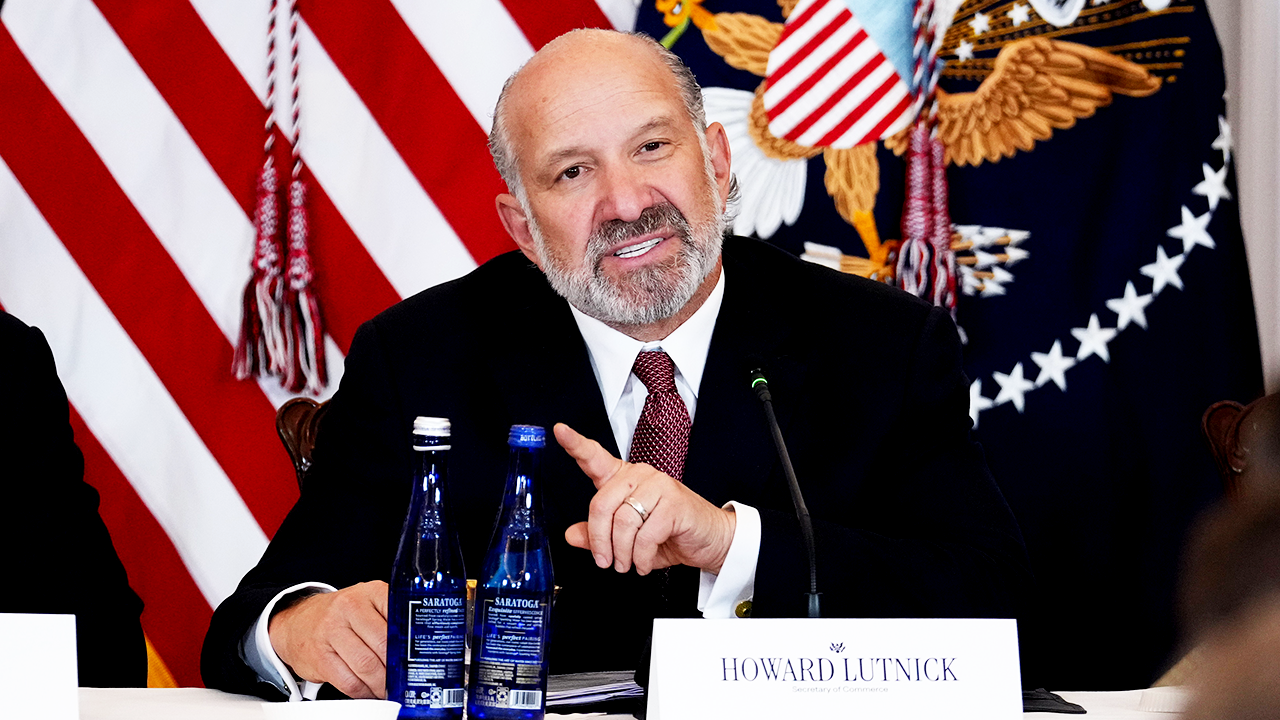
Commerce Secretary Howard Lutnick discusses how America is rebuilding its automobile manufacturing industry through policy on ‘Kudlow.’
Key Takeaways:
- **Strategic Reshoring & Policy Influence:** Ford’s decision to expand U.S. production of Lincoln vehicles and phase out Chinese imports by 2030 underscores a growing trend of corporate reshoring, heavily influenced by government tariffs and a broader policy push for domestic manufacturing. This move signals a strategic shift aimed at de-risking supply chains and leveraging “Made in America” appeal, potentially creating thousands of jobs.
- **Economic Debate on Tariffs:** The announcement reignites the contentious economic debate surrounding tariffs. While proponents, like Commerce Secretary Lutnick, champion tariffs as catalysts for domestic investment and job creation, critics point to the potential for increased production costs, inflationary pressures, and strained international trade relations, necessitating careful evaluation of net economic impact.
- **Market & Investment Implications:** For investors, this pivot highlights Ford’s long-term strategy for luxury brand positioning and supply chain resilience. Analysts will closely scrutinize the capital expenditure required, potential impacts on profit margins, and how this strategy aligns with the broader automotive industry’s transition towards electrification and advanced manufacturing, influencing investor sentiment and competitive dynamics within the luxury segment.
In a significant strategic maneuver resonating across the automotive sector and financial markets, Ford Motor Company is accelerating plans to expand U.S. production of its luxury Lincoln vehicles. This initiative marks a definitive step toward ending imports from China for American customers, a move enthusiastically highlighted by Commerce Secretary Howard Lutnick as demonstrative of the Trump administration’s concerted push to bolster domestic manufacturing capabilities.
Lutnick, appearing on FOX Business’ Larry Kudlow, framed Ford’s decision as a bellwether for a broader industrial renaissance, directly attributing the shift to the administration’s auto tariffs and its robust efforts to incentivize U.S.-based production. “They’re bringing their manufacturing home,” Lutnick asserted, “Ford is going to rock us with bringing manufacturing back to America.” Beyond a mere production shift, this move signals a confluence of policy influence, supply chain re-evaluation, and evolving investor priorities in an increasingly complex global trade landscape.
U.S. Commerce Secretary Howard Lutnick speaking during a roundtable.(Eric Lee / Getty Images)
Ford’s detailed plan involves a phased expansion of U.S. Lincoln production commencing in 2030, with the ultimate goal of ceasing imports of these luxury vehicles from China for its American clientele. While the specific investment figures and recipient plants remain undisclosed, the company projects this expansion will generate thousands of direct and indirect U.S. jobs. This commitment is particularly salient given the current geopolitical climate and persistent calls for supply chain de-risking among major corporations.
Currently, Lincoln’s U.S. lineup includes the China-built Nautilus. Ford has not specified whether Nautilus production will be relocated to the U.S. under this new plan or identified other China-imported vehicles that will be affected. However, the intent to localize production of a key luxury offering sends a clear message about the company’s long-term strategic direction and its response to prevailing policy headwinds.
FORD BOOSTS US LINCOLN PRODUCTION AS IT PHASES OUT IMPORTS FROM CHINA
FHN Financial chief economist Chris Low and SMBC Nikko Securities senior US economist Troy Ludtka discuss July’s blockbuster ISM manufacturing index on ‘Making Money.’
This expansion builds upon Ford’s already substantial domestic manufacturing footprint. In 2025, the automaker assembled over 2 million vehicles in the U.S. and maintains a workforce of approximately 56,300 hourly manufacturing employees in the country. This existing capacity provides a foundation for the announced expansion, yet the transition of luxury vehicle production often entails complex retooling and significant capital expenditures, which analysts will be keen to track for their impact on Ford’s balance sheet and future earnings.
Lutnick consistently cited Ford and other major automakers as prime examples of companies increasingly prioritizing American manufacturing, arguing that the administration’s tariff policies are a primary driver behind this renewed investment and job creation. “Thousands of jobs, thousands and thousands of jobs coming back to America because of these tariffs on automotives,” Lutnick emphasized. This anticipated job growth, while significant locally, feeds into a national discourse about the revitalization of the American industrial base, a key tenet of economic nationalism that has influenced investor sentiment and policy discussions for years.
MANUFACTURERS SAY GOP TAX LAW PROTECTED JOBS, PRESERVED WAGES AND ECONOMIC GROWTH ACROSS EVERY STATE
Economists, however, remain divided on the net impact of such tariffs. While advocates like Lutnick point to direct job creation and increased domestic investment, others, like American Action Forum President Douglas Holtz-Eakin and Evenflow Macro managing partner Marc Sumerlin, who have discussed the economic impact of President Donald Trump’s tariffs, have cautioned about potential ripple effects. These include higher input costs for manufacturers, which can squeeze profit margins or be passed on to consumers as increased prices, potentially fueling inflation and challenging the competitiveness of U.S.-made goods in global markets.
American Action Forum President Douglas Holtz-Eakin and Evenflow Macro managing partner Marc Sumerlin discuss the economic impact of President Donald Trump’s tariffs on ‘Kudlow.’
Beyond the immediate production shift, Lutnick also underscored the critical need to prepare younger workers for increasingly automated and technologically advanced manufacturing jobs. “We’re gonna have to train young people for these high-tech jobs,” he stated. “We are going high-tech in America.” This emphasis reflects a broader understanding that modern manufacturing demands not just factory space, but also a skilled workforce proficient in robotics, artificial intelligence, and advanced materials science. Investment in human capital and education will be as crucial as capital investment in physical plants for this strategy to yield sustainable economic benefits.
TRUMP ADMINISTRATION UNVEILS NEW TARIFFS ON 60 TRADING PARTNERS AS TEMPORARY DUTIES EXPIRE
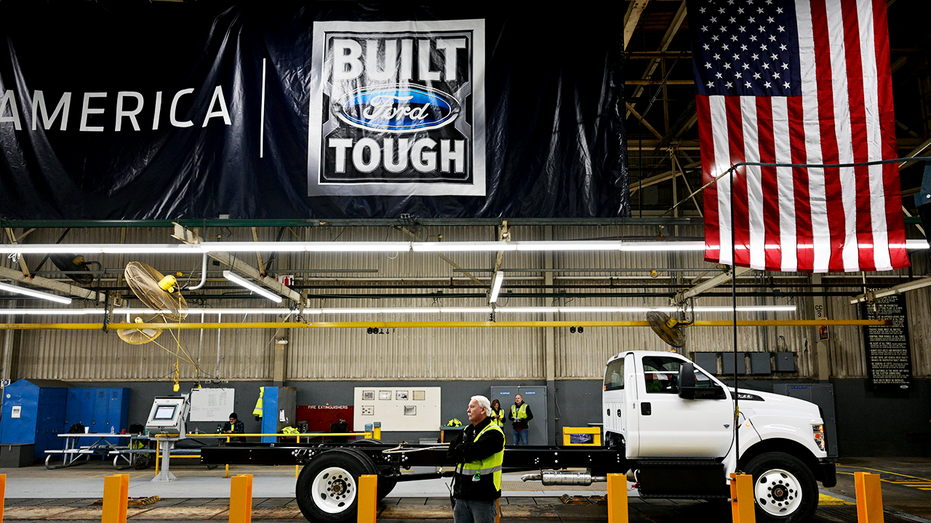
A completed commercial truck rolls off the assembly line at Ford’s Ohio Assembly Plant in Sheffield Lake, Ohio.(Dustin Franz/Bloomberg / Getty Images)
Lutnick’s vision extends beyond final vehicle assembly, focusing on building advanced manufacturing capacity for components and sub-assemblies within the United States. “We are going to build these factories here in America, and that’s the key,” he added. This holistic approach aims to create a more resilient and integrated domestic supply chain, reducing reliance on foreign production for critical components and mitigating risks associated with global supply chain disruptions. Such a strategy aligns with broader industry trends of “friend-shoring” or “near-shoring” observed since the COVID-19 pandemic and escalating geopolitical tensions.
For Ford, successfully executing this pivot for its Lincoln brand will not only reinforce its “Made in America” credentials but also position it strategically within the competitive luxury automotive segment. It will also test the company’s ability to manage potentially higher domestic production costs while maintaining the premium quality and profitability expected from a luxury marque, especially as the industry collectively navigates the costly transition to electric vehicles and advanced mobility solutions.
GET FOX BUSINESS ON THE GO BY CLICKING HERE
Market Impact:
Ford’s announcement is poised to generate significant ripple effects across financial markets and the broader automotive ecosystem. For **Ford (F)** investors, the news presents a dual perspective: on one hand, it signals a strategic commitment to supply chain resilience, national security, and potentially higher brand equity through “Made in America” appeal, which could be viewed positively in the long term. On the other hand, the substantial capital expenditure required for retooling and new plant construction, coupled with potentially higher U.S. labor and operational costs compared to overseas production, could pressure short-to-medium term profit margins. Analysts will closely monitor future disclosures regarding investment figures, production timelines, and their projected impact on earnings per share.
The broader **automotive sector** may interpret Ford’s move as a harbinger of similar strategic shifts, potentially influencing other major manufacturers like General Motors (GM) and Stellantis (STLA) to re-evaluate their own global production footprints, particularly for high-value segments. This could lead to increased domestic demand for **auto parts suppliers** with significant U.S. operations, such as BorgWarner (BWA) or Magna International (MGA), potentially boosting their revenues and stock performance. However, it also raises questions about market fragmentation and the potential for increased domestic competition. In the **luxury auto market**, the “Made in America” label for Lincoln could appeal to a specific consumer demographic, but maintaining cost-competitiveness against European and Asian luxury brands, which often leverage global supply chains for efficiency, will be a critical challenge.
Economically, the creation of thousands of U.S. manufacturing jobs, while positive, could contribute to **wage inflation** in skilled labor segments, impacting broader economic indicators. The underlying policy driver—tariffs—will remain a focal point of debate, with its perceived success in driving reshoring balanced against concerns over potential **consumer price increases** and its implications for **U.S.-China trade relations**. Ultimately, this strategic pivot by Ford underscores a fundamental realignment within the global industrial landscape, driven by a complex interplay of political will, economic calculus, and the evolving demands of supply chain security.
Brittany Miller contributed to this report.