
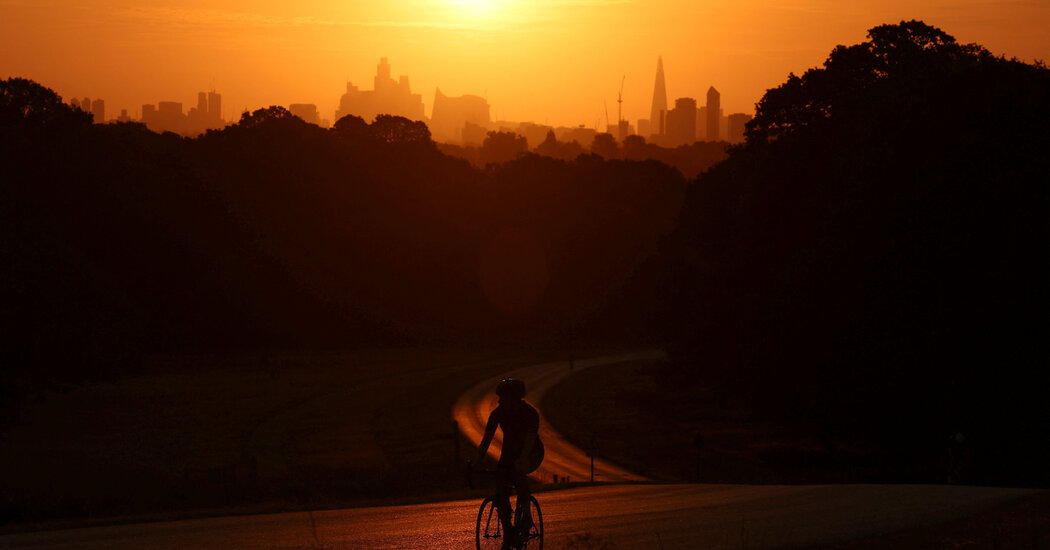
The United Kingdom is currently experiencing a sustained period of high temperatures, with forecasters indicating the possibility of this summer becoming the warmest on record. This trend marks a significant shift in the nation’s seasonal weather patterns, prompting widespread discussion about adaptation and long-term climate changes.
The Met Office, Britain’s national weather service, issued an amber warning for extreme heat for Thursday, encompassing large portions of southeast England. This warning, the second-highest level, signifies a high likelihood of impacts on public health and infrastructure. The current conditions are part of a broader pattern of elevated temperatures that have characterized recent British summers.
Historically, British summers were often associated with moderate temperatures and frequent rainfall. However, recent years have seen more prolonged dry spells and higher average temperatures, altering the traditional perception of summer within the country. This shift is leading many residents to reconsider how they experience and prepare for the summer months.
Jacqui Browne, 67, a London resident, observed while sitting in a park, “An English summer is not the same anymore.” Her sentiment reflects a common perception among those who have witnessed the gradual changes in the country’s climate over decades.
For Thursday, temperatures in London were projected to reach 37 degrees Celsius (98.6 degrees Fahrenheit), according to detailed forecasts provided by the Met Office. These temperatures are substantially higher than the historical average for the region during this time of year.
The country has also faced widespread drought conditions, which have contributed to parched landscapes across many regions. This contrasts sharply with historical patterns where British summers were typically more temperate and characterized by regular precipitation, maintaining greener environments.
Janice Kennedy, 66, visiting from northern England, corroborated the widespread nature of these conditions, noting that even the traditionally cooler and greener northern regions are experiencing elevated temperatures. “Even up north it’s quite warm,” Ms. Kennedy stated. “Not like down here, but it’s quite warm up there, as well.” This indicates a national rather than localized phenomenon.
For some long-term residents like Ms. Browne and Ms. Kennedy, memories of the summer of 1976 serve as a benchmark for extreme heat. That year was characterized by repeated, extended periods of hot and dry weather, setting a historical precedent. However, recent summers have begun to surpass or significantly challenge that benchmark, suggesting a new climatic normal may be emerging.
The summer of 2022 remains notable for its intensity, as it was the first time Britain officially recorded a temperature exceeding 40 degrees Celsius, according to data from the Met Office. This event marked a significant milestone in the country’s meteorological history.
Reflecting on the recent trend, Ms. Browne commented that the 2022 extreme has “been overshadowed by the last three or four years,” indicating a perceived escalation in summer heat.
Statistical data from the Met Office reinforces this perception. By the end of July this year, Britain had already experienced 37 days classified as extreme heat, nearing the record of 39 days set in 1995. This rapid accumulation of high-temperature days points to an intensified heat season.
Even if the latter weeks of August see a slight reduction in temperatures, Met Office predictions suggest that the cumulative warmth for the season is highly likely to surpass existing annual records. This consistent pattern underscores the broader climatic shifts underway.
Mike Kendon, a senior scientist at the Met Office, provided a statement this week addressing the situation. “Another record-breaking summer now looks increasingly likely for the U.K., following the second-warmest June and second-warmest July on record, and yet another heat wave imminent,” he said. He added a clear emphasis on the long-term implications: “These statistics are a clear reminder — if one were needed — of the stark changes that we are seeing in the U.K.’s climate.”
The persistent high temperatures have prompted some residents to re-evaluate their summer activities and travel plans. The traditional British inclination to seek warmer climes abroad is being challenged by the increasing heat at home.
Mike Jones, 55, observed while seeking shade in a London park with friends, “I think you might find that is a real win for coastal towns. I think there’ll be more staycations, too.” This suggests a potential shift towards domestic tourism, benefiting coastal regions within the UK.
However, his friend Caroline John, 50, highlighted a perceived drawback to this trend. “When you go abroad, you have a cocktail and the sea,” she noted, contrasting it with the realities of urban heat. “Whereas, in London, you’re on the tube in the heat.” The experience of navigating a city not primarily designed for extreme heat forms a significant part of the public’s current challenges.
Both Mr. Jones and Ms. John agreed that London’s transportation infrastructure, particularly its underground subway system, is not adequately equipped to handle sustained high temperatures. Instances of train lines buckling under the heat have led to numerous delays throughout the summer, impacting commuters and travelers. “We’re not equipped, are we?” Ms. John remarked, reflecting on the broader societal preparedness.
The Met Office’s warnings extended beyond transport, indicating that Thursday’s temperatures could affect heat-sensitive infrastructure in residential and commercial properties. Beyond logistical disruptions, the high temperatures also pose significant health and welfare concerns, particularly for vulnerable populations such as older individuals and those with pre-existing medical conditions. Potential health complications include heatstroke, dehydration, and exacerbation of cardiovascular or respiratory illnesses.
Despite the challenges, not all residents view the warmer summers negatively. Anesta Logan, 61, who was also in the park with Mr. Jones and Ms. John, expressed a preference for the new conditions compared to the cooler summers and colder winters she experienced growing up.
“The hotter, the better,” she stated, concluding with a pragmatic view on public sentiment: “People are always going to complain.” Her perspective highlights a diversity of opinion regarding the ongoing climatic changes in the UK, even as scientific data points towards a clear trend of increasing temperatures.
Why This Matters
The recurring and intensifying heatwaves in the United Kingdom are not merely a matter of personal comfort; they represent a significant challenge with far-reaching implications for public health, national infrastructure, the economy, and the environment. As the Met Office highlights, these events are clear indicators of a changing climate, demanding adaptation strategies and policy responses.
From a public health standpoint, sustained extreme heat significantly increases the risk of heat-related illnesses and mortality, particularly among vulnerable populations such as the elderly, young children, and individuals with chronic health conditions. This places additional strain on healthcare services and requires public awareness campaigns on hydration and heat safety.
Economically, heatwaves can impact productivity, particularly in sectors that involve outdoor work or non-air-conditioned indoor environments. Agricultural yields can suffer from drought conditions, while changes in tourism patterns—such as the increased preference for “staycations”—can redistribute economic benefits within the country but may also lead to overtourism in certain coastal areas. Infrastructure, built for a temperate climate, proves vulnerable, with buckling rail lines and overwhelmed cooling systems causing disruptions and necessitating costly upgrades.
Environmentally, prolonged dry spells contribute to water scarcity, increased risk of wildfires, and stress on ecosystems, including changes to natural habitats and biodiversity. The visible browning of typically green landscapes underscores the severity of drought conditions.
Ultimately, these events serve as a stark reminder of the ongoing climate crisis. They underscore the urgent need for both mitigation efforts to reduce greenhouse gas emissions and robust adaptation strategies to cope with the unavoidable impacts of a warming world. How the UK responds to these evolving summer conditions will shape its future resilience and sustainability.